


Dark Wood Folding Tray
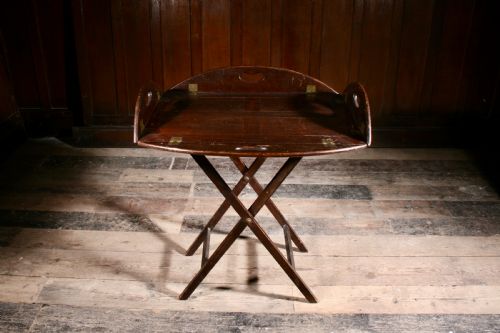
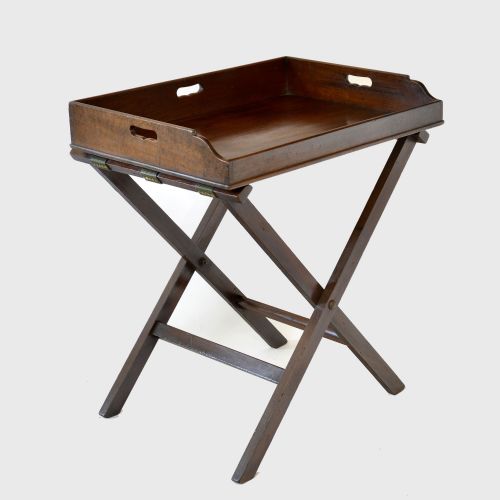
A dark wood folding tray brings effortless hospitality to any room, offering a removable surface paired with a collapsible stand.
Dark Wood Folding Tray
A dark wood folding tray is fundamentally a portable serving surface set upon a collapsible stand, designed to move easily between rooms for dining and entertaining. The pieces gathered here span from the 18th century through the early 20th century, encompassing Georgian, Victorian, and Edwardian eras alongside campaign styles and Anglo-Indian designs.
Materials and construction
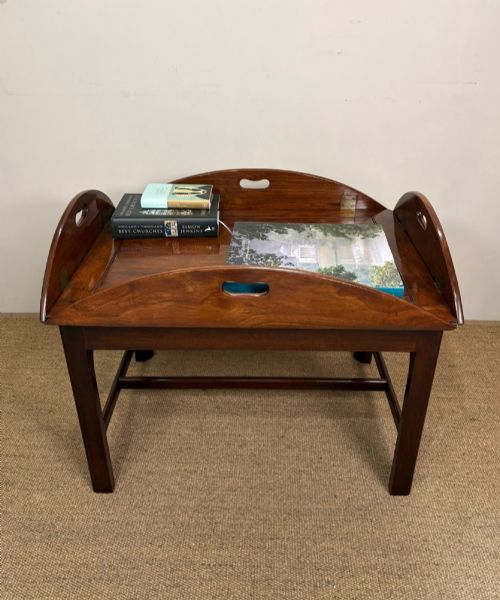
Cabinetmakers utilised dense timbers like mahogany, rosewood, and oak to construct these pieces, ensuring the raised edges and folding hinges could withstand regular lifting and transport. Joinery typically involved dovetailed corners for the trays and sturdy pivoting pins or webbing for the stands.
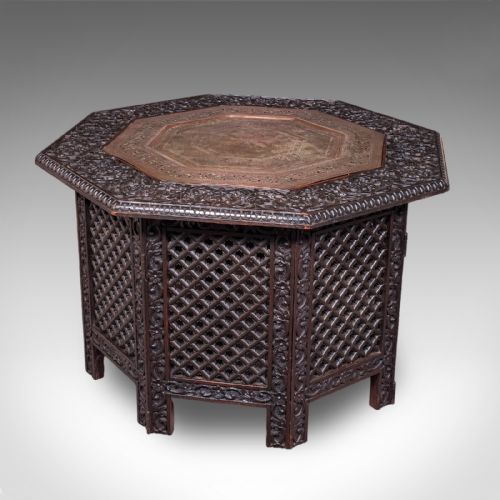
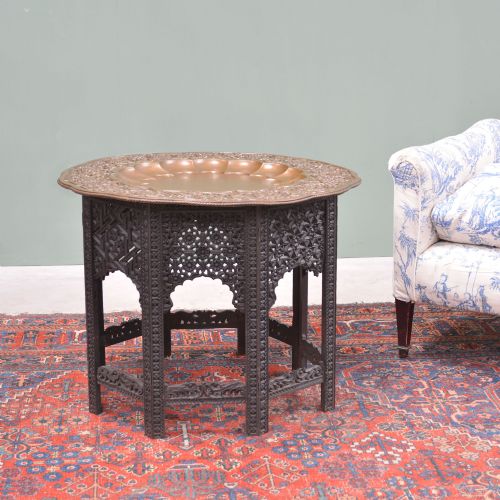
Some regional variations incorporate inset metal components, such as engraved copper or brass tops fitted to hardwood or folding frames. These mixed-media pieces rely on precise metalwork and fitted wooden surrounds to maintain structural stability while collapsing.
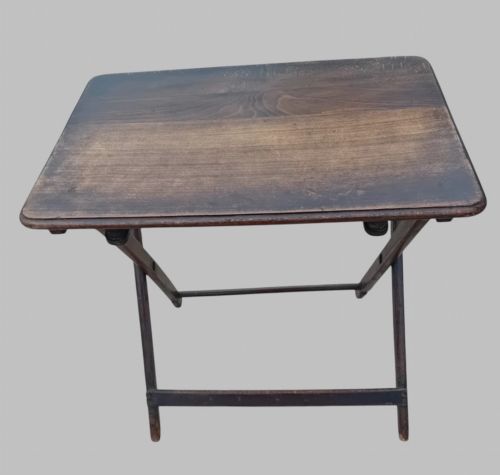
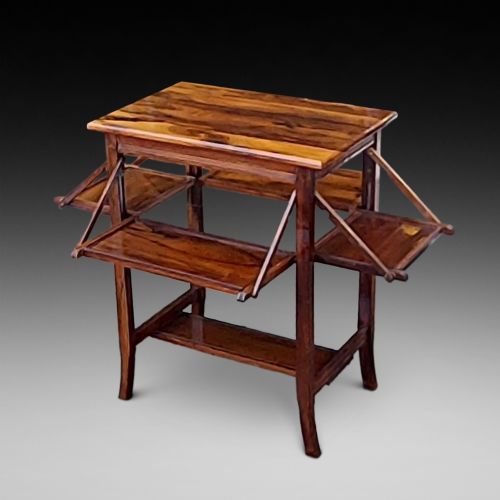
One clever Victorian piece hides its true purpose as a surprise metamorphic drinks table.
Judging execution and finish
Quality rests in the crispness of the timber grain, the weight of the wood, and the subtlety of the handling around handholds and hinges. Superior examples display carefully selected mahogany or rosewood veneers and solid framing that remains rigid when open.
Consider the harmony between the tray and its stand, as many portable pieces were reunited with supports later in their lives. Pieces that retain their original folding mechanism and patinated timber surfaces demonstrate superior craftsmanship.
The Dark Wood Folding Tray Glossary
- Butler tray
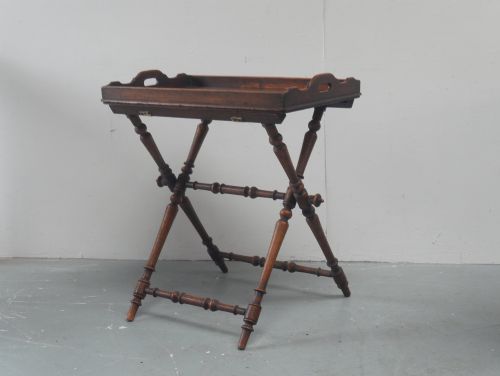
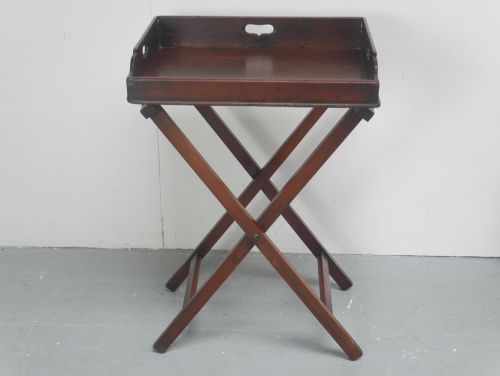
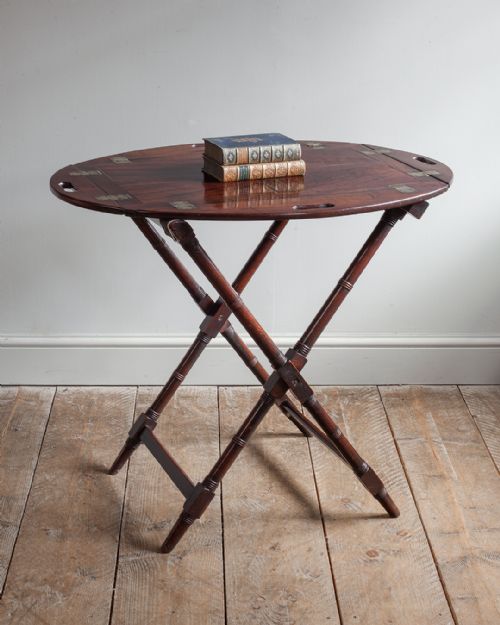
- A portable wooden tray featuring raised sides, often with hinged flaps or integrated cut-out handles for carrying. It traditionally sat on a separate folding stand when in use.
- Campaign style
- Furniture designed for easy dismantling and transport by military officers on the march. These pieces prioritise folding mechanisms and portability.
- Hongmu
- A category of dense, dark Asian hardwoods frequently utilised for fine furniture. It translates literally to red wood and displays a deep natural colour.
- Hoshiarpur
- A region in India renowned for intricate woodwork. Tables from this area often feature dense carving and metal insets.
Dark Wood Folding Tray: Frequently Asked Questions
What is a dark wood folding tray used for?
These pieces served historically for serving drinks and meals across different rooms of a large house. Today, they function well as portable coffee tables or occasional surfaces.
Because the tray lifts straight off the stand, you can use the top independently for serving guests before placing it back onto the folded support.
How do I date a butler tray?
Dating relies on timber selection, handle cut-outs, and the construction of the folding stand. Georgian examples often feature deep mahogany boards with shaped handles.
Later Victorian and Edwardian versions introduce lighter timbers, varied edge profiles, and different brass hinge mechanics. Examining the joinery beneath the tray reveals the era of manufacture.
Are the stands original to the trays?
Many trays and stands were separated over time, meaning some combinations are matched later in their history. Inspecting the wear patterns on both pieces helps determine if they originated together.
A unified patina and matching timber species suggest an original pairing, though married pieces remain entirely functional for daily use.
How do I care for antique hardwood?
Keep these items away from direct heat sources and strong sunlight to prevent the timber from drying out or splitting. Regular dusting with a soft cloth maintains the polished finish.
Applying a traditional beeswax occasionally helps nourish the wood and preserves the historical surface without creating a heavy buildup.