

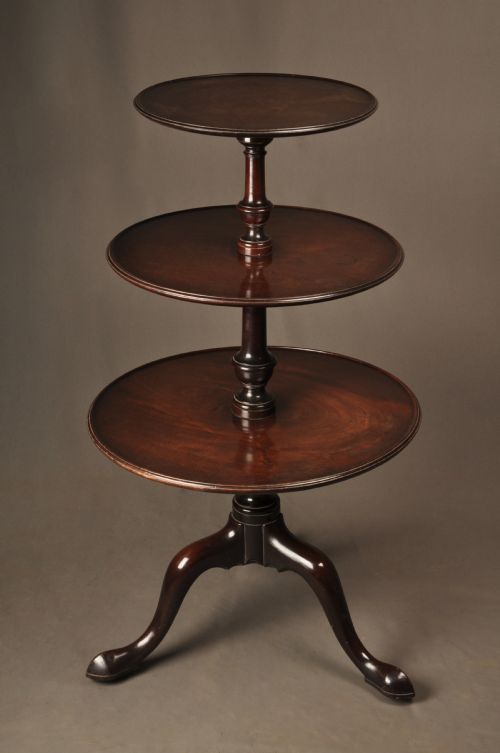


Dark Wood Dessert Table
These dark wood dessert tables are tiered serving pieces in mahogany, built to hold food and drink through Georgian and Regency dining.
Dark Wood Dessert Table
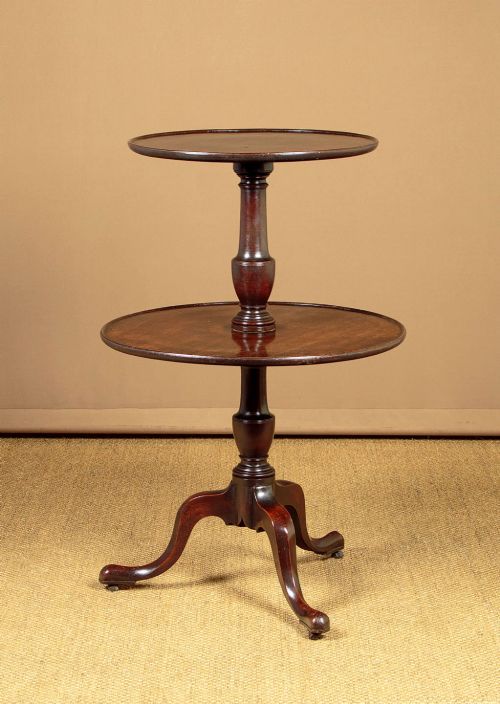
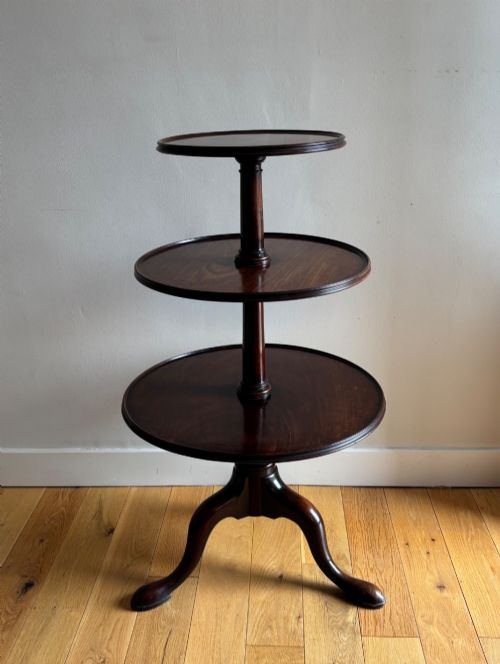
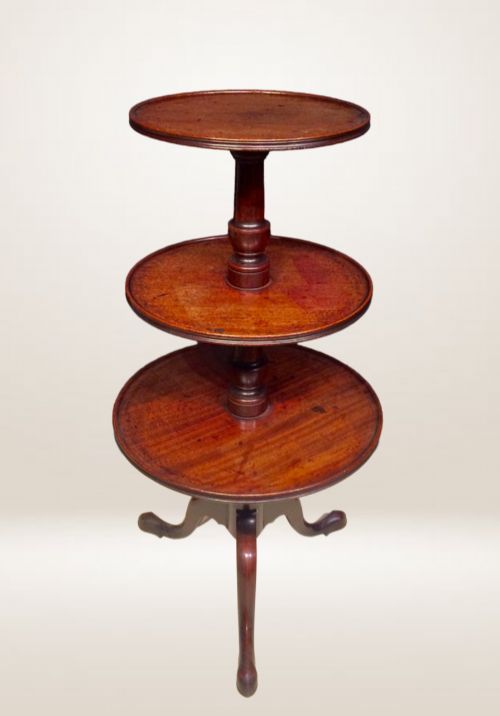
A dark wood dessert table on this page is most frequently encountered as a tiered dumb waiter or serving stand originating from the Georgian, Regency, and Victorian periods. These pieces take the form of circular stacked trays rotating on a central column, designed to hold courses and beverages without the need for attendants during private dining.
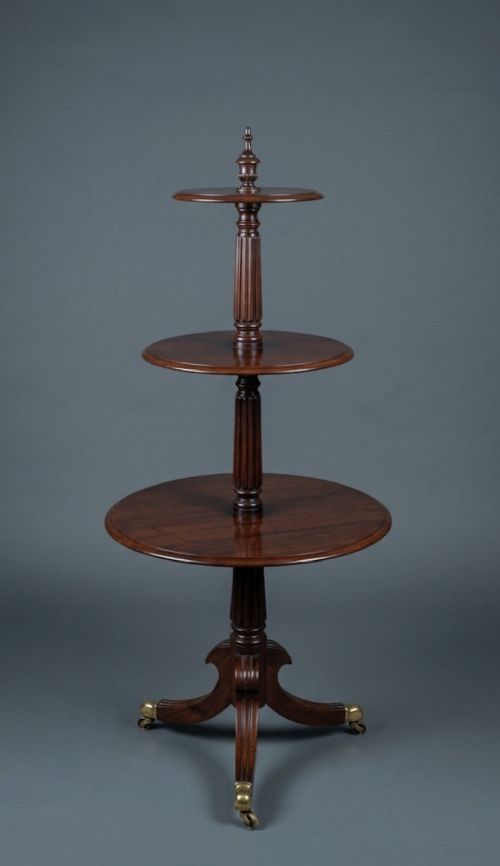
The objects seen here span George II, George III, and William IV styles, showcasing varying tiers from two-tiered folding stands to tall three-tier revolving structures. Makers constructed them primarily as occasional or serving tables, utilising rich timber to support heavy dishes in the dining room.
While some pieces carry a galleried edge or drop-leaf mechanism, the core function remains the presentation of desserts or wine. The enduring design reflects the formal dining customs of the eighteenth and nineteenth centuries.
Materials and Construction
Cabinetmakers built these serving stands predominantly from mahogany, chosen for its dense grain and structural strength needed to support multiple rotating tiers. Brass fittings, including casters and column connectors, appear regularly to facilitate movement and adjustment on the dining floor.
The construction relies on turned central pillars supporting graduated circular trays, occasionally featuring folding mechanisms or drop leaves for compact storage. Joinery techniques connect the tiers securely to the central shaft, allowing smooth rotation where specified in the design.
These polite wooden assistants allowed diners to gossip freely without servants listening in.
Quality and Proportion
The standard of a dark wood dessert table rests upon the figure of the mahogany timber and the proportion of the graduated circular tiers. Finer examples display carefully matched grain across the circular trays and robust turning on the central pillar.
Mechanical execution also separates pieces, visible in the smooth operation of revolving tiers, folding hinges, and brass castors. The crispness of carved details on the tripod legs and column bases distinguishes superior workshop production.
The Dark Wood Dessert Table Glossary
- Dumb waiter
- A tiered freestanding serving table with rotating circular trays, used to hold food and wine during meals. This form eliminates the need for servants at the table.
- Tiered table
- A piece of furniture featuring multiple horizontal surfaces stacked vertically on a single central support. This configuration maximises display and serving space.
- Galleried
- A raised wooden border surrounding the edge of a tray or table top to prevent items from sliding off. Such edges often feature pierced or carved detailing.
- Drop-leaf
- A hinged table section that can be lowered when not in use to save space. This mechanism appears on folding serving stands in the evidence.
Dark Wood Dessert Table: Frequently Asked Questions
What is a dumb waiter used for?
These tiered stands held extra food, wine, and dessert courses within reach of the dining table.
Guests served themselves from the rotating trays, reducing the presence of household staff during private meals.
How do I date a mahogany dumb waiter?
Dating relies on stylistic markers from the Georgian, Regency, and Victorian periods seen in the turnings and leg forms.
Cabinetmakers of the eighteenth century favoured tripod legs and crisp pillar turnings, while later pieces adopted heavier Victorian proportions.
Where do I place a tiered serving table?
These pieces fit well in dining rooms or living spaces as side tables or display stands for decorative objects.
The circular footprint allows them to sit comfortably in corners or beside seating areas.
Are these tables sturdy enough for daily use?
Built from dense mahogany with solid central columns, these stands were constructed to bear the weight of heavy ceramics and glass.
Careful handling of the rotating tiers and folding mechanisms preserves their structural integrity.