

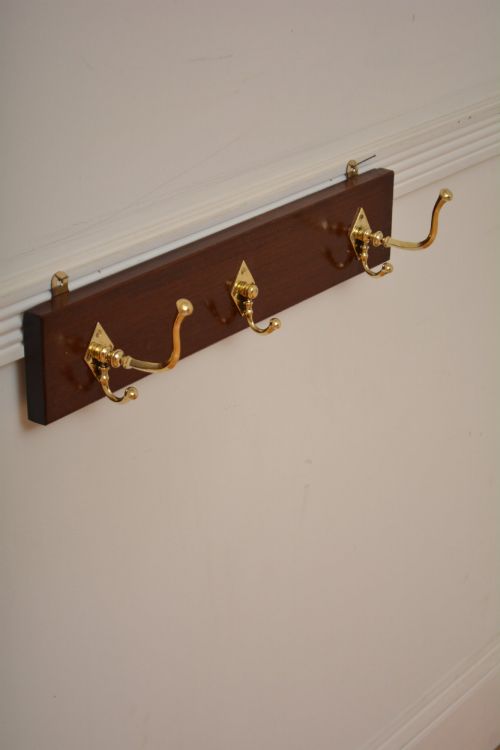


Dark Wood Coat Rail
A dark wood coat rail offers practical hanging space with rich timber character, spanning Victorian, Edwardian, and earlier eras.
Dark Wood Coat Rail
A dark wood coat rail brings traditional utility to hallways and reception spaces, appearing across periods from the eighteenth century to the Edwardian era. You will most frequently encounter wall-mounted wooden rails fitted with multiple metal hooks designed for daily hanging of hats, cloaks, and garments.
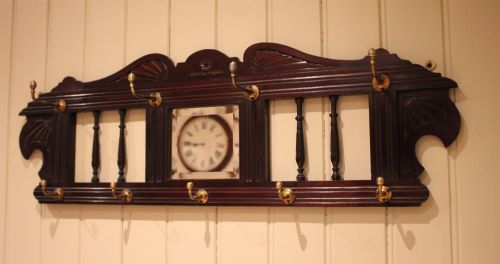
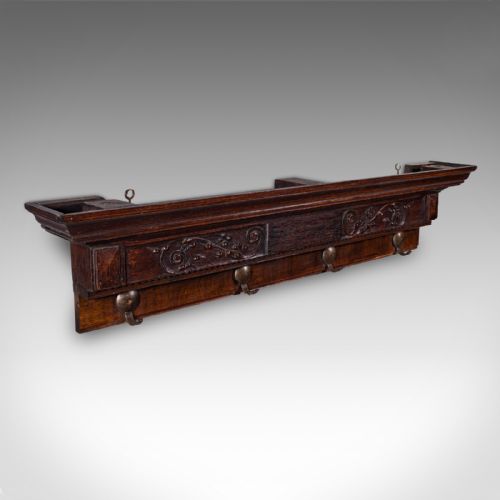
The selection ranges from simple provincial oak hook racks to more ornate Victorian and Aesthetic Movement mahogany designs featuring brass hardware. Larger hall stands and robe stands also appear, offering integrated storage solutions with carved woodwork or lacquered surfaces.
These items originate from diverse British and international traditions, including English domestic pieces alongside Chinese carved hall stands and lacquered clothes horses. Each variation provides a functional architectural fixture rooted in historical craftsmanship.
How they were made
Construction relies on solid timbers such as mahogany, oak, elm, and lacquered wood, shaped through traditional joinery and carving techniques. Rails often incorporate durable woods chosen for their structural strength and deep natural grain.
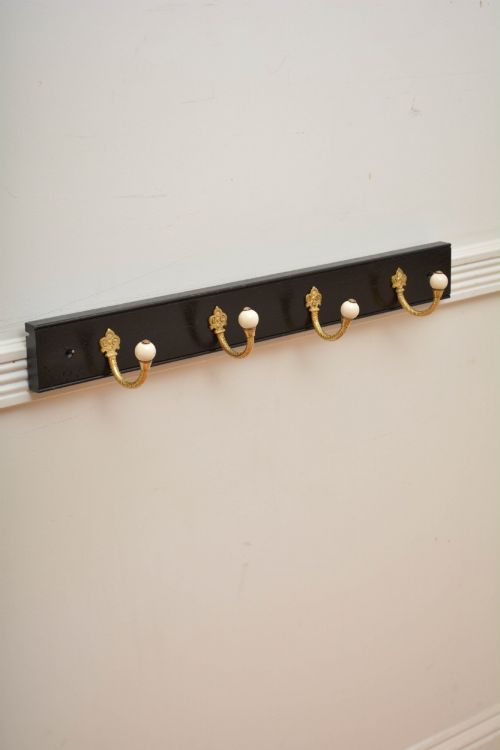
Metal components, predominantly brass, are secured directly to the timber backboards to support hanging loads. Additional detailing involves ceramic inserts, glass elements, and intricate hand-carved ornamentation seen in specific Aesthetic Movement and Qing Dynasty examples.
Dark Wood Coat Rail Retail Price Guide 2026
Typical asking prices for dark wood coat rail among the pieces listed under this phrase on Sellingantiques today, from the lower quarter to the upper quarter. They describe what is for sale here now, not the wider market.
The listings span the eighteenth, nineteenth, and early twentieth centuries, incorporating Victorian, Edwardian, Aesthetic Movement, and Jacobean styles.
What varies in quality
The refinement of the hardware and decorative flourishes, such as heavy brass hooks and detailed hand-carved panels, separates standard production from exceptional examples. Original patination and intact structural elements elevate the overall integrity of the piece.
The Dark Wood Coat Rail Glossary
- Coat rail
- A horizontal wooden board mounted to a wall and fitted with multiple hooks for hanging garments. This forms the primary structural format for the majority of pieces in this category.
- Hat tree
- A vertical or wall-mounted fixture combining provisions for hanging both hats and coats. These often incorporate multiple tiers of hooks or pegs.
- Cloakroom
- A dedicated domestic reception space near an entrance used for storing outerwear. Furniture designed for this area prioritises sturdy hanging capacity.
- Bentwood
- Timber subjected to steam to bend it into curved shapes without breaking. This technique creates resilient and flowing structural profiles.
- Aesthetic Movement
- A nineteenth-century design current emphasising visual beauty over narrative subject matter. Pieces from this style often combine dark polished timber with contrasting brass fittings.
Dark Wood Coat Rail: Frequently Asked Questions
How are wall mounted coat rails secured?
These rails typically feature pre-drilled screw holes or heavy-duty mounting brackets integrated into the wooden backboard. Fixing them securely into wall studs ensures they can bear the weight of heavy coats and garments.
For older pieces, using appropriate wall anchors maintains stability without damaging the historic timber.
What is the difference between a coat rack and a hall stand?
A coat rack is a compact, wall-mounted board carrying a row of hooks for garments and hats. It is designed to save space in narrow entryways and corridors.
A hall stand is a larger, often freestanding piece of furniture that may include umbrella wells, mirrors, and bench seating alongside the coat hooks.
How do I care for antique dark wood?
Maintain the timber by dusting regularly with a soft, dry cloth and avoiding placement near direct heat sources or strong sunlight. These precautions prevent the wood from drying out or splitting.
Applying a specialist wax occasionally helps nourish the grain and preserve the historic surface patination.
How do I identify an Edwardian coat rail?
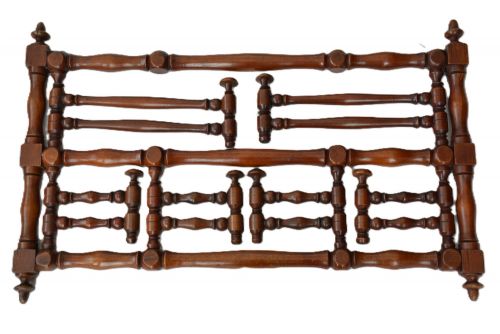
Edwardian pieces often feature lighter interpretations of earlier Victorian styles, sometimes utilising turned wooden pegs alongside brass hardware. They frequently date from around nineteen hundred to the nineteen-tens, reflecting domestic interior trends of that period.
Construction details and timber finishing help distinguish them from earlier Georgian or later twentieth-century items.