

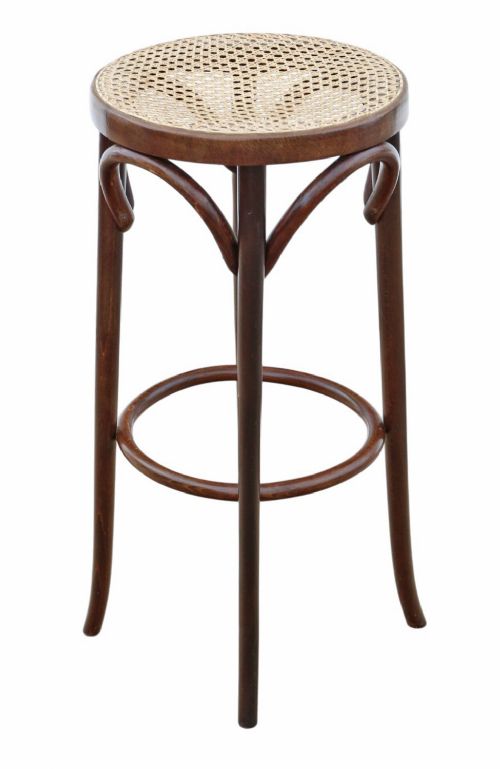


Dark Wood Circular Stool
These dark wood circular stool pieces offer compact seating and sturdy surfaces, valued for their versatile utility in traditional and eclectic interiors.
Dark Wood Circular Stool
When searching for a dark wood circular stool, collectors encounter a varied selection of round-topped seating and small support tables. These pieces span periods from the Georgian era through the Victorian period and into the early twentieth century. Common forms include piano stools, footstools, bar stools, and occasional tables with circular tops.
How they were made
Cabinet makers and joiners worked with dense timbers including mahogany, solid walnut, and oak to construct these round forms. Turning lathes shaped circular tops and supporting legs, while hand carving added decorative detail to frames and aprons. Some examples incorporate bentwood techniques to achieve curved structural elements.
Additional materials such as cane, textile, bone, and glass appear on specific items like piano stools and occasional tables. Joinery methods relied on sturdy pegging and mortise and tenon connections to ensure stability in daily use. Wood finishes were polished or oiled to highlight the natural grain of the hardwood.
Dark Wood Circular Stool Retail Price Guide 2026
Typical asking prices for dark wood circular stool among the pieces listed under this phrase on Sellingantiques today, from the lower quarter to the upper quarter. They describe what is for sale here now, not the wider market.
Current listings feature pieces spanning the Georgian era, Victorian period, and early twentieth century, utilising mahogany, solid walnut, oak, and beech.
What varies in quality
The distinction between standard examples and finer items rests upon the selection of timber and the precision of the construction. Superior pieces display dense, well-figured mahogany or solid walnut alongside clean joinery that remains firm over decades. Finely executed hand carving on the frame or legs elevates the character of the object beyond simple utility.
Design complexity also defines the upper range, particularly in adjustable mechanisms for piano stools or intricate carved motifs on Anglo-Indian and Arts and Crafts pieces. Pieces retaining original surface patination and authentic upholstery materials command greater interest among discerning buyers.
James Shoolbred
The Dark Wood Circular Stool Glossary
- Bentwood
- Wood steamed and bent into curved shapes, commonly utilised in nineteenth century bistro and high stool production. This technique allows for lightweight yet resilient framing.
- Piano stool
- A seat designed for keyboard players, often featuring an adjustable height mechanism operated by a central screw. Many examples incorporate a circular top and carved walnut construction.
- Solid walnut
- A heavy, durable dark hardwood prized for its rich colour and distinctive grain pattern. Cabinet makers used this material for Georgian and Victorian circular tables and stools.
- Anglo-Indian
- Descriptive of items produced in the Indian subcontinent under British influence, typically featuring dense carving and exotic hardwoods. These pieces date frequently to the late nineteenth century.
- Arts and Crafts
- A design movement valuing hand craftsmanship and simple utility over mass production. Objects from this tradition often display honest construction in oak or other hardwoods.
Dark Wood Circular Stool: Frequently Asked Questions
What is a dark wood circular stool used for?
These items serve primarily as compact seating options, adjustable piano seats, or small occasional tables for tight spaces.
Their round tops and sturdy hardwood frames allow them to function easily beside chairs or in hallways.
How do I identify a Victorian circular stool?
Look for characteristic timber choices like solid walnut or mahogany combined with hand carved frames or adjustable screw mechanisms.
Victorian pieces often display heavier proportions and traditional joinery methods compared to later twentieth century items.
Are these stools suitable for daily use?
Most pieces are constructed from durable hardwoods like oak, beech, and mahogany designed for practical seating and support.
Checking the stability of the joints ensures the piece safely handles regular household weight.
What periods do these circular stools come from?
The selection spans multiple eras including Georgian vernacular, Victorian, Edwardian, and early twentieth century production.
Each period brings distinct stylistic traits, from primitive solid walnut to carved Arts and Crafts oak.