

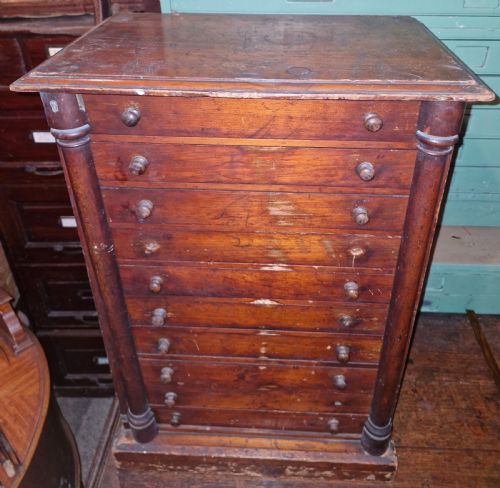


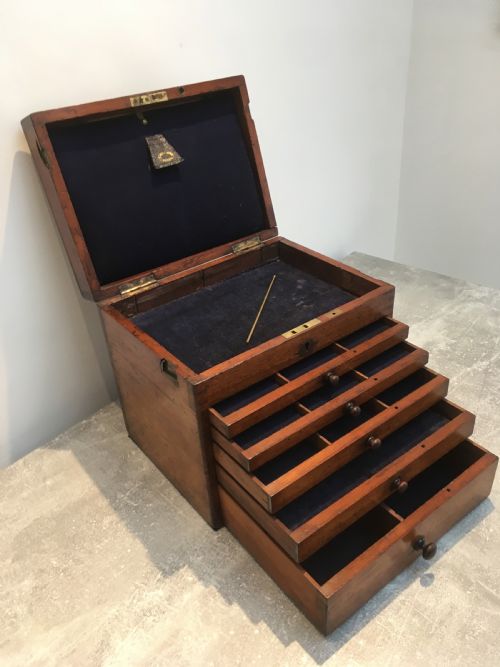


Dark Wood Apothecary Chest
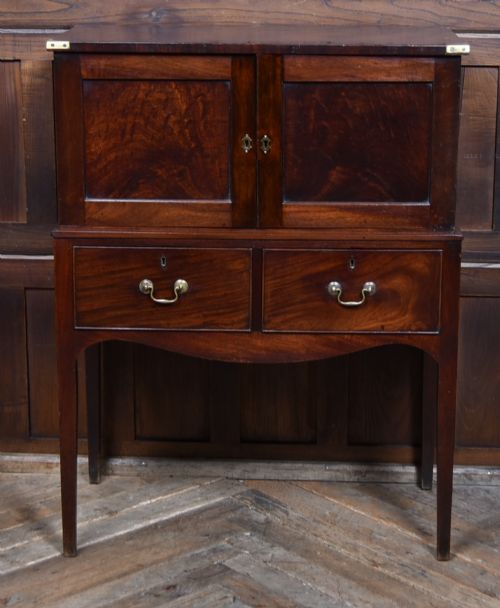
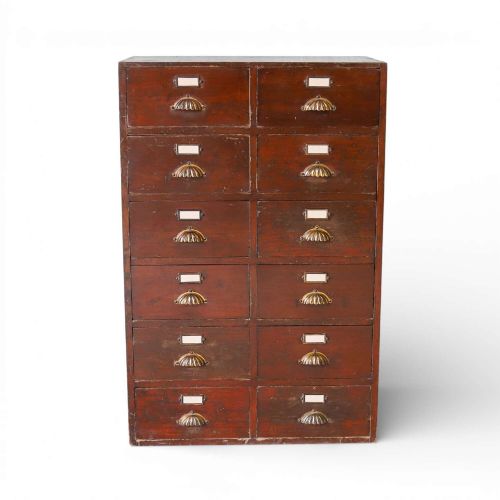
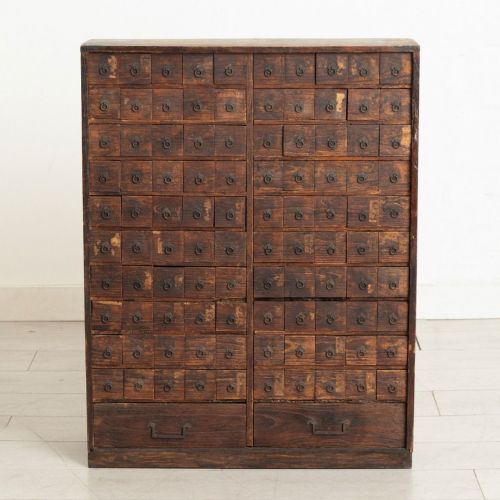
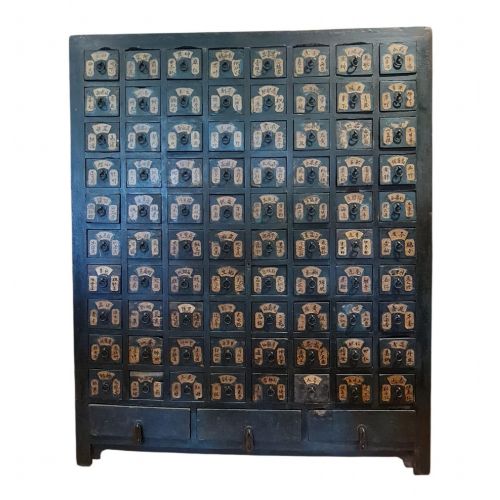
A dark wood apothecary chest is a multi-drawer storage piece originally designed for medicinal herbs, bottles, or specimens, sought after for its dense arrangement of small compartments.
Dark Wood Apothecary Chest
A dark wood apothecary chest brings together functional multi-drawer storage units and specialist cabinetry from various global traditions. When you search for a dark wood apothecary chest, you encounter forms ranging from massive banks of drawers to compact specimen cabinets and medicine chests.
The pieces listed on this page span the eighteenth, nineteenth, and early twentieth centuries, covering Georgian, Victorian, and Edwardian eras alongside Chinese Qing Dynasty, Japanese Meiji, Korean Joseon, and French provincial examples.
Most frequent among these are banks of drawers, apothecary cabinets, and collectors' cabinets constructed from timber such as mahogany, elm, deal, and lacquer, often fitted with brass hardware and glass.
Materials and construction
Makers utilised hardwoods like mahogany and elm alongside deal and lacquer for the primary carcases, building sturdy frames to support dozens of small internal compartments. Timber selection depended on regional availability, with British and European workshops favouring mahogany while Asian provincial makers utilised elm and lacquer.
Metal components such as brass label holders, shell pulls, and iron fastenings were integrated into the drawer fronts to assist with organisation and daily utility in dispensaries or laboratories. Glass panels occasionally appeared on doors to protect delicate contents or display collections while keeping them secure.
Dark Wood Apothecary Chest Retail Price Guide 2026
Typical asking prices for dark wood apothecary chest among the pieces listed under this phrase on Sellingantiques today, from the lower quarter to the upper quarter. They describe what is for sale here now, not the wider market.
Some nineteenth-century apothecary chests still retain faint traces of dried herbs in the drawer corners from when they worked in Victorian dispensaries.
Factors determining quality
The standard of a piece depends on the precision of the drawer joinery and the integrity of the original hardware, such as brass shell pulls and label holders. Superior examples retain their complete set of matching drawers and intact internal fittings like glass bottles or microscope slides.
Finer construction is evident in timber selection and secondary woods, where tight joints and well-figured grain distinguish standard utility furniture from pieces commissioned for scientific or medical use.
The Dark Wood Apothecary Chest Glossary
- Bank of drawers
- A large piece of furniture comprising many small drawers stacked in multiple columns and rows. These units were built for commercial or institutional storage.
- Specimen cabinet
- A specialised cabinet designed to hold natural history collections, such as insects, minerals, or botanical samples. They frequently feature shallow drawers with glass lids or fitted interiors.
- Shell pull
- A semi-circular metal handle shaped like an inverted seashell, commonly fitted to the drawers of nineteenth-century filing and apothecary furniture. They often incorporate integrated slots for paper labels.
- Label holder
- A small metal frame fixed to a drawer front to secure a paper identifier. These allowed practitioners to quickly locate specific remedies or specimens without opening every compartment.
Dark Wood Apothecary Chest: Frequently Asked Questions
What were apothecary chests originally used for?
Apothecaries and chemists utilised these multi-drawer chests to store dried herbs, roots, powders, and prepared medicines in distinct, labelled compartments.
Over time, similar multi-drawer formats were adopted by dentists, ironmongers, and naturalists for sorting small tools, hardware, and biological samples.
How do I date a dark wood apothecary chest?
Dating relies on examining construction methods, timber types, and the style of the hardware like brass pulls and label holders.
Georgian and Victorian pieces often display hand-cut dovetails and dense mahogany, whereas later nineteenth and early twentieth-century examples incorporate industrial ironmongery or Asian provincial joinery techniques.
Where should I place an apothecary chest in my home?
These chests function well as standalone statement pieces in studies, hallways, or living rooms where their numerous small drawers provide practical tabletop storage.
Because many examples have a deep or narrow footprint, positioning them against a sturdy wall ensures stability and protects the timber from heavy traffic.
Are all apothecary chests made from mahogany?
While British and European examples frequently utilise mahogany or stained deal, Asian pieces often feature elm, lacquer, or regional hardwoods.
Materials varied according to the local workshops of origin, spanning Shanxi Province, Japan, Korea, and provincial Britain.