



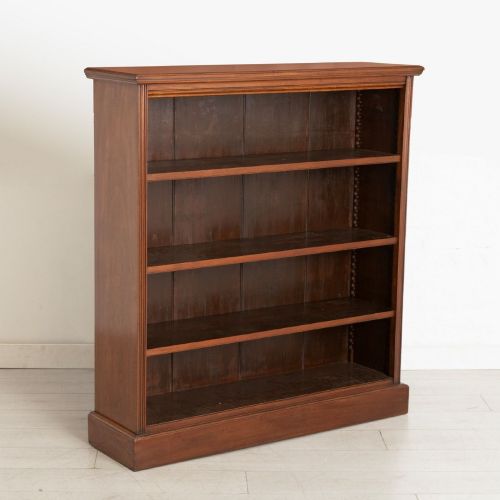
Dark Walnut Open Shelves
Dark walnut open shelves offer accessible display and storage in rich timber, bringing warmth and character to traditional or modern rooms.

Dark Walnut Open Shelves
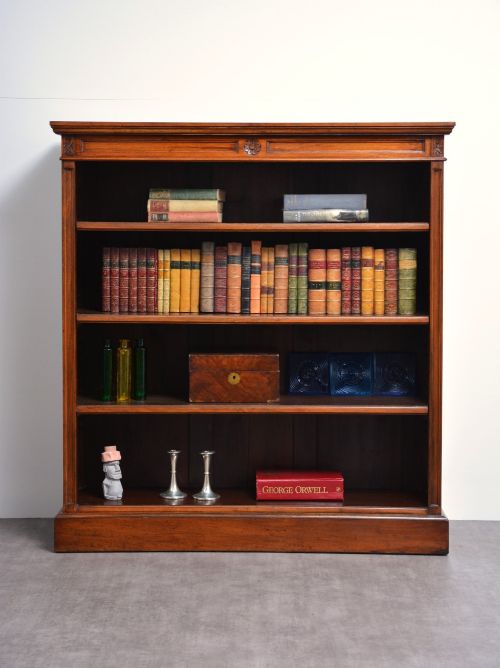
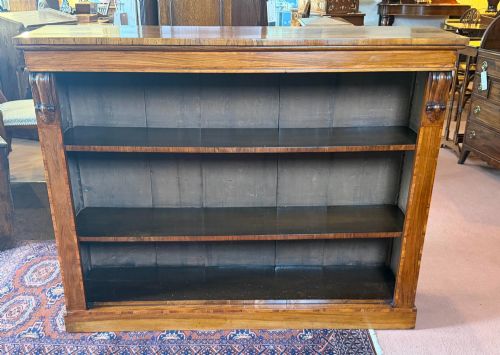
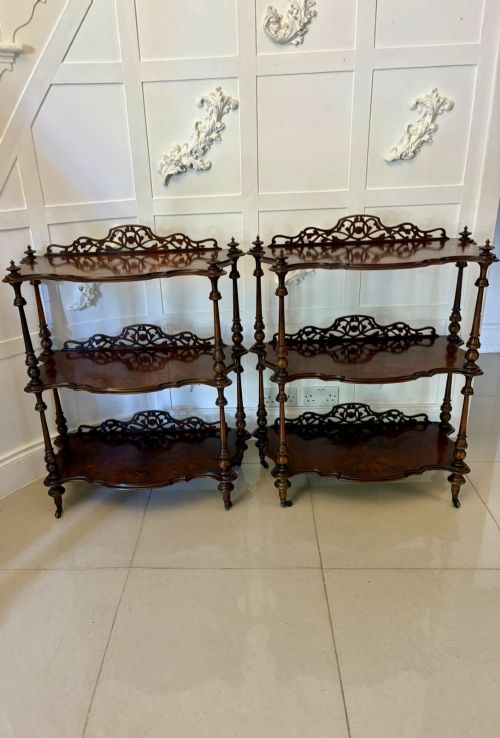
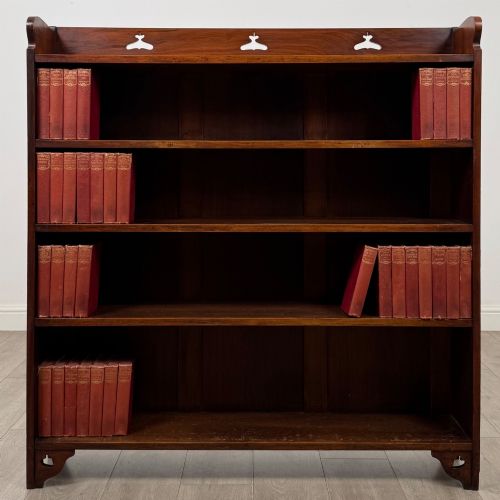
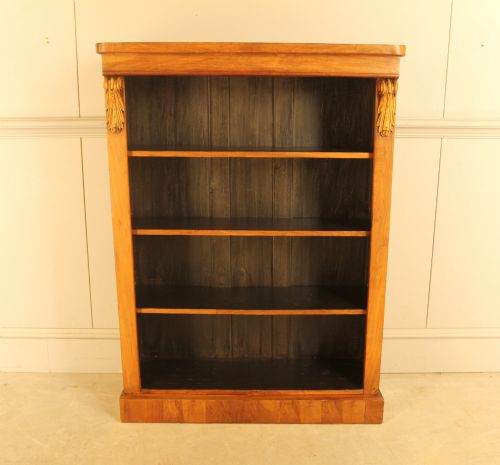
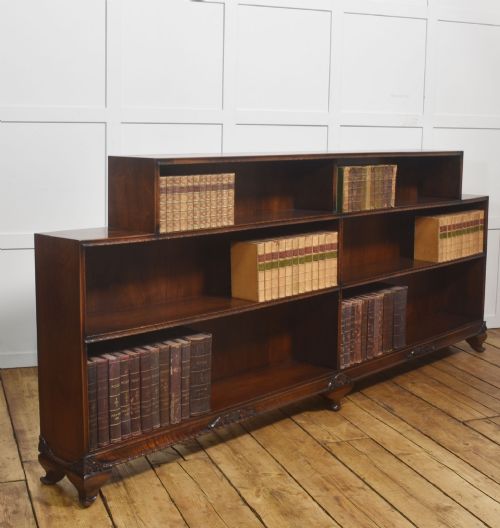
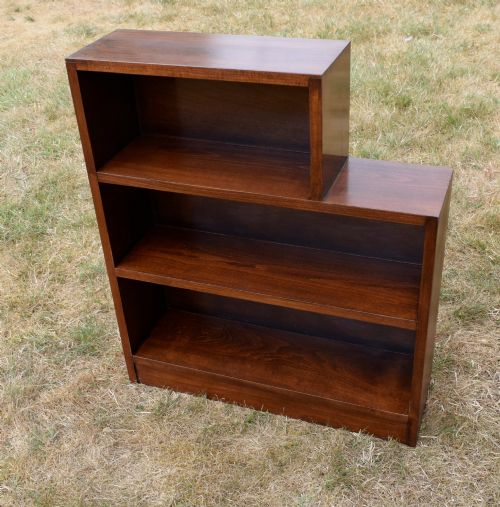
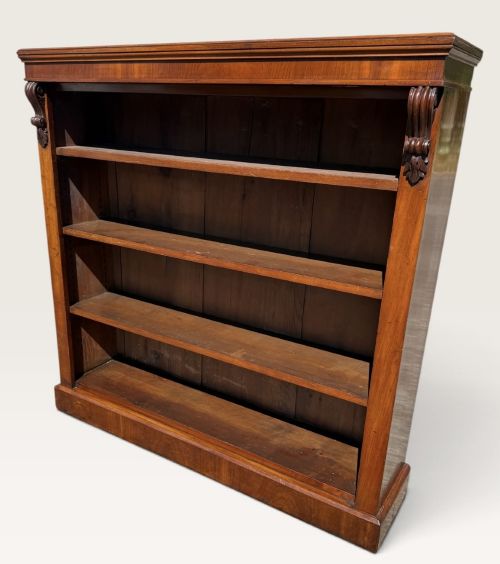
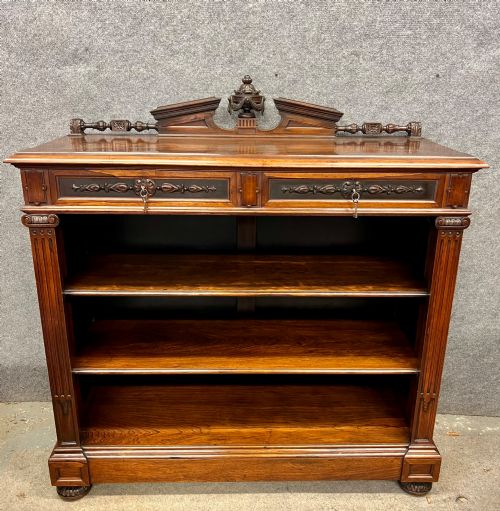
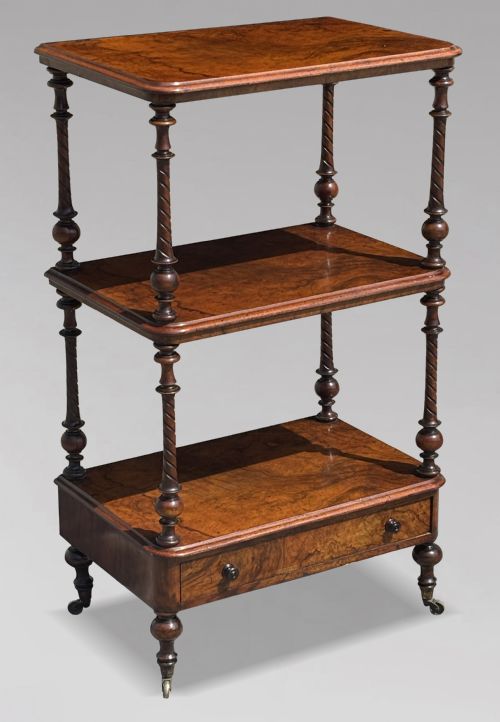
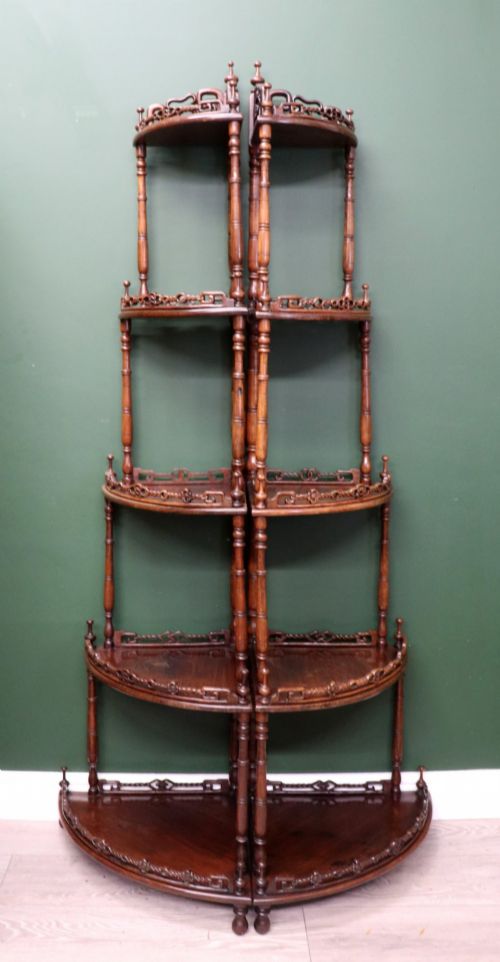
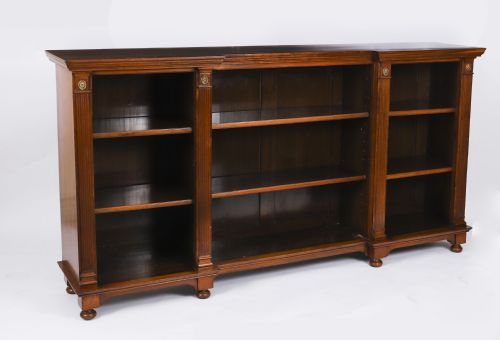
Dark walnut open shelves appear primarily in the form of Victorian bookcases, corner whatnots, and tiered etageres constructed during the nineteenth and early twentieth centuries. These pieces provide accessible display space without solid doors, allowing books and decorative objects to remain visible from multiple angles.
The selection ranges from simple adjustable bookcases to elaborate multi-tiered whatnots featuring turned columns and carved friezes. Most examples date from the Victorian and Edwardian periods, utilising the deep natural grain of walnut to anchor a room's interior scheme.
How they were made
Craftsmen utilised solid walnut and burr walnut veneers over secondary timbers such as pine, selecting timber for its striking grain patterns and rich natural colour. Surfaces were frequently enhanced with hand-carved details, barley twist columns, and occasional mounts in brass, ormolu, and gilt bronze.
Structural joinery relied on traditional techniques to support heavy books and porcelain, incorporating adjustable shelf mechanisms and robust framing. Etageres and whatnots often employed multi-tiered platforms supported by turned uprights, while glass elements and ebony inlay appeared on select refined cabinets.
Certain Victorian ladies davenports appear alongside open shelves, offering miniature built-in writing slopes for discreet correspondence.
What varies in quality
Quality separates standard utilitarian shelving from exhibition pieces through the selection of highly figured burr walnut veneers and the crispness of hand-carved friezes. Superior examples exhibit refined proportions, careful timber matching across visible surfaces, and sophisticated additions such as ormolu mounts.
Construction details dictate longevity and refinement, notably the integration of adjustable shelf mechanisms and substantial timber thickness. Pieces designed by notable makers or created for exhibition demonstrate exceptional execution in turned columns and structural joinery.
Gabriel Viardot·Maurice Adams
The Dark Walnut Open Shelves Glossary
- Whatnot
- A multi-tiered piece of freestanding furniture designed for displaying ornaments, books, or small objects. These open pieces typically feature three or more shelves supported by slender columns.
- Etagere
- A set of open shelves or tiered stands used for display. Originating in France, these pieces function as decorative storage units in parlours and drawing rooms.
- Burr walnut
- Timber taken from the abnormal growth of a walnut tree where the grain grows in a swirl or twist. This highly decorative veneer appears on the most expensive nineteenth-century furniture.
- Ormolu
- Gilded bronze applications used as decorative mounts on furniture. This technique adds metallic contrast and ornate detail to the corners and friezes of cabinets.
- Frieze
- The wide horizontal band of decoration adorning the upper section of a bookcase or cabinet. Carved wooden details often populate this area on Victorian examples.
Dark Walnut Open Shelves: Frequently Asked Questions
How do I date a walnut bookcase?
Dating relies on stylistic clues such as carved friezes, barley twist columns, and overall proportions that align with Victorian or Edwardian design periods. Secondary timbers and construction methods observed inside the frame provide further chronological context.
Makers' marks or stamps occasionally appear on the woodwork, while specific hardware like brass shelf racks helps narrow down the exact decade of manufacture.
What is the difference between a whatnot and an etagere?
A whatnot traditionally refers to multi-tiered English furniture used for displaying ornaments, whereas an etagere is the continental equivalent often incorporating console tables or mirrored elements. Both share open shelving structures designed to exhibit collections rather than store closed items.
English variants from the nineteenth century lean towards robust timber construction, while continental pieces may display lighter proportions and decorative brass or gilt bronze mounts.
Are these shelves suitable for heavy books?
Victorian and Edwardian open bookcases with adjustable wooden shelves easily accommodate standard library collections. The dense nature of walnut provides strong structural support for heavy volumes.
Larger tiered units and whatnots are better suited for lighter decorative objects, ceramics, and smaller collections due to their slender column supports.
How do I care for antique walnut furniture?
Maintaining walnut furniture requires keeping pieces away from direct sunlight and sudden temperature changes to protect the timber and veneer from drying. Regular dusting with a soft, dry cloth preserves the finish without building up unwanted residues.
Applying occasional appropriate wax feeds the wood and enhances the natural grain depth without altering the historic patina.