
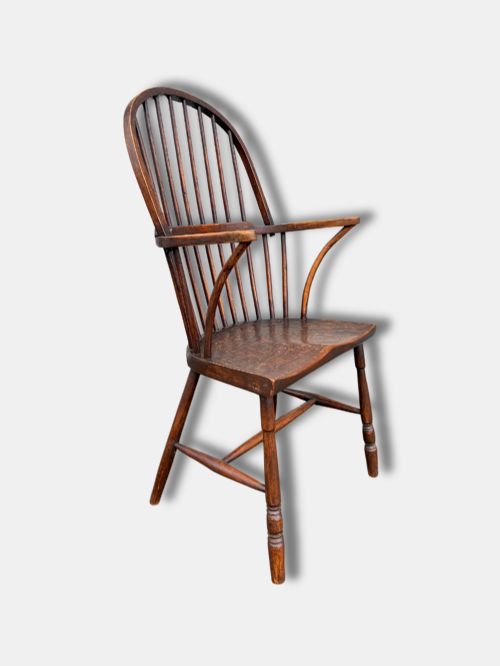
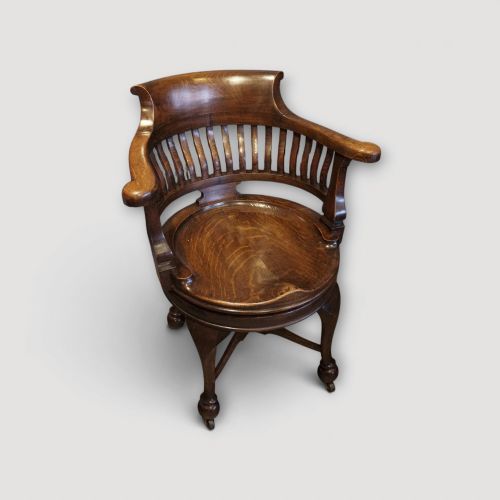
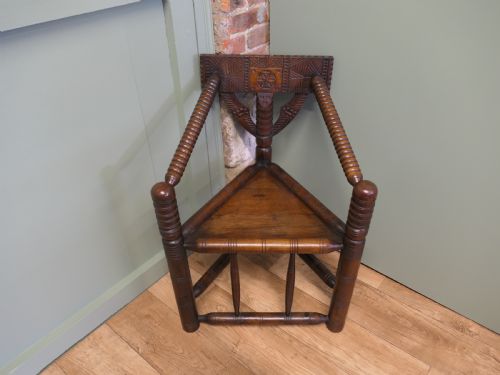
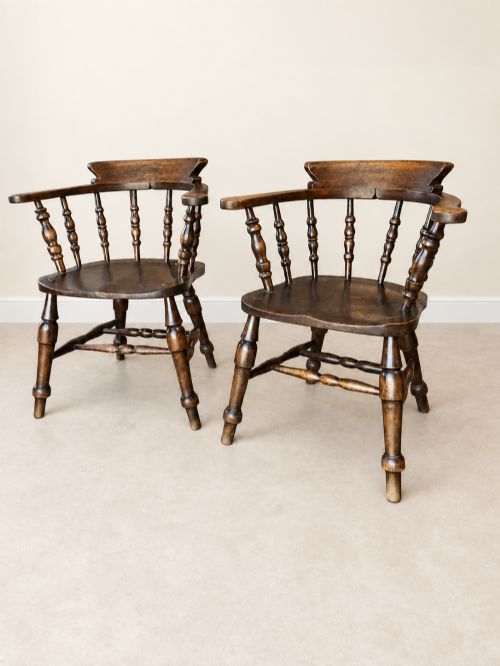


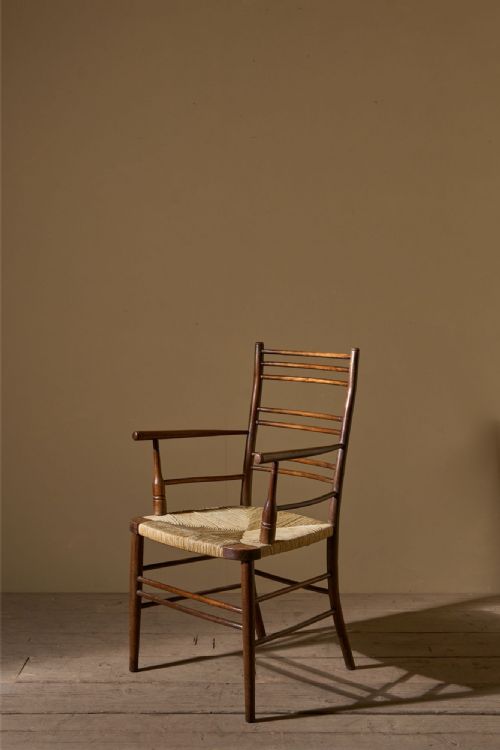
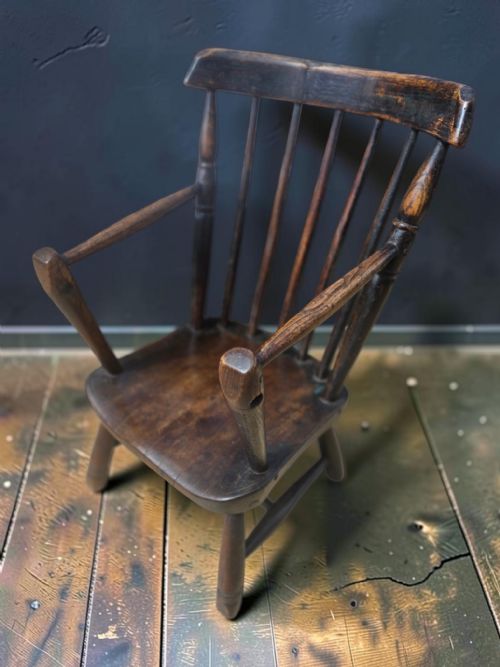
Dark Oak Wooden Armchair
A dark oak wooden armchair brings centuries of solid regional craft and heavy timber grain into a modern room.
Dark Oak Wooden Armchair
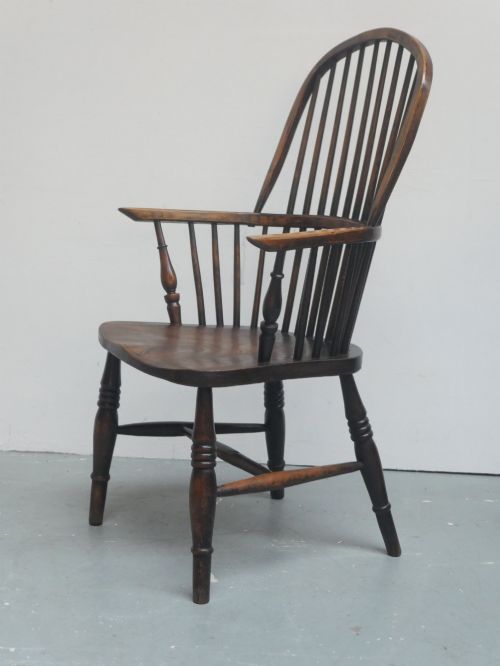
A dark oak wooden armchair is a sturdy seating form found across multiple historical periods, ranging from seventeenth-century wainscot designs to nineteenth-century farmhouse Windsors. Buyers seeking this phrase typically encounter robust country furniture shaped by local vernacular traditions in England, Scotland, and Wales.
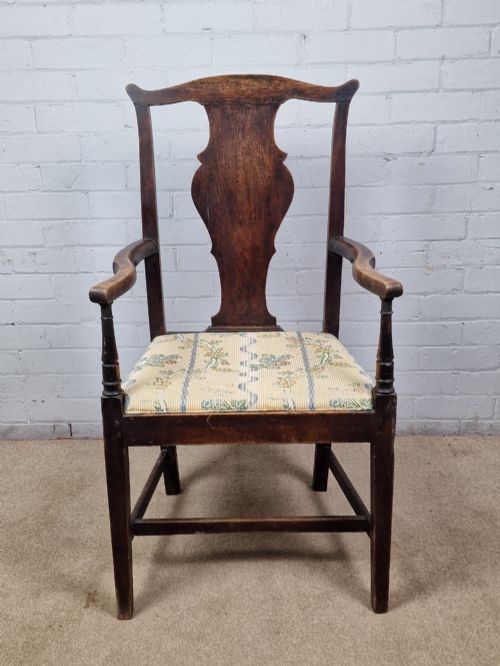
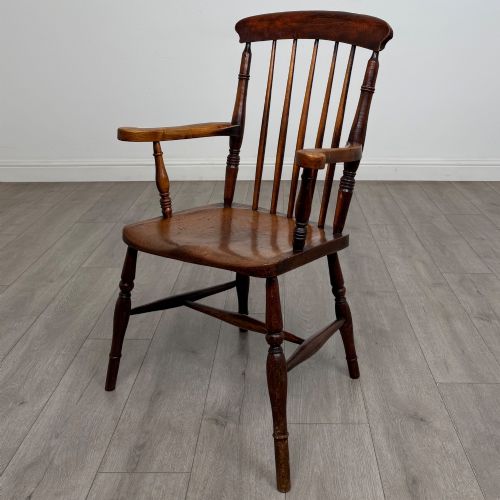
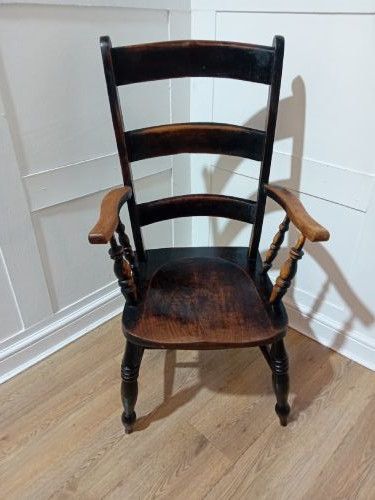
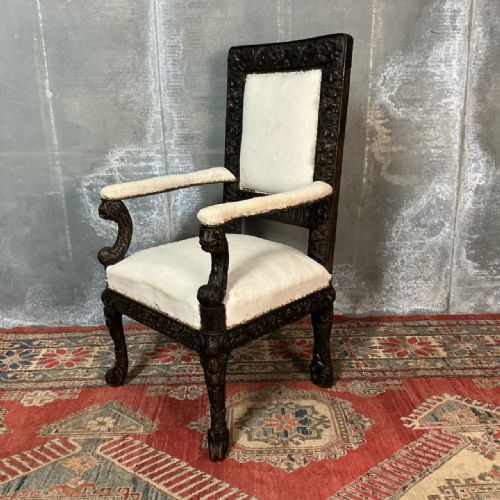
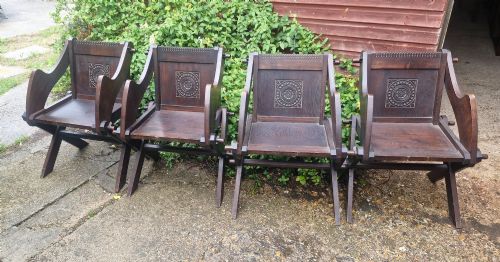
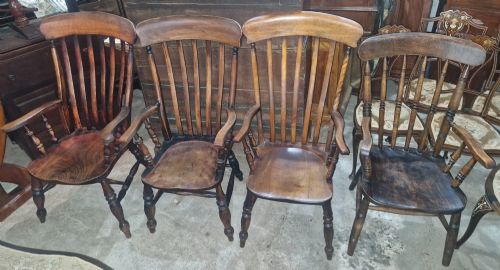
The selection on this page centres heavily on nineteenth-century interpretations alongside earlier seventeenth-century forms and eighteenth-century country iterations. Regional variations appear frequently, from Thames Valley spindle backs to Yorkshire farmhouse rockers and Lancashire panel designs.
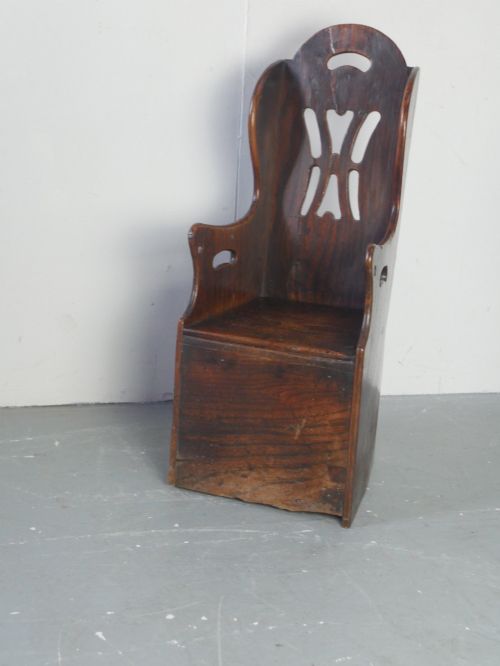
Forms span low child chairs and lambing seats to heavy high-backed wainscot seating and smoker bows. These pieces served domestic and civic life for generations, utilising local timbers to build enduring seating.
Materials and Construction Methods
Makers relied on primary framing of native oak, often combined with secondary woods like elm, ash, beech, and fruitwood for spindles, arms, and seats. Rush seating also appears to provide woven comfort within specific regional frameworks.
Joinery relied on traditional pegged mortise and tenon construction for heavy wainscot frames, whilst Windsor and stick-back variants utilised turned legs and arm supports wedged into solid saddle seats.
Listings span from the sixteenth-century Elizabethan era through the seventeenth, eighteenth, and nineteenth centuries into the Edwardian period.
Qualities of Distinction
Quality rests in the integrity of the timber, the depth of original surface patination, and the retention of early structural components. Chairs that maintain their original finish and uncompromised joinery stand apart from heavily restored or later assembled examples.
The crispness of carved details on panel backs and the harmony of regional proportions dictate the standing of a piece within its type. Regional vernacular furniture gains distinction when local stylistic quirks remain entirely untouched by later hands.
The Dark Oak Wooden Armchair Glossary
- Wainscot chair
- A heavy wooden armchair constructed primarily from oak, featuring a panelled back and solid seat, common in the seventeenth century.
- Windsor chair
- A chair built with a solid wooden seat into which the legs and back stick are independently inserted, frequently found in regional farmhouse styles.
- Lambing chair
- An enclosed wooden armchair designed with high wings to shield the sitter from drafts, sometimes featuring a storage compartment beneath the seat.
- Smoker's bow
- A low-backed Windsor elbow chair with a curved continuous rail forming the arms and upper back, popular in nineteenth-century country settings.
- Rush seat
- A seating surface woven from dried marsh reeds, providing a flexible and traditional texture within regional chair frames.
Dark Oak Wooden Armchair: Frequently Asked Questions
How do I date a dark oak armchair?
Dating relies on observing construction methods, joinery types, and stylistic indicators such as carved strapwork or simpler turned spindles. Earlier pieces from the seventeenth century typically feature pegged mortise and tenon joints and heavy panelled backs.
Later nineteenth-century interpretations often incorporate steam-bent components or Windsor construction techniques. Comparing the timber grain and wear patterns against known regional periods helps clarify the era of manufacture.
What is the difference between a wainscot and a Windsor chair?
A wainscot chair is a formal, heavy armchair built with solid oak panels and frame construction typical of the seventeenth century. These pieces feel architectural and solid.
In contrast, a Windsor chair uses a saddle-shaped wooden seat into which individual legs and back spindles are bored. This creates a lighter, often vernacular seating form suited to farmhouse kitchens.
Are these chairs comfortable for daily use?
Many of these wooden armchairs offer surprisingly supportive seating, particularly vernacular Windsor designs shaped to fit the human form. Their solid wooden seats encourage upright posture.
For extended lounging, adding a simple cushion softens the firm wooden base. Their sturdy construction ensures they easily withstand regular daily sitting.
How should I care for antique oak furniture?
Maintaining antique oak involves keeping the timber away from direct heat sources and sudden humidity changes to prevent wood splitting. Regular dusting with a soft, dry cloth preserves the finish.
Occasional application of traditional beeswax feeds the dry grain without building up heavy chemical layers. This gentle maintenance protects the historic surface patination.