
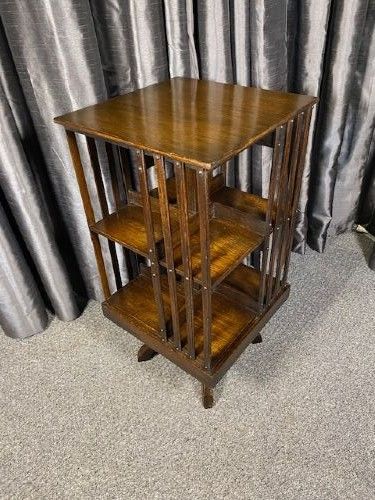
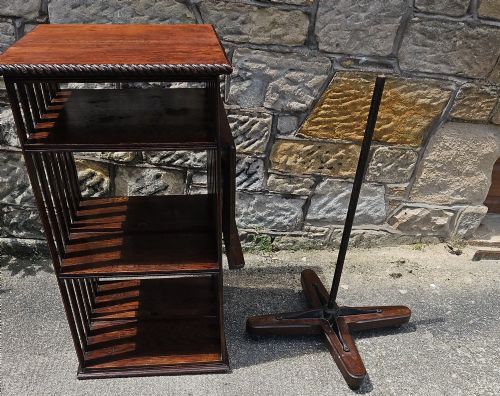
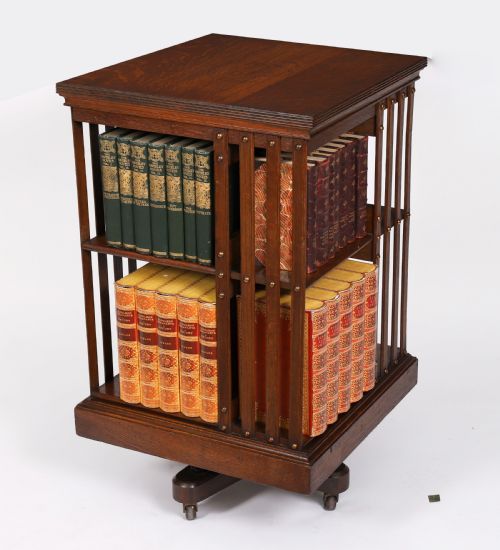


Dark Oak Rotating Stand
A dark oak rotating stand brings tactile warmth and efficient utility to any room, offering instant access to books or dining dishes.
Dark Oak Rotating Stand
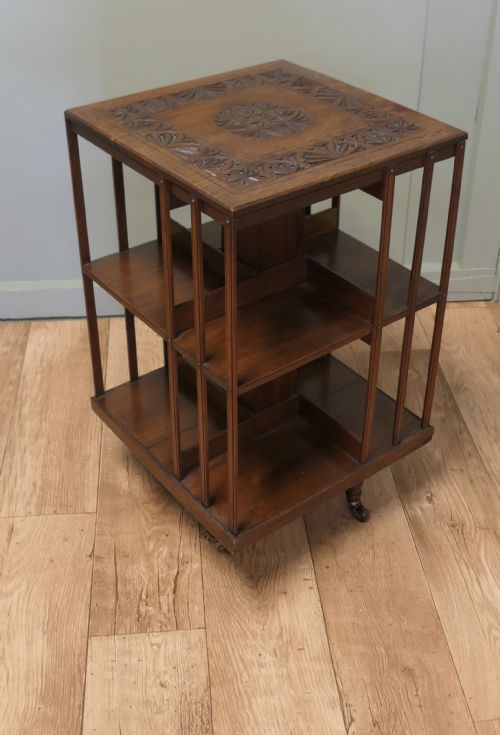
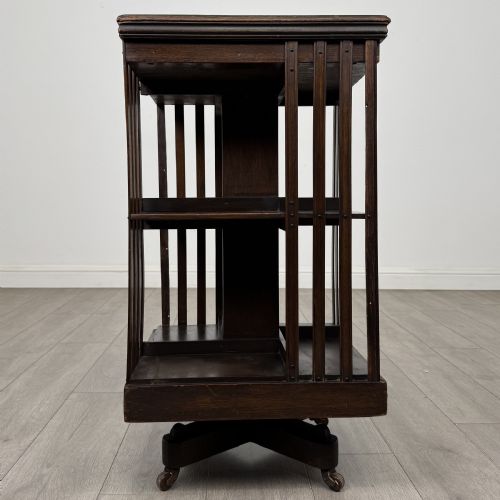
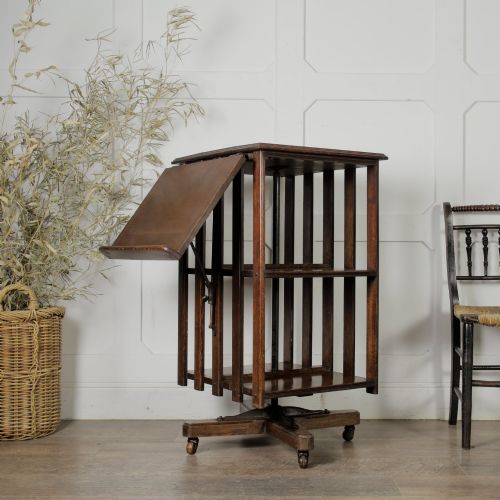
When you search for a dark oak rotating stand, you encounter pieces designed to turn smoothly on a concealed mechanism while holding books or serving dishes. The selection on this page consists primarily of revolving bookcases and lazy susans, spanning the nineteenth and early twentieth centuries.
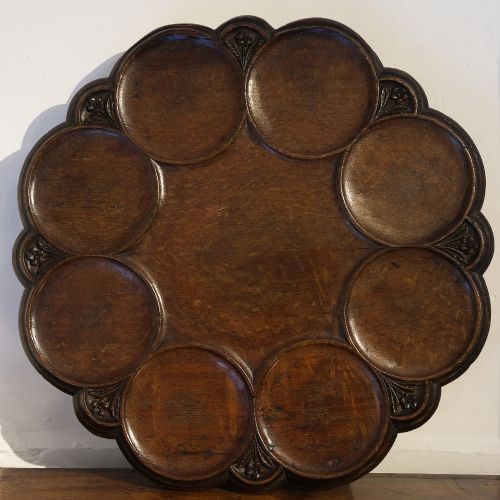
The most common forms you meet here are Edwardian and Victorian revolving bookcases alongside occasional dining room serveware like lazy susans and tazzas. These items range from compact table top versions to large floor-standing units built from dense, figured timber.
Originating largely from English workshops, these items reflect the practical domestic needs of past households. They combine sturdy joinery with the convenience of 360-degree rotation, making them as useful in a modern study or dining room as they were a century ago.
How they were made
Makers built these pieces primarily using solid oak, chosen for its durability and prominent grain pattern. Joinery relied on traditional framing methods to ensure the rotating superstructure remained stable under weight.
Internal mechanisms frequently incorporated cast iron and brass components to facilitate smooth rotation without binding. These metals provided the necessary strength for the central pivot and bearing assemblies hidden beneath the timber.
The listings span from the Victorian and Edwardian eras into the Art Deco period, uniting oak with brass and cast iron.
What varies in quality
The distinction between ordinary and superior examples lies in the selection of the timber and the refinement of the turning mechanism. Finer pieces display carefully matched grain across the revolving tiers and operate with an effortless, silent spin.
Proportion and detail separate basic utilitarian furniture from more considered Arts & Crafts or Victorian designs. Subtle moulding profiles and well-cast metal components indicate a higher standard of manufacture from the outset.
The Dark Oak Rotating Stand Glossary
- Revolving bookcase
- A freestanding or table top case designed to turn on a central axis for easy access to volumes from any angle. These units usually feature slatted or panelled sides.
- Lazy Susan
- A rotating tray placed on a table or tazza to assist with serving food. Early versions utilise robust timber construction and central pivots.
- Edwardian
- A stylistic period spanning from the death of Queen Victoria in 1901 until the First World War in 1914. Furniture from this era often lighter in proportion than Victorian equivalents.
- Tazza
- A small pedestal plate or shallow bowl used for serving food. In oak, this form provides a raised rotating platform for the dining table.
- Arts & Crafts
- A design movement valuing honest construction and plain materials over excessive machine-made ornamentation. Pieces from this style emphasise the natural qualities of the oak.
Dark Oak Rotating Stand: Frequently Asked Questions
What is a dark oak rotating stand used for?
These pieces serve primarily as functional furniture for organising books or facilitating the sharing of food at the dining table. Their rotating design allows users to access items stored on all sides without moving the entire unit.
Floor-standing versions typically hold reference volumes in studies or living rooms, while smaller table top models and lazy susans are placed on dining surfaces to pass dishes easily between guests.
How do I date an antique rotating stand?
Dating relies on observing the stylistic cues, construction methods, and materials present in the piece. Victorian examples often show heavier mouldings and darker finishes, whereas Edwardian pieces can be lighter in scale.
Looking beneath the revolving mechanism can also reveal the age of the iron or brass hardware used in the pivot. Comparing these details against known period styles helps narrow down the decade of manufacture.
How do I care for antique oak furniture?
Maintaining these pieces requires keeping them away from direct heat sources and excessive moisture to prevent the oak from warping or splitting. Regular dusting with a soft, dry cloth preserves the finish.
Applying a traditional beeswax polish occasionally helps nourish the timber and maintain its natural lustre. Avoid using modern silicone sprays, which can build up and damage the antique surface over time.
Are these stands suitable for modern homes?
Their compact footprints and dual function make them practical additions to contemporary living spaces. A revolving bookcase fits neatly beside a sofa or desk to hold current reading material.
Similarly, a timber lazy susan brings both historical character and everyday convenience to modern dining tables. They blend easily into various interior styles, from traditional country to eclectic modern.