
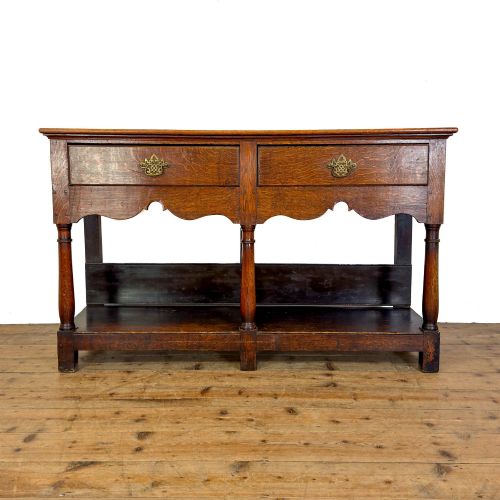
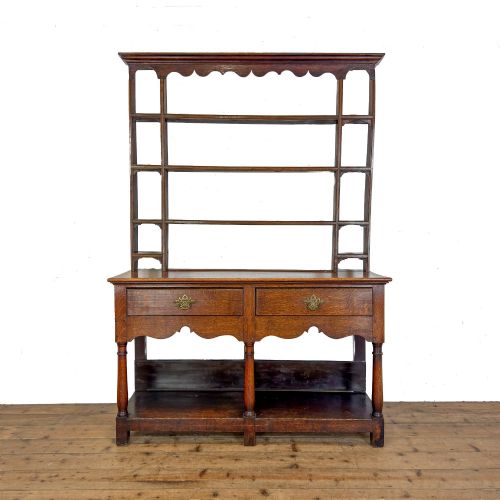

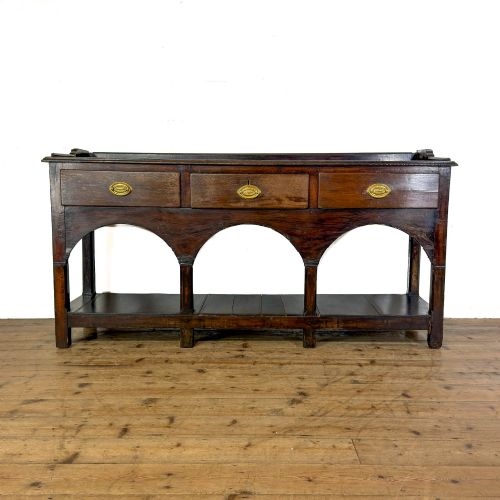
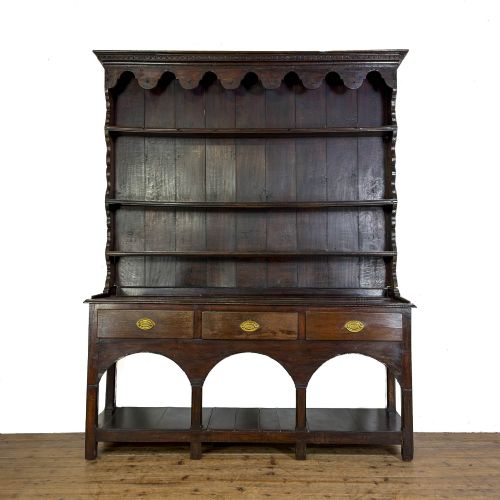
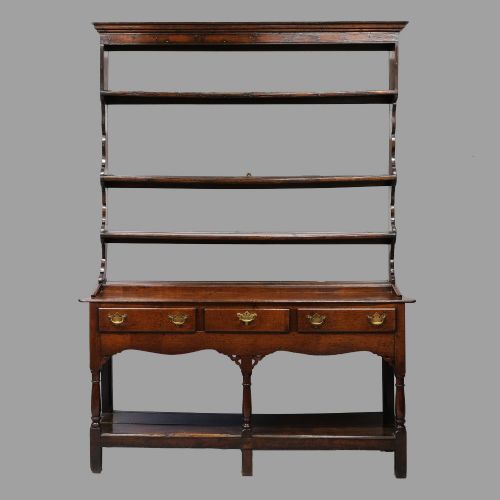
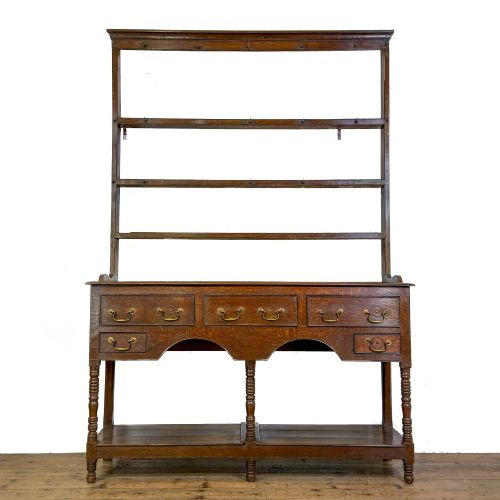


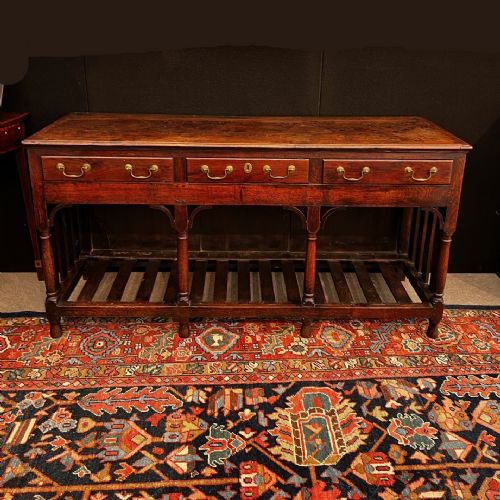
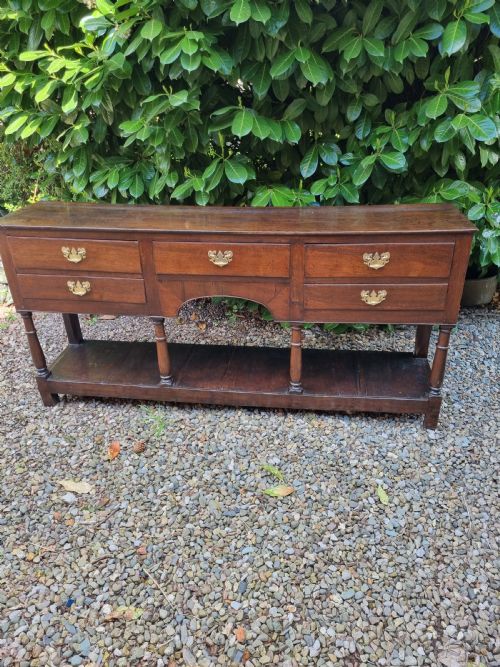

Dark Oak Potboard Dresser
A dark oak potboard dresser brings sturdy regional character and open lower shelving to a dining room or kitchen.
Dark Oak Potboard Dresser
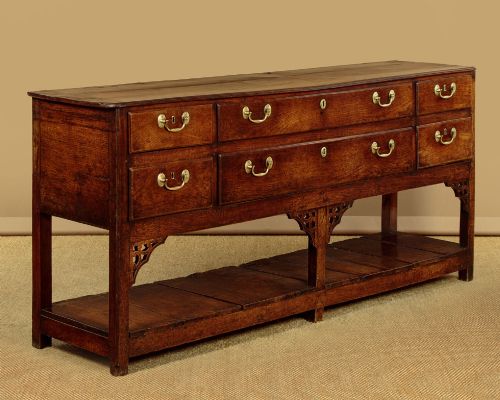
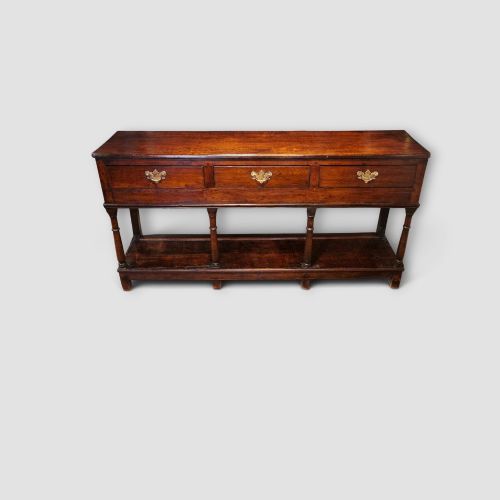
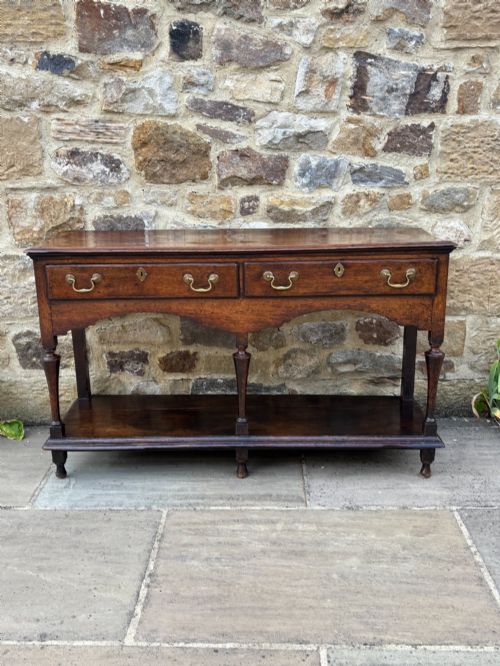
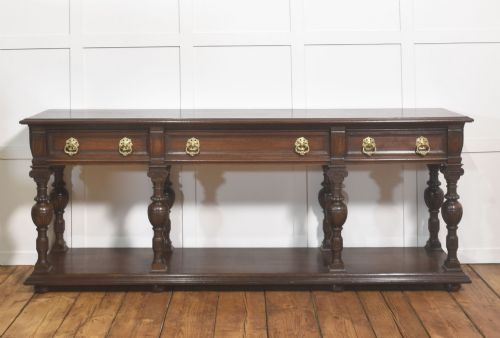
A dark oak potboard dresser combines a timber base with drawers and an open lower board shelf, originating primarily from English and Welsh rural workshops. These pieces range from compact cottage proportions to wider regional formats, occasionally retaining an upper plate rack.
The materials span native timbers, with oak forming the main structure alongside secondary woods like elm and pine in drawer linings and backs. Surviving examples date from the eighteenth and nineteenth centuries, with later revival interpretations appearing from the early twentieth century.
Regional variations include Welsh country forms and English provincial styles, showing distinct drawer configurations and geometric carvings. Buyers encounter both complete dresser and rack combinations and standalone bases functioning as sideboards.
How they were made
Joiners built these pieces using solid oak planks for the top boards, drawer fronts, and structural framing, often supported by elm or pine for internal elements. Timber was hand-planed and joined with traditional pegged mortise and tenon construction.
Hardware consists of brass handles and iron hinges or drawer pulls, reflecting the utilitarian needs of domestic storage. Surfaces frequently received a polished wax finish or retained older painted surfaces on select examples.
Potboards were originally swept clean for cooling heavy clay cooking pots before iron ranges moved kitchens.
What varies in quality
Proportion and scale dictate the visual balance of the piece, with smaller proportions commanding particular attention from collectors. The crispness of hand-carved geometric details and the integrity of the potboard staging separate regional vernacular items from standard production.
Surface patination, depth of colour, and the retention of original timber boards without extensive modern replacements define the primary tier of craftsmanship. Pieces retaining their original upper plate racks also represent a more complete survival of form.
The Dark Oak Potboard Dresser Glossary
- Potboard
- The open lower shelf fitted beneath a dresser base, originally designed for storing heavy pots and pans. This lower tier defines the primary architectural feature of the furniture type.
- Dresser base
- The lower cabinet portion of a dresser, featuring drawers and cupboards without the upper plate rack. Many survive independently as sideboard storage.
- Vernacular furniture
- Domestic items made by local country joiners using regional traditions rather than metropolitan pattern books. These pieces emphasise utilitarian function and local timber supplies.
- Cottage proportions
- Smaller dimensions suited to modest domestic rooms rather than grand country houses. These compact formats remain sought after for modern interiors.
Dark Oak Potboard Dresser: Frequently Asked Questions
What is a potboard dresser?
A potboard dresser is a traditional storage unit featuring drawers above an open lower platform shelf.
This open board distinguishes it from closed cupboards, providing space for displaying large kitchen items.
How do I style a dresser base?
A dresser base functions well as a sideboard in dining rooms or as a preparation surface in kitchens.
The surface accommodates lamps and serving dishes while the lower potboard holds baskets or heavy ceramics.
Are these dressers English or Welsh?
Makers produced these pieces across both English and Welsh rural workshops during the eighteenth and nineteenth centuries.
Welsh examples often display specific regional drawer arrangements and proportions.
How do I date an oak dresser?
Dating relies on construction methods, timber grain, and hardware style rather than strict year markers.
Hand-planed boards, pegged joints, and drawer construction help indicate eighteenth or nineteenth century origins.
Did these dressers always have racks?
Many dresser bases were made without upper racks, while others lost their plate racks over centuries of use.
Surviving examples that retain their original racks remain less common.