

Dark Mahogany Book Cabinet
A dark mahogany book cabinet brings heavy timber and organised shelves to a room, holding centuries of collected volumes behind glass or open fronts.
Dark Mahogany Book Cabinet
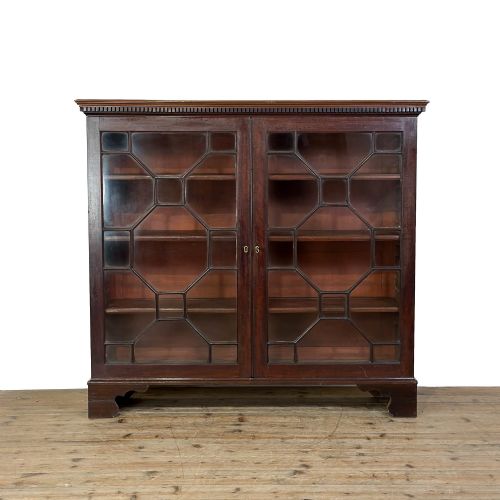
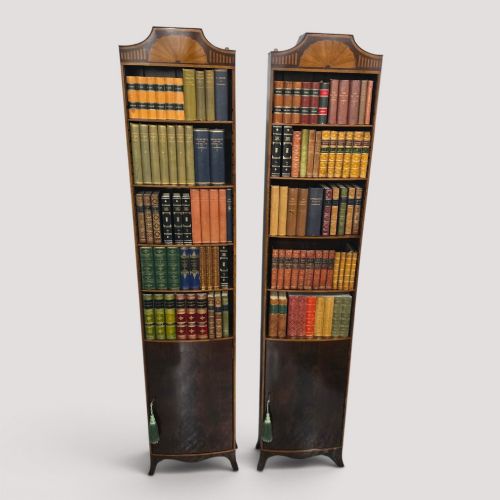
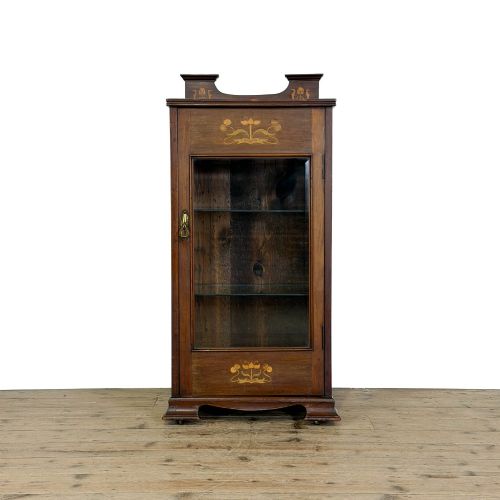
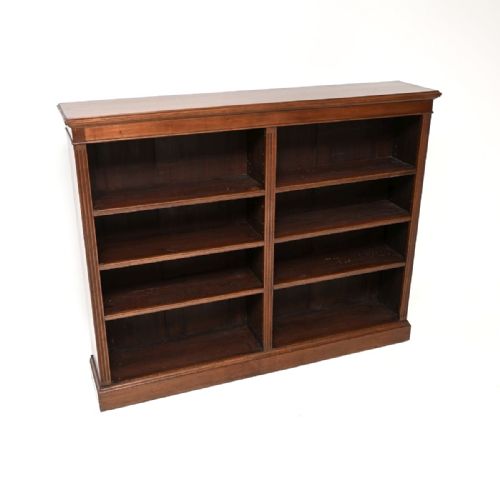
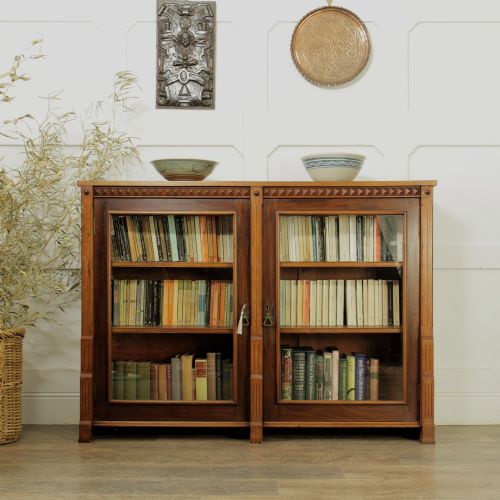
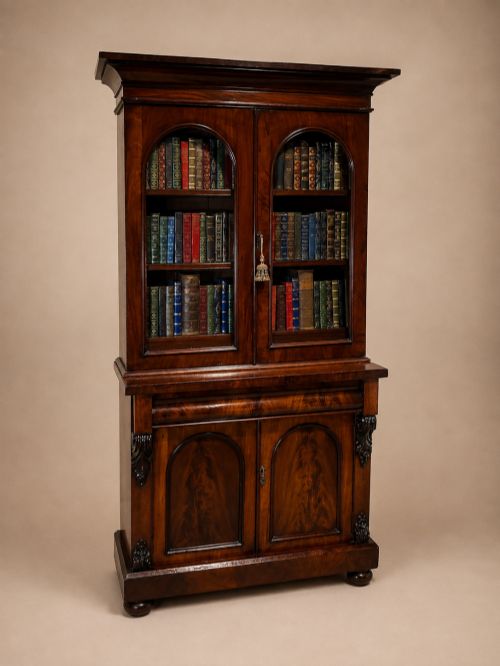
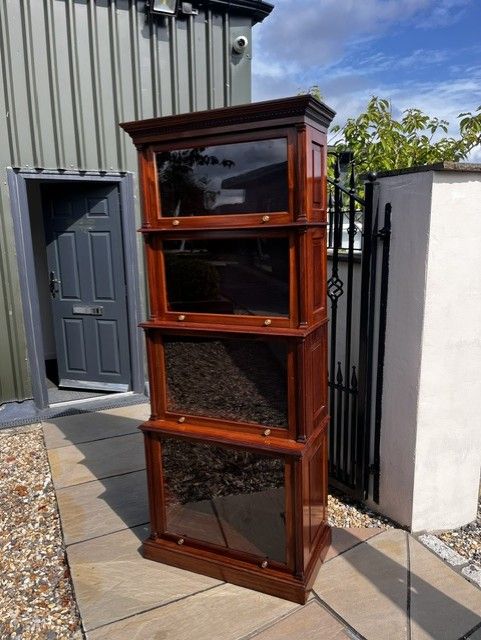
When searching for a dark mahogany book cabinet, buyers encounter substantial pieces designed to store and display libraries in domestic and professional settings. These items appear primarily across Victorian, Georgian, and Regency periods, utilising dense tropical timber to create both open shelving and glazed storage.
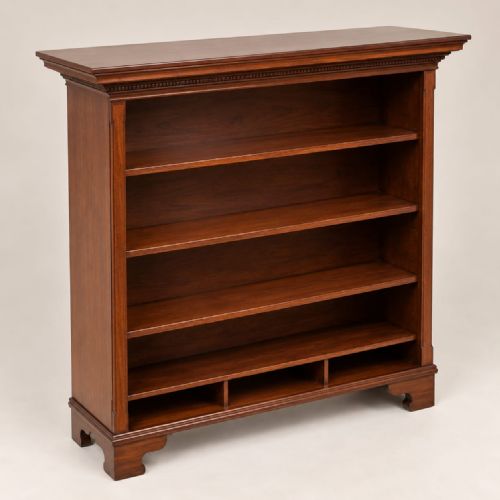
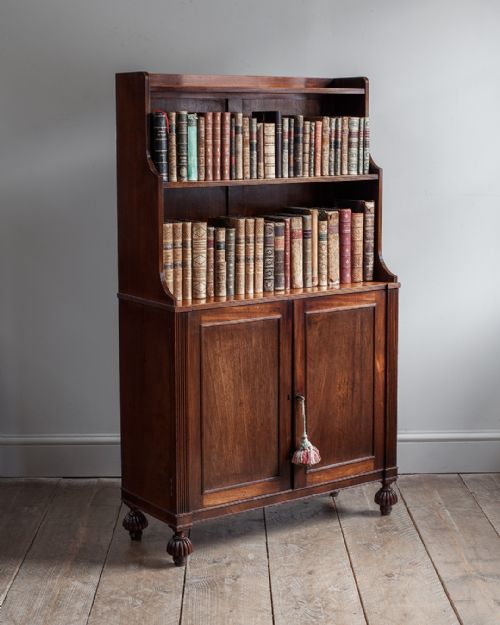
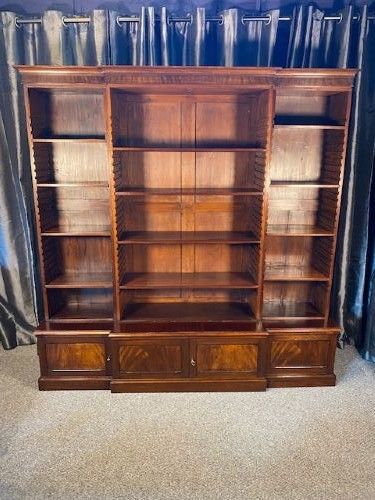
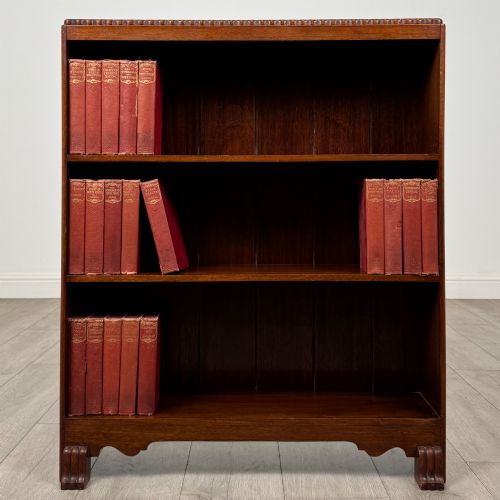
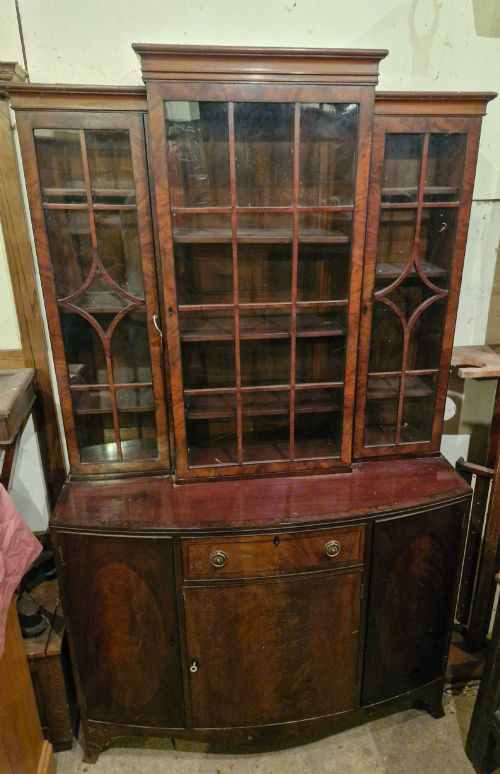
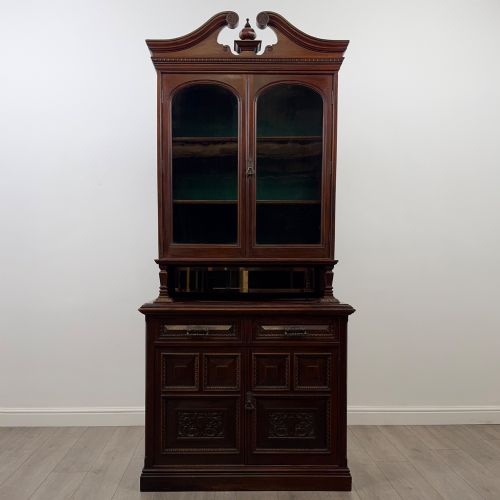
The forms range from tall breakfront library bookcases to compact waterfall designs and stacking sectional units. Many examples combine upper glazed doors with lower wooden cupboards, while others provide simple open tiers or revolving formats for daily use.
Makers and workshops of the nineteenth and early twentieth centuries produced these cabinets with varying capacities, from narrow single units to large library installations. The darker tones of the wood emerge either through natural ageing of the timber or through traditional polishing techniques applied by period cabinet makers.
Materials and construction methods
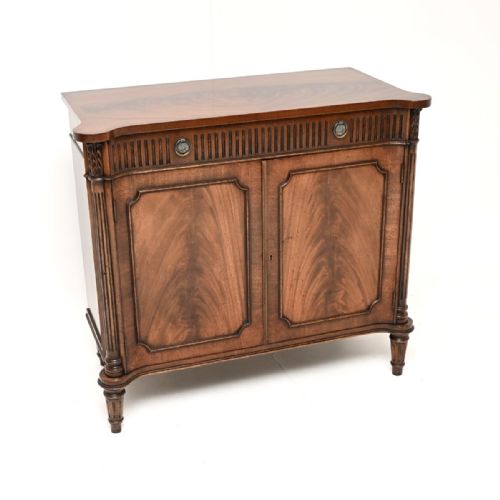
Makers constructed these cabinets using solid mahogany and flame mahogany veneers applied to secondary structural timbers. The grain patterns on door panels and drawer fronts often display symmetrical figuring selected by skilled artisans.
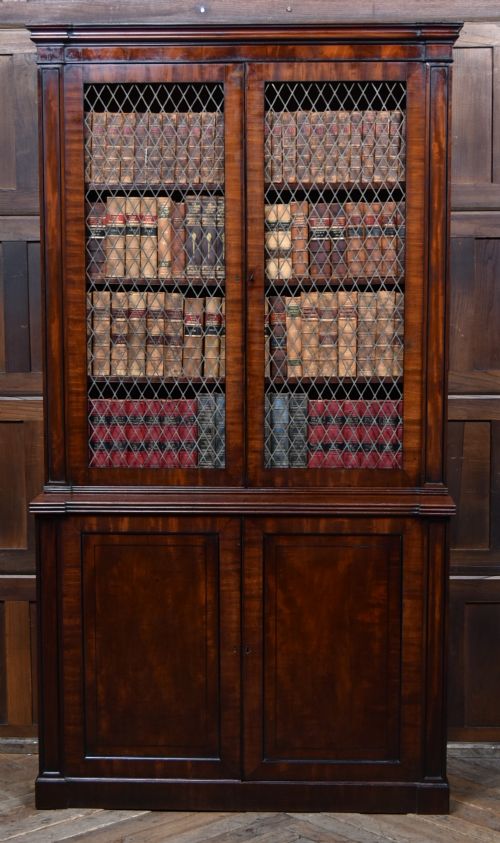
Glazing takes the form of individual glass panes held within wooden bars or wire mesh inserts fitted to door frames. Brass hinges, handles, and locks secure the doors, while occasional satinwood or general wood inlay adds decorative contrast to the darker corpus.
Some nineteenth-century revolving bookcases let readers consult an entire multi-volume encyclopaedia without moving an inch from their armchairs.
Distinctions in construction and design
Quality rests in the selection of timber and the precision of the joinery rather than the sheer scale of the piece. Cabinets featuring figured flame mahogany veneers and well-proportioned breakfront cornices represent superior workshop output compared to simpler utility items.
The integration of original brass hardware, clean glass panes, and smooth-operating stacking mechanisms or drawer runners separates standard commercial production from the work of prominent makers like Gillows or Globe Wernicke.
Gillows·Globe Wernicke
The Dark Mahogany Book Cabinet Glossary
- Breakfront
- A cabinet design where the central section projects forward from the flanking wings. This architectural arrangement creates depth and visual interest on large library pieces.
- Waterfall bookcase
- A shelving unit with receding tiers stepped back progressively from bottom to top. These pieces offer a lighter silhouette suitable for smaller collections.
- Flame mahogany veneer
- A thin slice of wood cut from the fork of a mahogany tree to produce a flickering, flame-like grain pattern. Cabinet makers applied these veneers to prominent exterior surfaces.
- Wire mesh
- Metal screening fitted into cabinet doors in place of glass to allow ventilation for stored books. This material appears frequently on nineteenth-century library furniture.
- Sectional bookcase
- A modular storage unit comprising multiple stackable tiers with glass up-and-over doors. These items allow owners to expand their shelving vertically as collections grow.
Dark Mahogany Book Cabinet: Frequently Asked Questions
How do I distinguish a Regency piece?
Regency dark mahogany book cabinets date from the early nineteenth century and typically display clean classical lines, restrained brass mounts, and often waterfall or waterfall-adjacent stepped shelving.
Makers of this era focused on architectural balance and the natural grain of the timber rather than heavy carved ornamentation.
Are stacking bookcases period items?
Stacking bookcases, often associated with makers like Globe Wernicke, emerged in the late nineteenth and early twentieth centuries.
These modular units allowed owners to add individual glazed tiers as their book collections expanded over time.
Why use wire mesh instead of glass?
Wire mesh doors were utilised on nineteenth-century library cabinets to provide air circulation for valuable volumes.
This technique kept closed compartments ventilated while keeping dust and handling away from the books.