





Dark Horse Painting
A dark horse painting captures the character and power of equine subjects through historical oil, watercolour, and mixed media works.
Dark Horse Painting
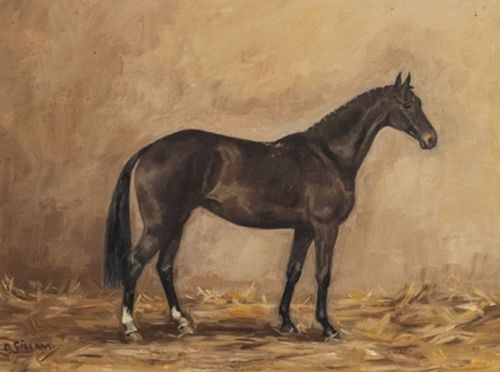
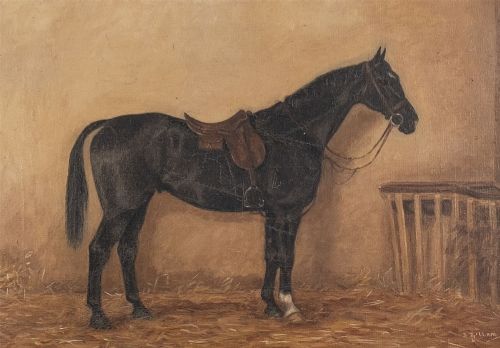
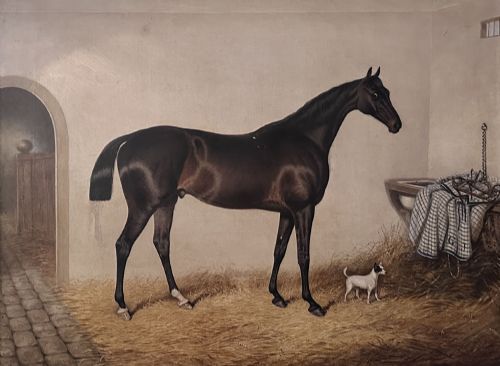
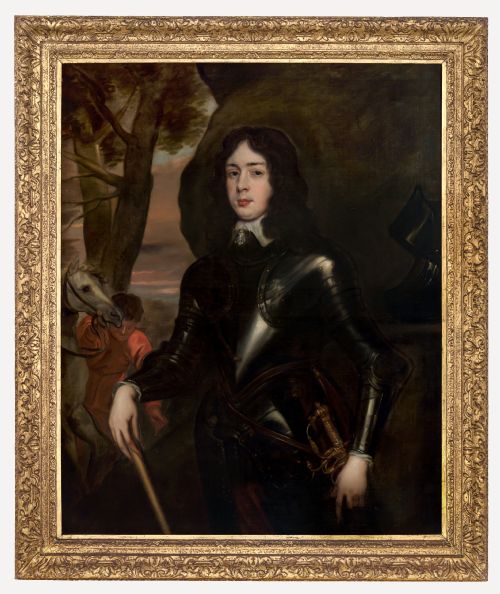
A dark horse painting focuses on equine subjects, ranging from solitary portraits of bay hunters and black horses to complex sporting scenes and military compositions. Collectors searching for a dark horse painting encounter works spanning multiple centuries, from seventeenth-century baroque canvases to twentieth-century depictions.
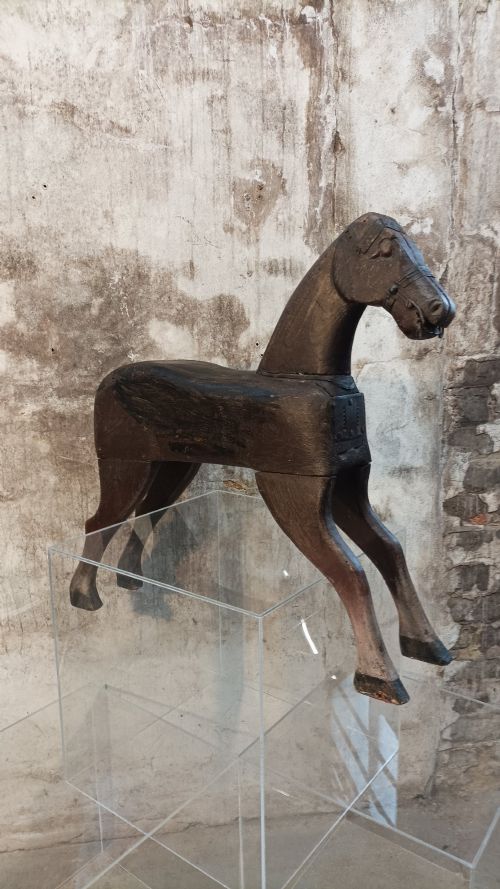
The selection includes oils on canvas, watercolours on paper, and works executed on wood panels. These pieces reflect diverse stylistic traditions including British Sporting Art, Victorian Realism, and folk art interpretations.
Subjects vary from individual champion stallions and working animals to military mounts and narrative hunting sequences. Each piece records historical attitudes towards horses and the craft of animalier portraiture.
Materials and methods
Artists employed oil paint on stretched canvas, wooden panels, and paper, building depth through layered pigment and glazes. Watercolours and gouache also appear, utilising paper supports to capture lighter, more immediate atmospheric effects.
Support materials range from traditional heavy linen canvas and pine panels to fine art paper. Each medium dictates the texture and preservation state of the surviving work.
Dark Horse Painting Retail Price Guide 2026
Typical asking prices for dark horse painting among the pieces listed under this phrase on Sellingantiques today, from the lower quarter to the upper quarter. They describe what is for sale here now, not the wider market.
Some horses stare back with more personality than the humans painted beside them.
Distinguishing finer works
Quality rests in the anatomical accuracy of the subject and the deft handling of light across muscle and coat. Superior execution displays careful observation of movement and proportion rather than generic form.
The integrity of the original surface, minimal restoration, and strong provenance separate exceptional historical examples from standard decorative output.
Franz Bergman·William Manners·W Williams·Charles Johnson Payne Snaffles·W.A. Clark·Walter Herbert Wheeler·Donald Wood·Abraham Cooper
The Dark Horse Painting Glossary
- Oil on canvas
- Pigment suspended in drying oil applied to a woven fabric support. This traditional medium allows for rich blending and deep tonal graduation.
- Watercolour
- Paint consisting of water-soluble pigments applied to paper. It provides transparent washes and luminous highlights.
- Panel painting
- Art executed on a rigid wooden base such as oak or pine. This surface offers a stable ground favoured by earlier painters.
- British Sporting Art
- A genre depicting equestrian subjects, hunting, and racing. These works record the history of rural sports and prized animals.
Dark Horse Painting: Frequently Asked Questions
What periods do these paintings cover?
The available works span several centuries, with examples originating from the seventeenth century through to the early twentieth century.
This broad chronological range encompasses Georgian, Victorian, and Edwardian aesthetic movements.
How should I hang an oil painting?
Display canvases away from direct sunlight and dramatic fluctuations in temperature or humidity.
Ensure proper wall fixings support the weight of the framed artwork safely.
Are watercolours framed differently than oils?
Watercolours require glass protection and acid-free mounts to shield the paper and delicate pigments from atmospheric damage.
Oil paintings on canvas generally remain unglazed to let the textured surface breathe.
What subjects accompany the horses?
Equine portraits frequently include stable hands, military officers, canine companions, and pastoral or architectural backgrounds.
These contextual elements help establish the narrative and historical setting of the artwork.