






Dark Green Pedestal
These dark green pedestal examples bring striking presence to a room, offering elevated display surfaces rooted in nineteenth-century design.
Dark Green Pedestal
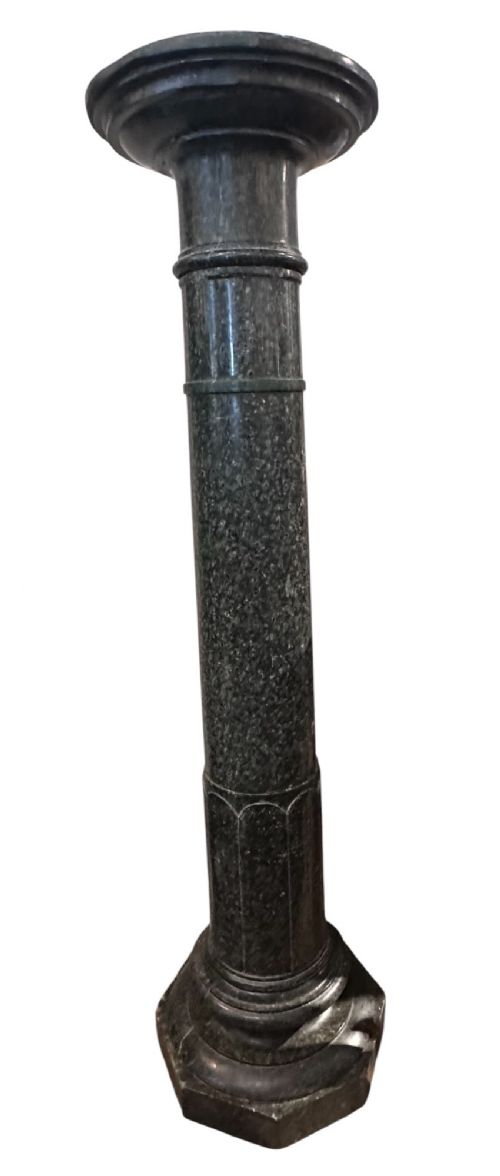
A dark green pedestal functions primarily to elevate busts, urns or decorative objects, utilising substantial stone columns that command attention within a room. Buyers searching for a dark green pedestal typically encounter substantial French and Italian marble works dating from the nineteenth century.
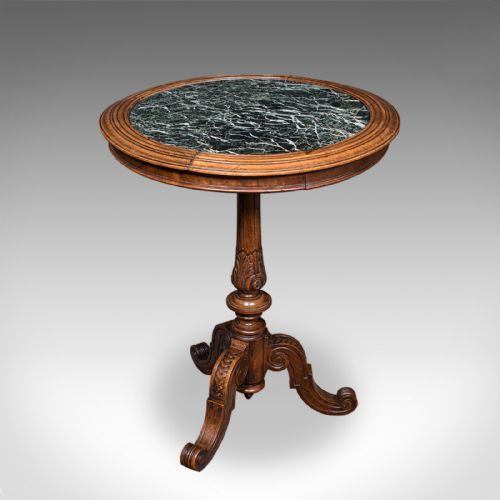
The materials span deep serpentine and Verde Antico marbles, often paired with matching capitals and bases to create an imposing architectural silhouette. These pieces reflect nineteenth-century classical revivals, where domestic interiors frequently incorporated monumental stone sculpture supports.
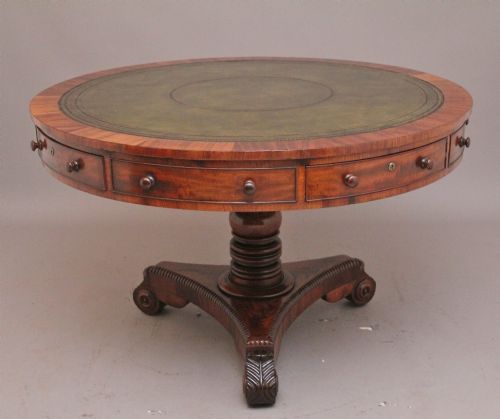
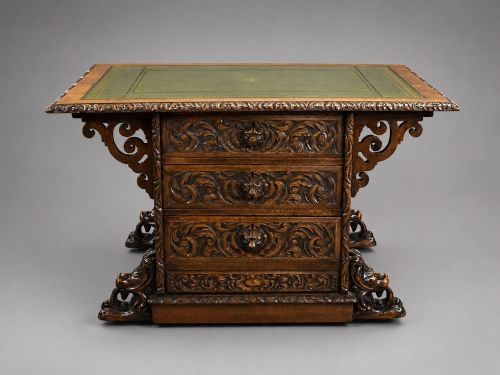
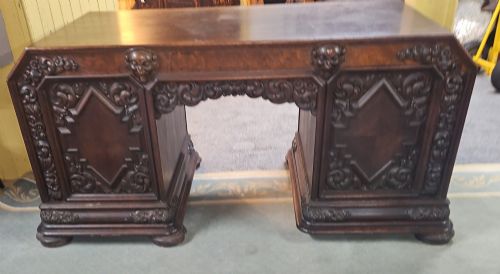
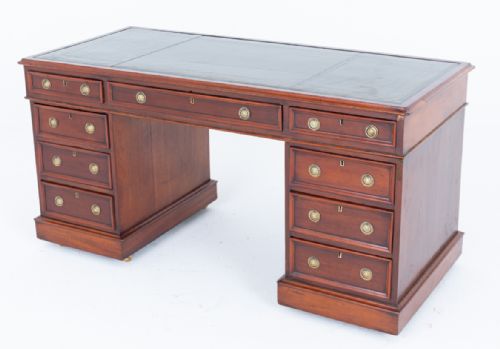
While some listings focus on timber pedestal desks featuring leather writing surfaces, the specific dark green pedestal manifests most purely in carved stone columns. They stand as self-contained sculptural items rather than utilitarian furniture, demanding dedicated floor space to display their variegated mineral surfaces.
Materials and construction
Masons shaped these columns from dense natural stones, turning blocks of Verde Antico or serpentine marble on heavy lathes before finishing the surfaces by hand. The resulting cylindrical or fluted shafts display deep botanical greens mottled with pale veins and calcite inclusions.
Many examples incorporate cast bronze or brass mounts, securing the stone capitals and bases with threaded iron rods running through the core of the column. This internal bracing provided the structural integrity required to support heavy bronze busts or marble urns without shifting.
Markers of quality
Quality rests primarily in the geological richness of the stone and the crispness of any classical turning or hand-carved detailing. Superior pieces display deep, uniform colouration with lively mineral patterning across the entire shaft rather than dull, muddy patches.
The precision of the joints between the stone drum sections and the metal or marble collars separates standard production from exceptional studio work. A well-executed column maintains strict vertical alignment without visible gaps or mismatched veining at the seams.
The Dark Green Pedestal Glossary
- Serpentine
- A group of green silicate minerals that polish to a rich, dark finish resembling snakeskin. This dense stone forms the primary material for many nineteenth-century architectural columns and display plinths.
- Capital
- The uppermost member of a column, designed to distribute weight from the load above down to the shaft. On these pieces, they often take simple Doric or Corinthian profiles carved directly from the marble.
- Plinth
- The heavy square base supporting the column shaft, providing stability on uneven nineteenth-century flooring. It anchors the vertical composition and prevents the tall stone structure from tipping.
Dark Green Pedestal: Frequently Asked Questions
Where should I place a heavy marble column?
Position these heavy stone pieces against a stable wall or in a corner where accidental knocks are minimised. Their considerable weight requires solid flooring to prevent sagging.
Keep them away from high-traffic pathways to protect both the protruding corners of the marble base and any objects displayed on top.
How do I clean a serpentine marble pedestal?
Dust the stone regularly with a soft, dry cloth to prevent grit from scratching the polished surface. Avoid acidic household cleaners, which etch marble instantly.
Use only plain warm water on a damp cloth for stubborn marks, drying the stone immediately with a lint-free towel.
Can these columns support heavy bronze sculptures?
Nineteenth-century stone columns were specifically engineered to bear the weight of heavy bronze busts, marble urns and large decorative vases. Their internal iron rods provide substantial load-bearing strength.
Ensure the object rests evenly across the centre of the top capital to distribute the weight symmetrically down the shaft.
How can I tell nineteenth century marble from later copies?
Examine the tooling marks inside the core and around the base, where hand-finishing leaves subtle irregularities absent in modern machine-cut stone. Nineteenth-century examples often use specific regional Italian or French quarries whose mineral signatures match period records.
Inspect the patina on any associated bronze mounts for natural oxidation and wear consistent with age.