

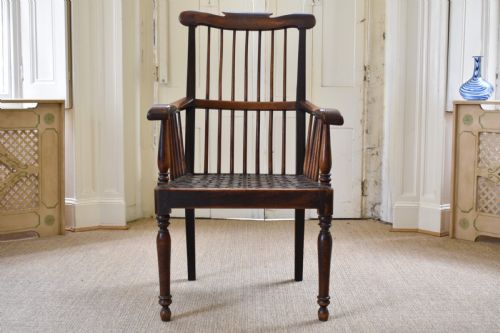


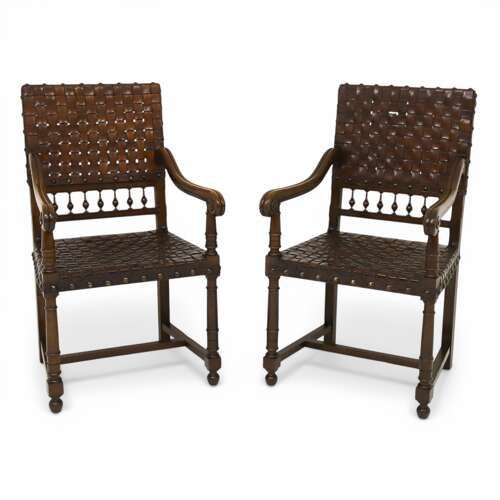


Dark Brown Woven Armchair
A dark brown woven armchair brings tactile texture and rich historic character to a room, drawing on traditional seating forms crafted from sturdy woods and natural plant fibres.
Dark Brown Woven Armchair
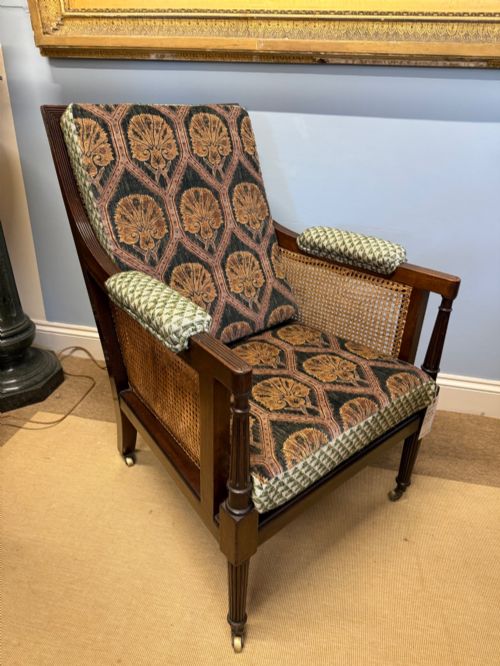
A dark brown woven armchair encompasses various seating forms designed for comfort, spanning periods from the Regency era through the nineteenth century and into the early twentieth century. These chairs frequently combine robust wooden frames with organic seat elements such as rush, cane, and woven leather.
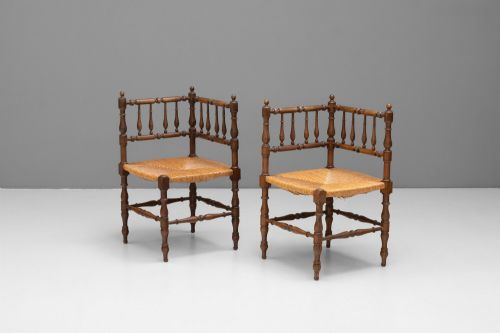
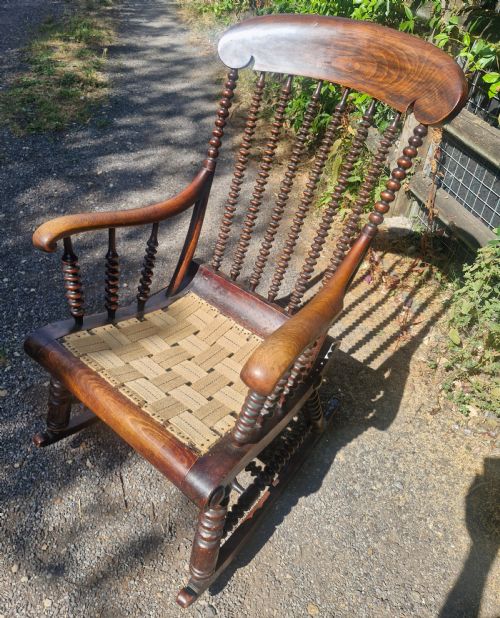
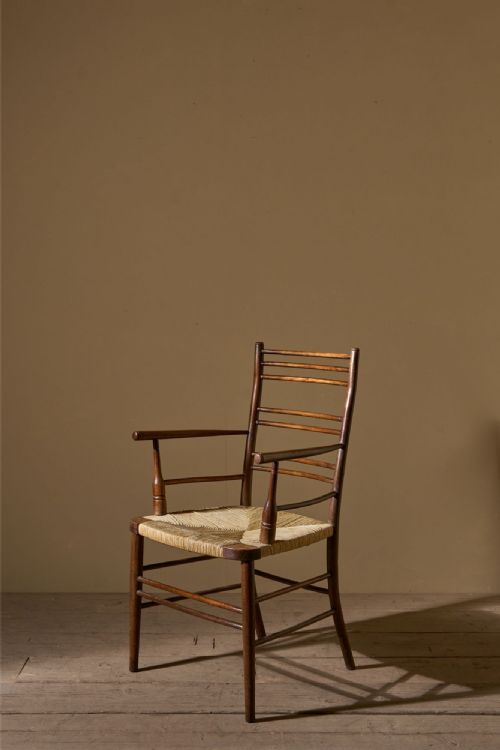
The versions most commonly met on this page include nineteenth century country armchairs, Arts and Crafts designs, and rustic rocking chairs constructed from oak, elm, laburnum, and mahogany. These pieces range from simple kitchen armchairs to decorative pairs and corner chairs.
Makers and designers of the period utilised traditional regional techniques, producing spindlebacks, bobbin frames, and reclining mechanisms. Buyers encounter these chairs in diverse regional English country styles alongside Victorian country interpretations.
Materials and construction methods
Makers constructed these frames predominantly from native hardwoods like oak, elm, and mahogany, often pairing them with bentwood or turned components. These woods provide the structural strength necessary for daily seating and rocking movements.
Seats and panels feature natural woven materials including rush, cane, and woven leather, bound tightly to the wooden frames. Brass accents and painted finishes appear on select decorative pieces from the Regency period.
Dark Brown Woven Armchair Retail Price Guide 2026
Typical asking prices for dark brown woven armchair among the pieces listed under this phrase on Sellingantiques today, from the lower quarter to the upper quarter. They describe what is for sale here now, not the wider market.
Several rocking chairs hide industrious bobbin frames, proving that nineteenth century sitters took their relaxation with a very specific, decorative bounce.
Distinguishing quality and craftsmanship
The distinction between standard utility seating and finer examples lies in the integrity of the timber framing and the tightness of the woven seat. Master craftsmen ensured precise joinery in the spindlebacks and bobbin frames, which maintains stability over generations.
Original painted surfaces, untouched patination on the dark brown woods, and the survival of early woven leather or rush elevate a piece. The presence of documented workshop types or distinct regional styling further differentiates standard examples from exceptional ones.
E W Godwin·Heals of London
The Dark Brown Woven Armchair Glossary
- Rush
- A marsh plant traditionally used for bottoming chair seats by twisting the dried stems into a strong cord. It creates a durable, textured surface.
- Cane
- Strips of peeled rattan woven into patterned mesh panels, often used for seats and backs in lighter chair designs. It offers flexibility and airflow.
- Bobbin frame
- A wooden structure turned on a lathe to resemble a series of rounded wooden beads or spools threaded together. This decorative technique appears on nineteenth century frames.
- Spindleback
- A chair back featuring a series of thin, turned wooden rods set between the top rail and the seat. This construction provides lightweight support.
- Regency
- An English design period spanning the early nineteenth century, characterised by classical revival motifs and refined painted decoration.
Dark Brown Woven Armchair: Frequently Asked Questions
How do I clean a rush seat?
Gently brush away dust using a soft bristle attachment on a vacuum cleaner. Avoid applying excessive water, as moisture causes natural rush to weaken over time.
For stubborn marks, wipe lightly with a slightly damp cloth and allow the fibres to dry completely in a well-ventilated space.
Are these chairs suitable for daily use?
Many of these wooden armchairs remain structurally robust for everyday seating. Checking the stability of the joints ensures safe use in modern living spaces.
Chairs with delicate woven leather or aged cane panels may require a more gentle approach to preserve their historic materials.
How do I identify a nineteenth century piece?
Look for construction indicators such as hand-turned wooden components, traditional joinery methods, and the natural patination on oak and elm surfaces.
Design styles like Arts and Crafts or Victorian country vernacular provide strong clues regarding the era of manufacture.
What is Lloyd Loom furniture?
Lloyd Loom is a material made from twisted kraft paper spun around a wire core, then woven into sheets for furniture production. Invented in the early twentieth century, it offered a durable alternative to traditional wicker.
Pieces utilising this technique appear in garden rooms and interior spaces from the 1930s onward.