

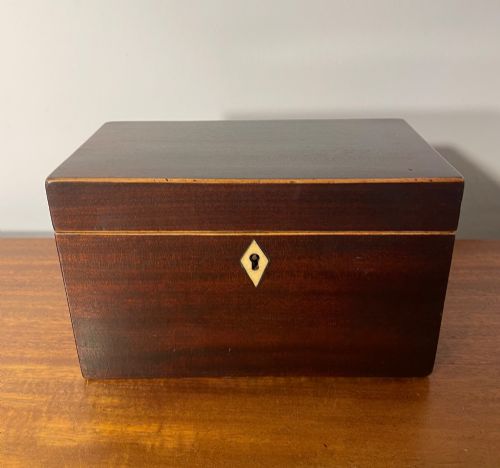
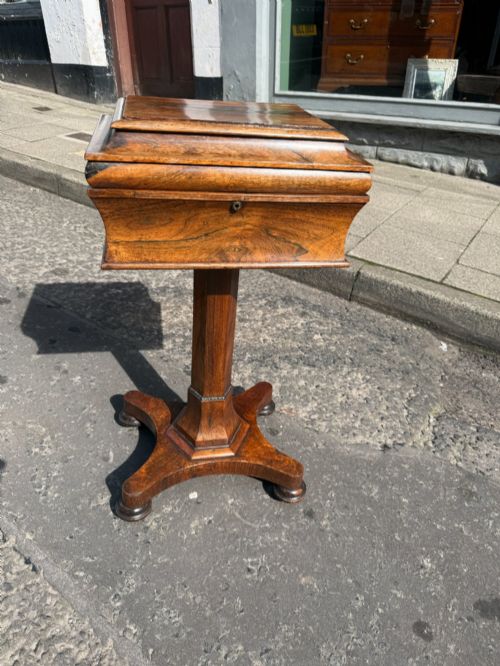


Dark Brown Tea Chest
A dark brown tea chest organises loose leaf tea gracefully in the traditional home, prized for rich timber tones and compact form.
Dark Brown Tea Chest
When buyers search for a dark brown tea chest, they encounter compact timber containers designed to store precious tea leaves securely under lock and key. These pieces span several distinct eras, encompassing Georgian, Regency, William IV, and Victorian periods.
Makers fashioned these chests in mahogany and rosewood, often enriching the dark surfaces with contrasting bone or wood inlay. Interior compartments usually feature mixing bowls and lidded canisters for black and green teas.
How they were made
Cabinet makers built these chests using dense hardwoods such as mahogany and rosewood, which naturally display deep brown colourations. Panels were joined with precision to withstand the movement of timber over time.
Craftsmen applied decorative techniques including delicate wood inlay and bone stringing to accentuate the dark grain. Interior components often incorporated glass mixing bowls and metal hardware such as brass escutcheons and handles.
Dark Brown Tea Chest Retail Price Guide 2026
Typical asking prices for dark brown tea chest among the pieces listed under this phrase on Sellingantiques today, from the lower quarter to the upper quarter. They describe what is for sale here now, not the wider market.
What varies in quality
The distinction between standard examples and superior pieces rests on the choice of timber and the refinement of the joinery. Figured rosewood and richly grained mahogany indicate a higher grade of manufacture from the outset.
Attention to detail in the interior compartments and the execution of delicate inlay work separate ordinary boxes from exceptional specimens. Complete internal fittings, such as original glass bowls and matching lidded canisters, elevate a piece considerably.
The Dark Brown Tea Chest Glossary
- Tea Caddy
- A box or chest designed for the storage of loose tea leaves. These containers typically featured internal divisions and a lock to protect expensive leaves.
- Teapoy
- A freestanding piece of furniture on a pillar or legs, serving as a tea chest. They often stood beside a chair during the tea service.
- Sarcophagus Form
- A style of box featuring a flared, pedestal-mounted body reminiscent of a classical stone coffin. This architectural shape became particularly fashionable during the Regency period.
- Wood Inlay
- The technique of inserting contrasting strips or pieces of wood into a recessed surface to create decorative patterns. Craftsmen utilised light woods and bone against dark rosewood and mahogany backgrounds.
Dark Brown Tea Chest: Frequently Asked Questions
What is a dark brown tea chest?
A dark brown tea chest is a historic wooden container used for storing loose tea leaves when tea was an expensive commodity.
These pieces typically feature hinged lids, internal lidded compartments, and small locks to secure the contents.
How were tea chests used?
Households kept precious tea leaves locked inside these chests to control consumption and prevent servants from taking them.
The mistress of the house usually held the key, mixing black and green teas with sugar inside an internal glass bowl.
How do I date a tea chest?
Dating relies on observing the timber species, architectural style, and internal construction methods.
Georgian and Regency examples often display distinct sarcophagus shapes, rosewood veneers, and brass ring handles characteristic of the early nineteenth century.
Where should I place a tea chest?
These chests suit display on sideboards, console tables, or desks where their polished wood surfaces remain visible.
Keep them away from direct sunlight and strong heat sources to protect the antique rosewood or mahogany finishes.