
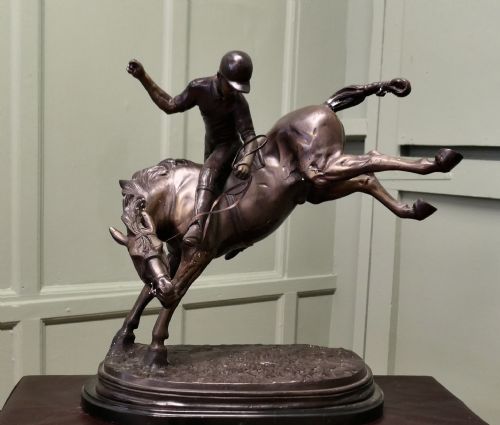
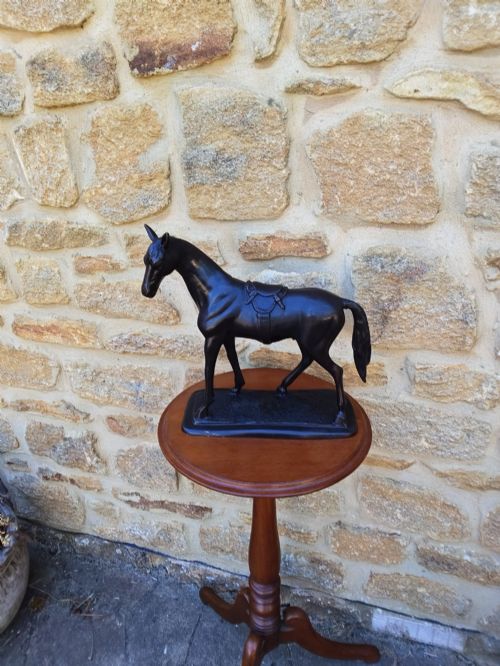
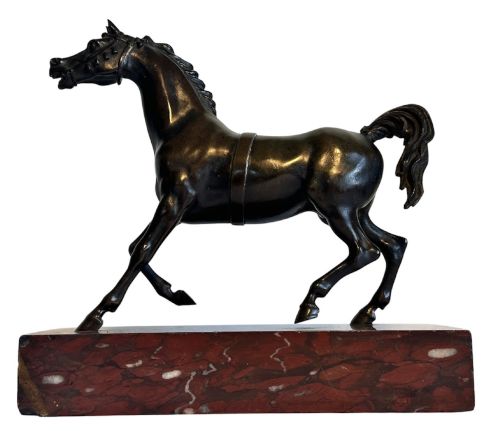
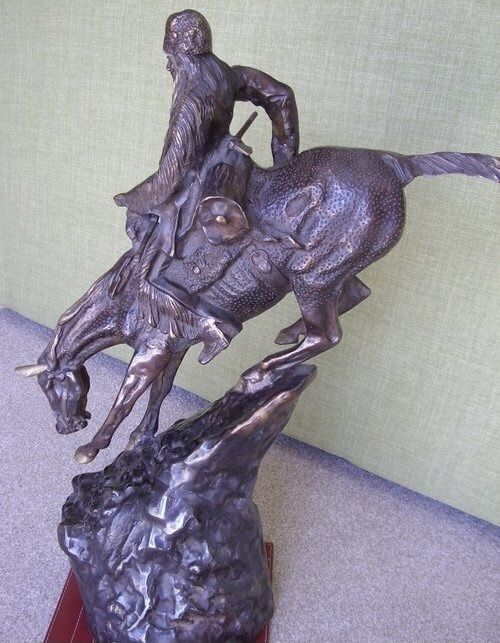


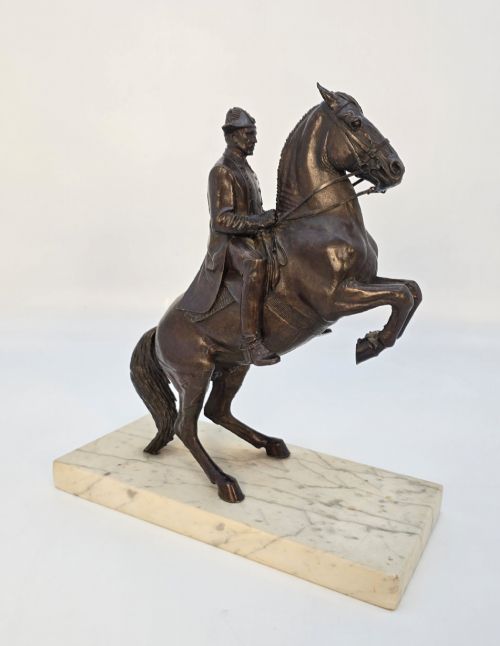
Dark Bronze Equestrian Figurine
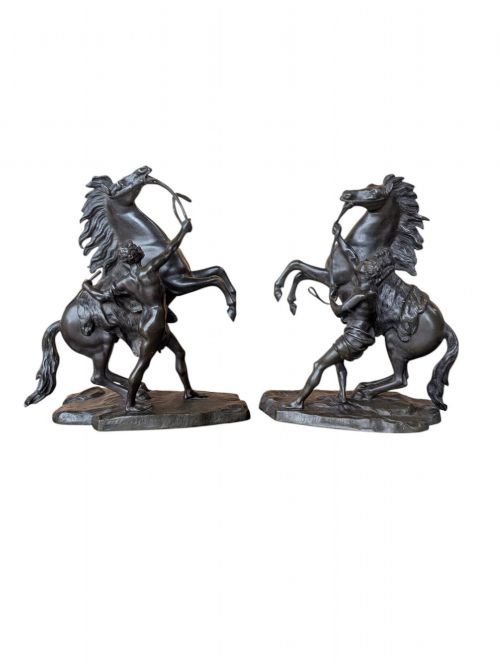
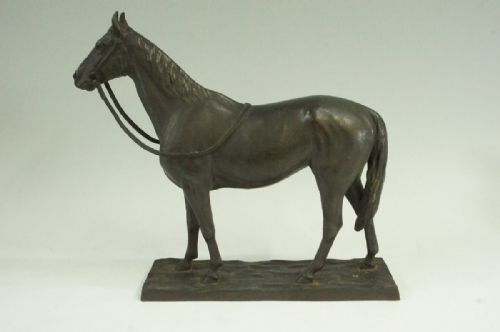
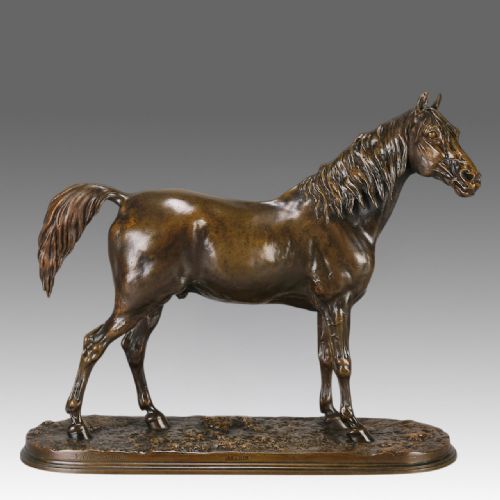
A dark bronze equestrian figurine captures horses and riders in metal, offering both movement and weight to a room.
Dark Bronze Equestrian Figurine
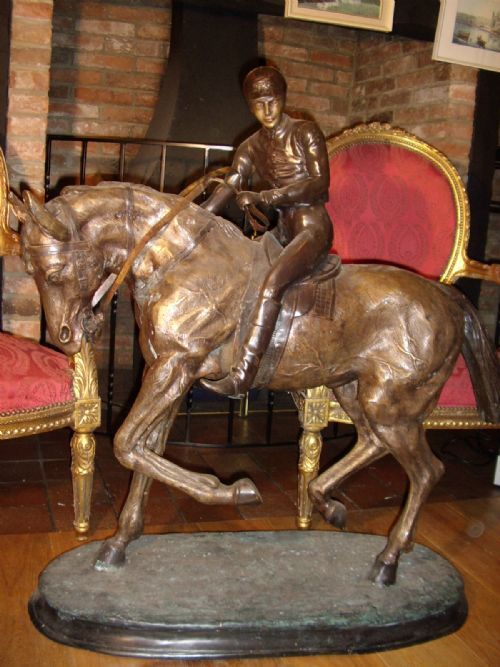
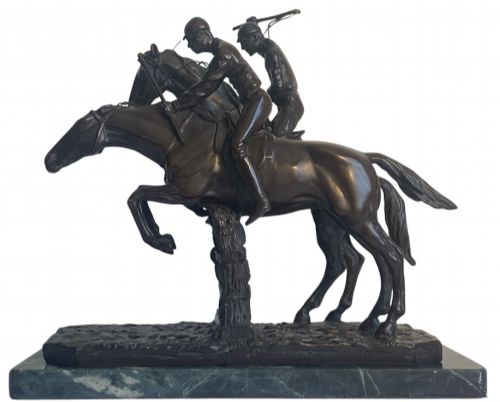
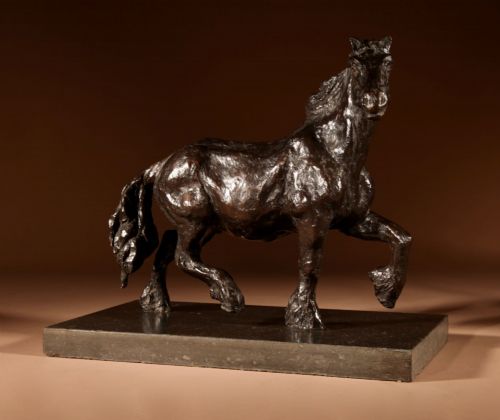
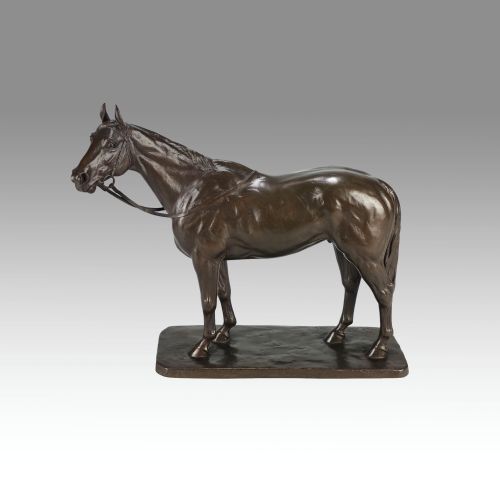
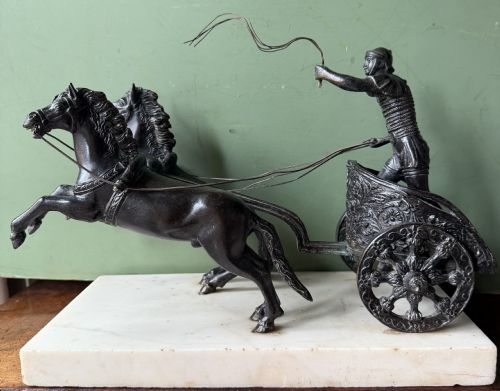
A dark bronze equestrian figurine portrays horses, riders, and drivers in cast metal, often mounted on a stone or marble base. These works range from French Animalier studies of racehorses and draft animals to Western Americana depictions of cowboys and polo players.
Buyers seeking this phrase encounter pieces spanning the nineteenth century through the mid twentieth century. Subjects include jockeys, historical figures on horseback, and charioteers produced by European and Japanese workshops.
How they were made
Craftsmen cast these figures using bronze, sometimes applying a dark patina or cold-paint finish to the surface of the metal. Many examples incorporate bases made from marble, green marble, or other stone.
Sculptors executed detailed models of horses and riders before casting, occasionally combining the bronze with elements of paint, wood, or gilding.
Listings feature works from the seventeenth century through the mid twentieth century, utilising bronze, marble, and patinated surfaces.
What varies in quality
Quality depends upon the sharpness of the casting and the fidelity of the musculature and harness details. Master modellers achieved realistic tension in the limbs of a rearing horse or a trotting cob.
The integration of the metal figure with its marble or stone plinth influences the overall balance and finish of the object.
Pierre Jules Mene·Kunio Ito·John Willis Good·Franz Bergman·Bruno Zach
The Dark Bronze Equestrian Figurine Glossary
- Animalier
- A nineteenth-century artistic movement focusing on the realistic portrayal of animals, particularly horses and dogs. Practitioners produced many dynamic equestrian groups.
- Patinated bronze
- Bronze treated with chemical solutions to produce a darkened or coloured surface finish. This technique enhances the depth and shadow of the cast sculpture.
- Cold-painted bronze
- Metal figures painted with oil or enamel colours without subsequent firing. This method was popular in Vienna workshops for small decorative sculptures.
- Grand Tour
- Souvenir bronzes purchased by travellers in Italy during the eighteenth and nineteenth centuries. These studies often replicated classical or historical subjects.
Dark Bronze Equestrian Figurine: Frequently Asked Questions
How do I identify an animalier bronze?
Animalier bronzes focus closely on the anatomy and movement of animals, particularly horses. Look for realistic muscle structures and energetic postures.
Many of these pieces date from the nineteenth century and bear the signature of a known sculptor on the base.
Are marble bases original to the bronzes?
Many nineteenth and early twentieth century sculptures were cast to fit a specific stone or marble plinth. These bases provide stability to heavy metal figures.
Inspect the fit between the bronze hooves and the marble surface to understand how the piece is mounted.
What is cold-painted bronze?
Cold-painting involves applying paint directly to the metal surface without high-temperature firing. This technique creates detailed colour on saddles, clothing, and harnesses.
Care is required when cleaning cold-painted surfaces to preserve the original pigment.
How do I care for a bronze sculpture?
Bronze requires minimal maintenance beyond gentle dusting with a soft, dry cloth. Avoid using harsh chemical polishes that can strip the patination.
Keep the figurine away from direct heat sources and high humidity to protect both the metal and any stone base.