


Cut Lead Crystal Goblet
A cut lead crystal goblet brings weight and brilliance to the table, offering a tactile connection to centuries of glassmaking skill.
Cut Lead Crystal Goblet
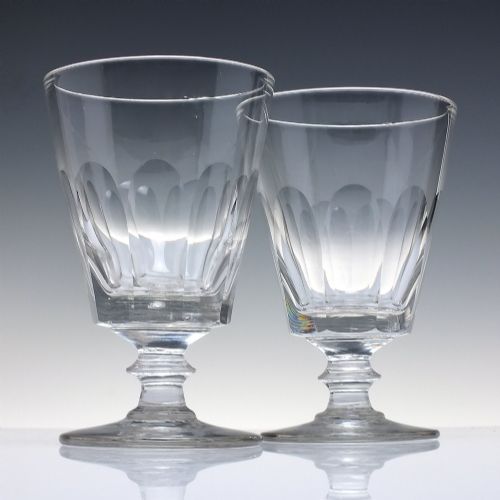
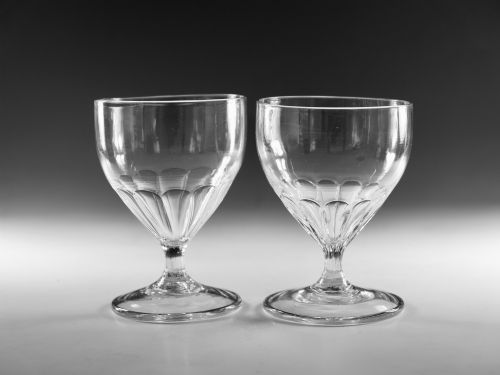
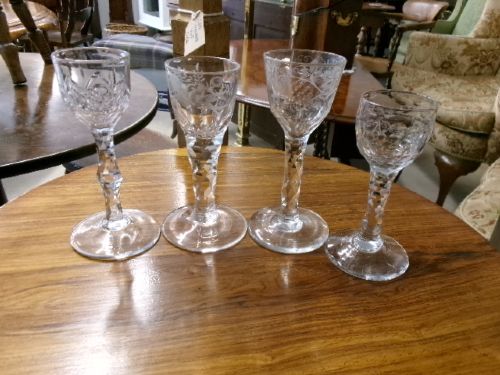
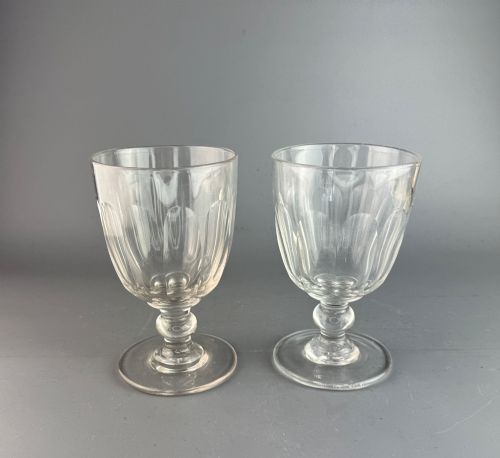
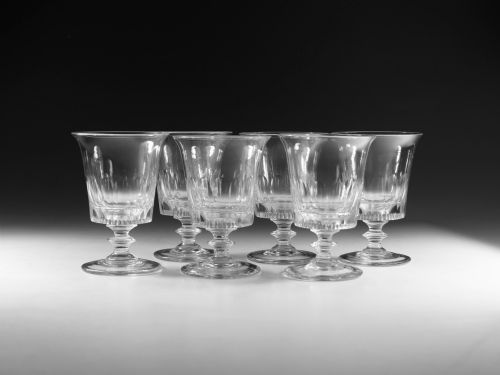
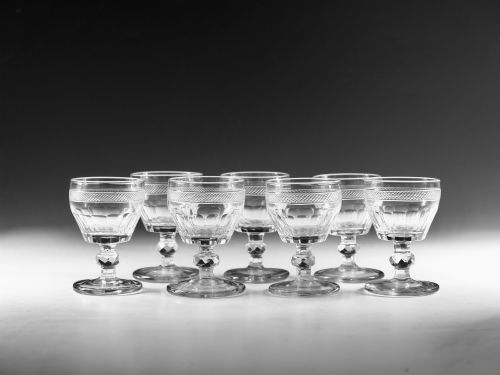
When you search for a cut lead crystal goblet, you encounter drinking vessels spanning the Georgian, Regency, and Victorian periods. These pieces range from substantial rummers and table goblets to delicate port, sherry, and wine glasses.
What varies in quality
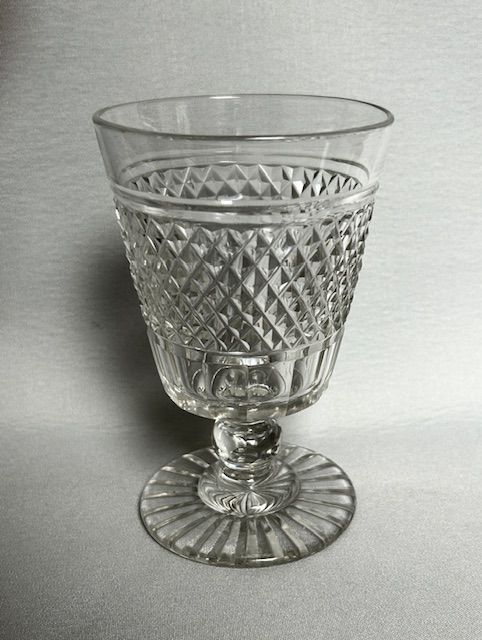
Clarity of the metal and crispness of the wheel-cutting separate the finest examples from standard work. Superior pieces display sharp, clean facets that catch the light without blurring.
Proportion and weight dictate the balance of the vessel. The depth of the engraving and the stability of the wide foot base further distinguish workshop output.
Listings span Georgian, Regency, Victorian, and Edwardian periods, utilising lead crystal, flint glass, and gold leaf.
James Giles
The Cut Lead Crystal Goblet Glossary
- Hobnail cut
- A raised geometric pattern resembling the iron nails used on boot soles. It creates a heavily textured surface that refracts light brilliantly.
- Lemon squeezer foot
- A square pressed glass base with sloped sides resembling a kitchen squeezer. This form appeared frequently on English and Irish table glass around eighteen hundred.
- Facet cut
- Flat polished planes ground into the stem or bowl of a glass. This technique enhances the sparkle of lead crystal.
- Intaglio
- A design incised into the glass surface so that the pattern sits below the outer plane. It contrasts with cameo carving which stands in relief.
Cut Lead Crystal Goblet: Frequently Asked Questions
How do I date a cut glass goblet?
Dating relies on form, pontil mark evidence, and the style of the cutting. Earlier pieces often show heavier metal and distinct facet stem formations.
Changes in silhouette from Georgian rummers to Victorian proportions provide reliable clues for attribution.
Were these goblets used daily?
Many examples served utilitarian roles for wine, ale, and spirits at the dining table. Substantial rummers handled heavy daily toasts while delicate engraved glasses marked special occasions.
Durability stemmed from the heavy lead glass composition used by period makers.
What is the difference between flint glass and lead crystal?
Flint glass and lead crystal both contain lead oxide which increases the weight and refractive index of the material. The terms often overlap in historic descriptions of English tableware.
Both materials allowed artisans to achieve deep, sharp wheel-cuts.
How should I clean antique crystal?
Wash pieces by hand in warm water using mild detergent and line the sink with a towel to prevent chipping. Avoid sudden temperature changes which can stress old glass.
Dry immediately with a lint-free cloth to maintain the brilliance of the cut facets.