



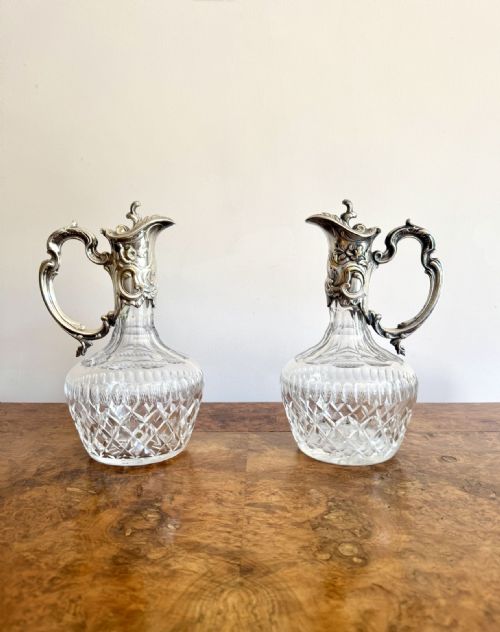
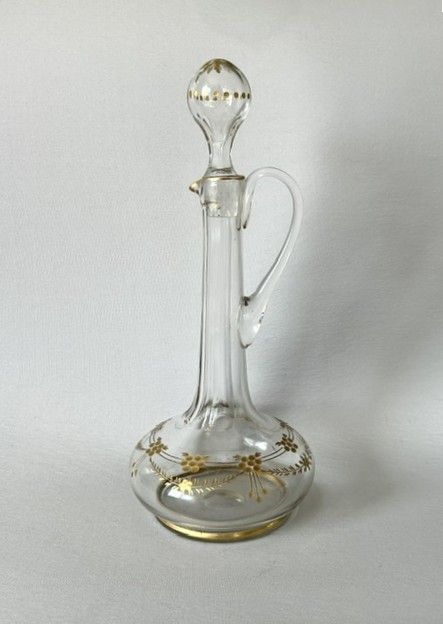


Cut Glass Wine Jug
A cut glass wine jug brings heavy crystal and bright metal to the dining table, serving claret or water with weight and distinction.
Cut Glass Wine Jug
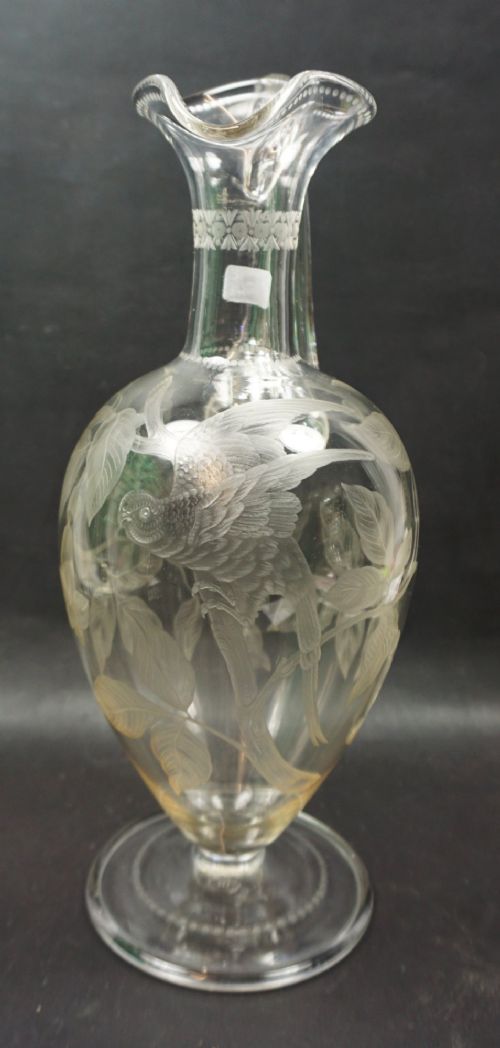
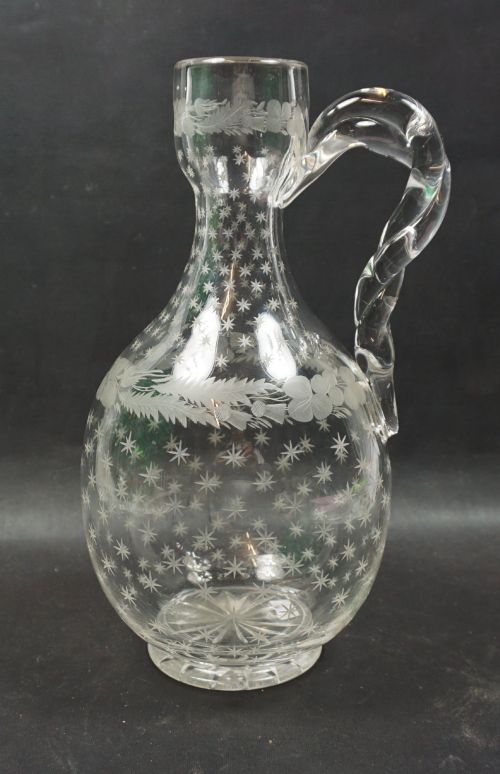
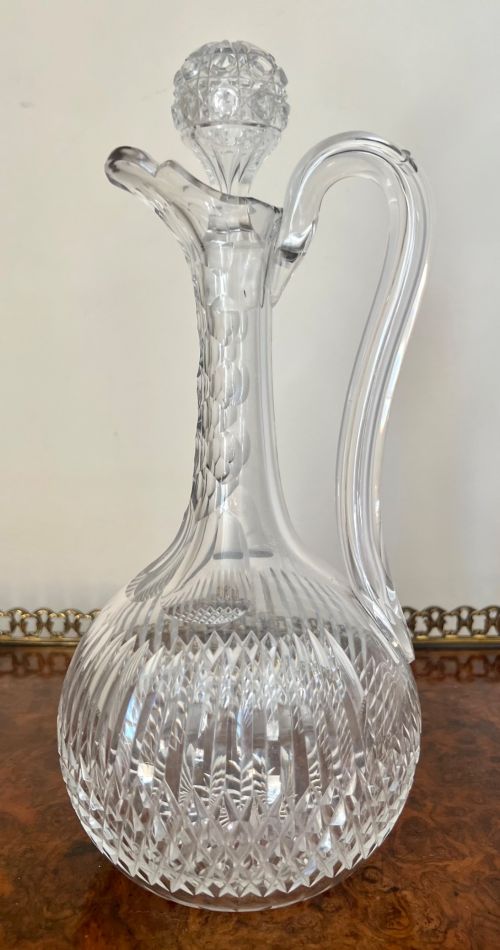
When you search for a cut glass wine jug, you find heavy vessels designed for pouring claret, wine, or water at the table. The forms span from Victorian claret jugs to Edwardian ewers and decanters.
Victorian examples appear alongside Edwardian pieces, often taking shapes labelled as claret jugs, decanters, or pitchers. Bohemian makers contribute coloured and gilded variations from the same era.
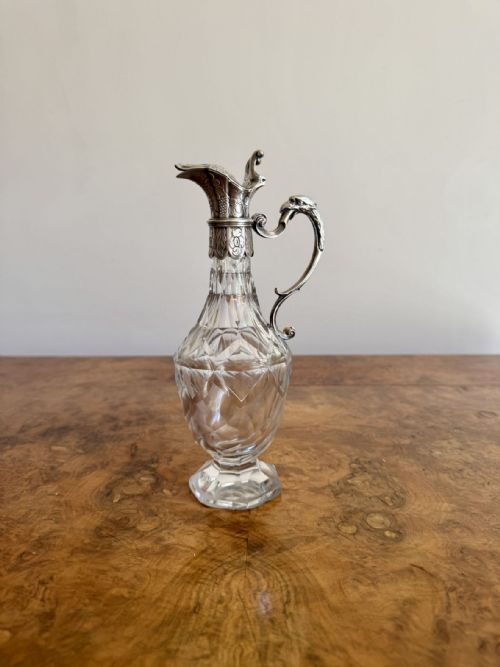
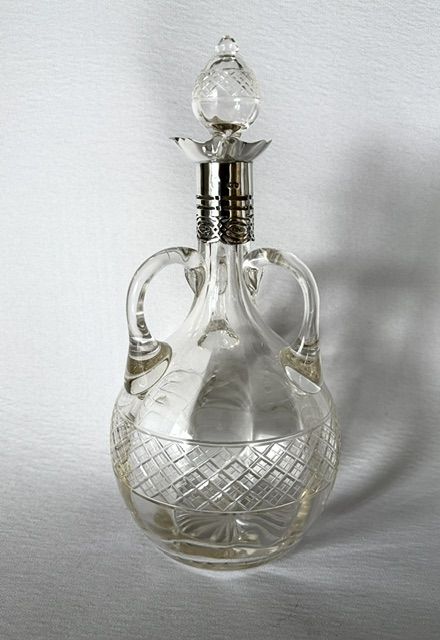
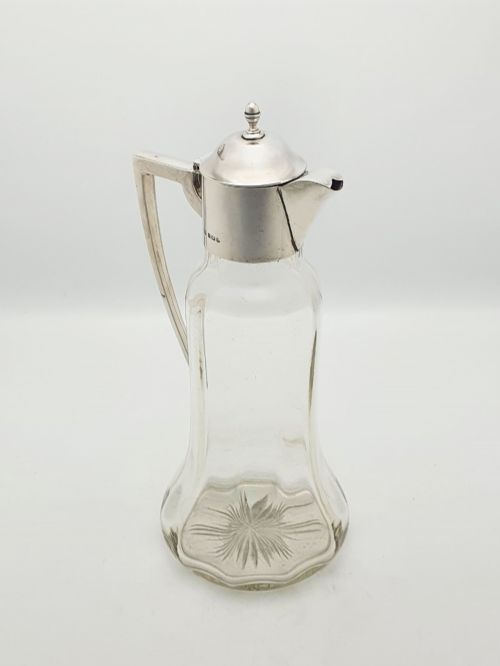
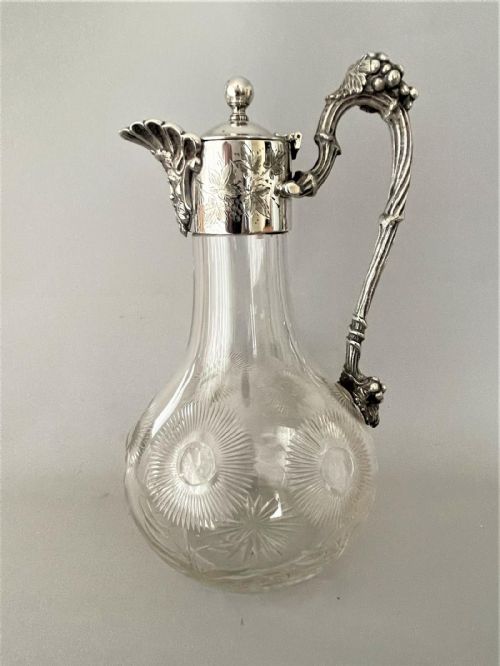
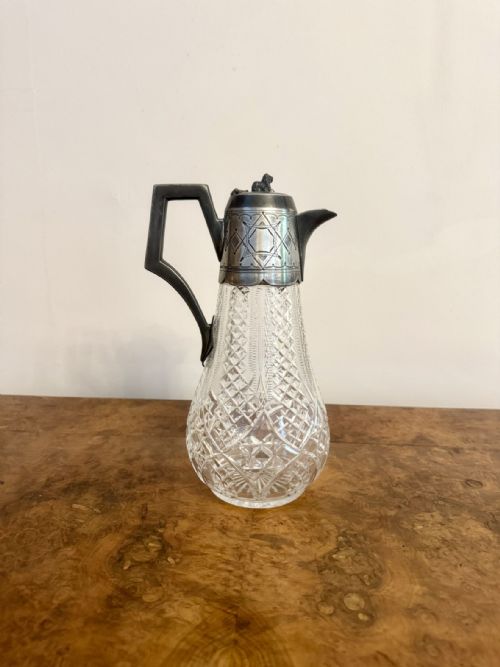
Most pieces combine moulded or heavy glass bodies with mounts made from silver plate or sterling silver. Handles and hinged lids provide both function and decorative balance to the heavy crystal.
How they were made
Makers formed the vessels from lead crystal or clear glass, sometimes overlaying contrasting colours like green before cutting patterns into the surface. Wheel-cutting produced deep facets that caught the light, while engraving added floral or vine motifs.
Mounts, collars, and hinged covers utilised sterling silver or silver plate, secured to the glass neck with collars. Silversmiths worked firm metals to shape handles that matched the proportions of the heavy glass bodies.
Cut Glass Wine Jug Retail Price Guide 2026
Typical asking prices for cut glass wine jug among the pieces listed under this phrase on Sellingantiques today, from the lower quarter to the upper quarter. They describe what is for sale here now, not the wider market.
Materials recorded across the inventory include lead crystal, cut glass, sterling silver, and silver plate.
What varies in quality
The depth and crispness of the glass cutting distinguish finer vessels from simpler production pieces. Sharp, clean facets reflect light distinctly, whereas softer edges indicate lighter moulding and less hand-polishing.
The weight and gauge of the silver or silver plate affect the balance of the piece in the hand. Substantial mounts and sturdy hinges show the care taken by silversmiths during assembly.
William Comyns·Webb Corbett·William Davenport·Hukin & Heath
The Cut Glass Wine Jug Glossary
- Claret jug
- A specialised vessel intended for serving red wine, typically fitted with a handle, spout, and hinged metal lid. These items date predominantly from the Victorian and Edwardian periods.
- Lead crystal
- A heavy glass variety containing metal oxide that increases brilliance and weight. This material allows deep, sharp wheel-cutting without fracturing.
- Silver plate
- A layer of silver fused to a base metal, commonly utilised for mounts and handles on nineteenth-century tableware. It provided the appearance of solid silver at a lower cost.
- Ewer
- A pitcher with a wide spout and a curved handle, often produced in glass or ceramic for decorative service. Victorian examples frequently feature elaborate silver mounts.
- Overlay
- A technique where a layer of coloured glass covers a clear glass body before cutting. The cutter removes sections of the outer layer to expose the clear glass beneath.
Cut Glass Wine Jug: Frequently Asked Questions
What is a cut glass wine jug used for?
These vessels served claret and other red wines at formal dining tables during the Victorian and Edwardian eras. The hinged lid kept contents covered while pouring into glasses.
They also functioned as water jugs or decorative ewers on sideboards. Today, they serve a similar purpose for decanting wine or displaying cut glass.
How can I tell Victorian from Edwardian jugs?
Victorian examples often feature heavier, more ornate silver mounts and deep, intricate wheel-cutting. Grape and vine motifs were particularly popular during the late nineteenth century.
Edwardian pieces frequently display lighter mounts, cleaner lines, and sometimes simpler geometric patterns. Arts and Crafts and Art Nouveau influences also appear in Edwardian silverwork.
Are silver plated mounts marked?
Silver plated mounts often carry maker marks or trade stamps rather than official silver hallmarks. These marks indicate the firm responsible for the plating and manufacture.
Sterling silver mounts display standard assay office hallmarks indicating town, date letter, and maker. These stamps help date the metal components precisely.