





Cut Glass Tent Chandelier
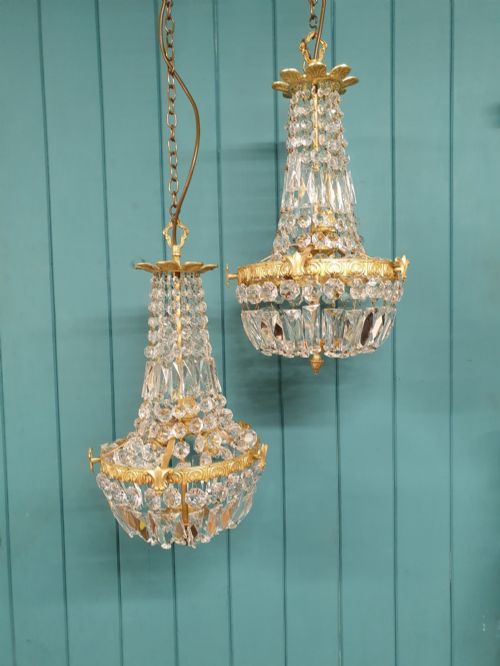
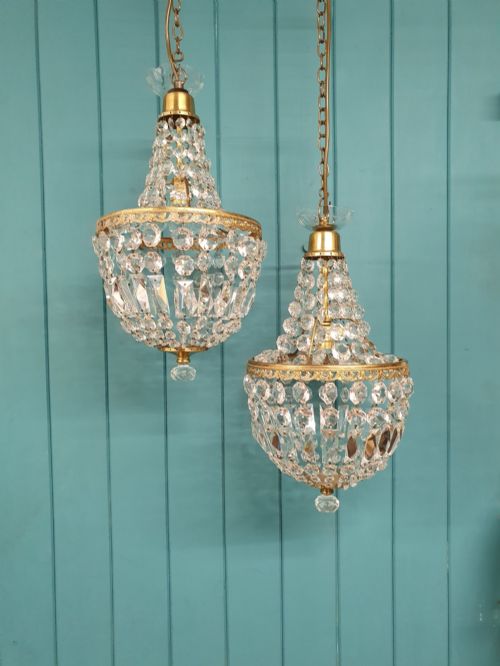
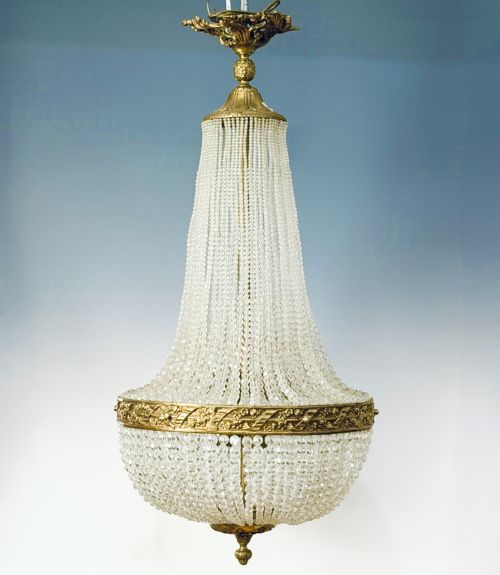
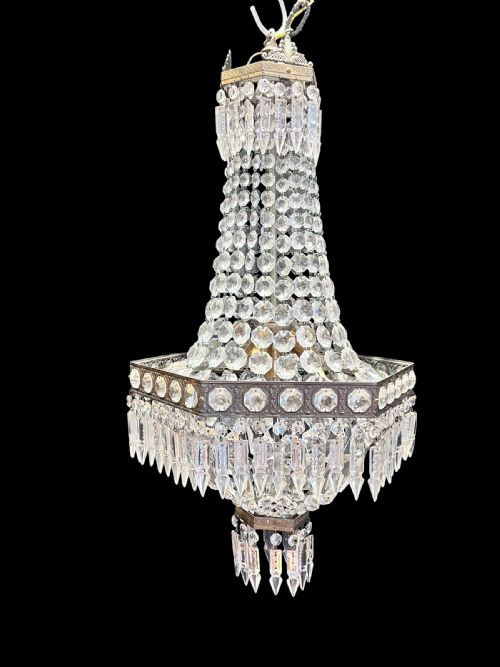
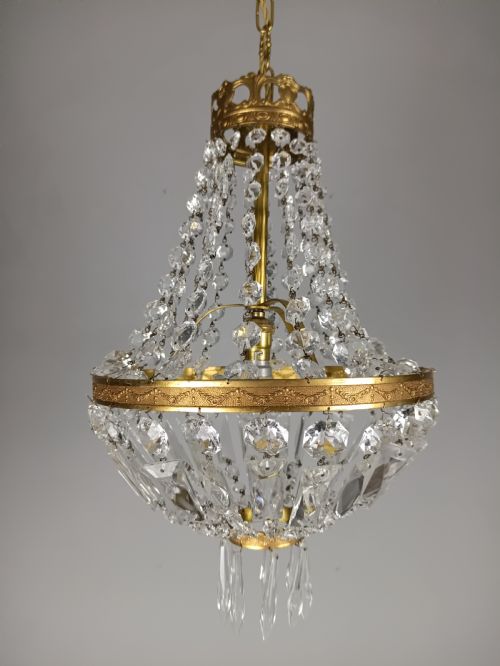
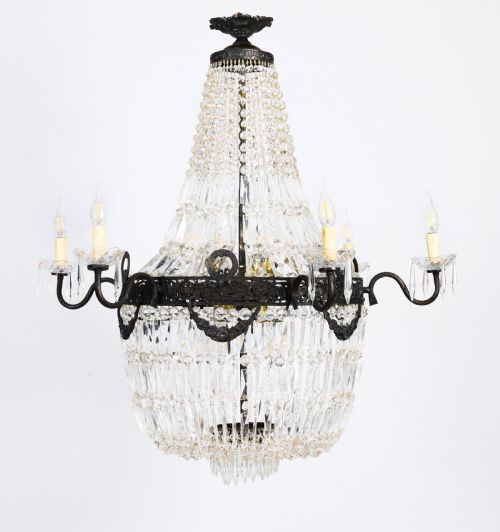
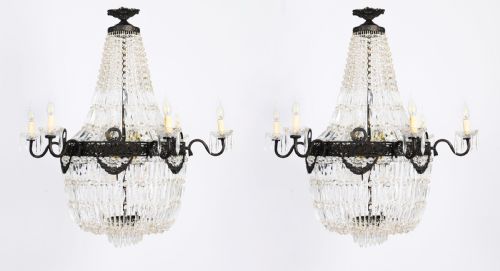
These cut glass tent chandeliers combine brass mounts and faceted drops to cast exceptional light.
Cut Glass Tent Chandelier
A cut glass tent chandelier is an overhead light source defined by a conical upper section of strung glass beads rising to a crown, paired with a lower bowl, bag, or waterfall of drops. When exploring this selection, buyers frequently encounter pairs and single pieces originating from the Edwardian era through the 1930s. These fixtures draw heavily on French Empire, Louis Revival, and Regency styles, integrating elaborate glass arrangements with structural metal frameworks.
The physical form relies on a tiered silhouette where upper tents direct the eye downward toward radiating arms or a gathered bag section of crystals. Many examples incorporate brass or gilt bronze mounts that anchor the glass elements securely while adding a warm metallic contrast. Proportions range from compact twelve-inch fixtures suited to smaller rooms to grand fourteen-light ballroom chandeliers designed for high ceilings.
How they were made
The structural framework of these fixtures relies on cast or spun brass, patinated bronze, and metal components shaped to support heavy arrays of glass. Individual elements like leaf decorations and structural hoops are fitted with pins and wire loops to suspend thousands of distinct crystals. This metal skeleton provides the necessary rigidity to bear the considerable weight of cut glass tents, drops, and prisms without distorting.
Optics and illumination depend on glass and crystal components that have been hand-cut and polished to maximise light refraction. Prisms, bag sections, and waterfalls are arranged in precise geometric patterns to catch and scatter light from multiple candle or electric light points. The integration of brass mounts with cut crystal requires careful mechanical fastening to ensure stability across complex tiered designs.
Cut Glass Tent Chandelier Retail Price Guide 2026
Typical asking prices for cut glass tent chandelier among the pieces listed under this phrase on Sellingantiques today, from the lower quarter to the upper quarter. They describe what is for sale here now, not the wider market.
Listings span the Edwardian era through the 1930s, featuring brass, crystal, and patinated bronze across French Empire and Louis Revival styles.
What varies in quality
The distinction between standard fixtures and finer examples lies in the clarity and cutting depth of the crystal components. Superior pieces utilise high-grade cut crystal that produces sharp refractive sparks, whereas lesser items rely on simpler, moulded glass with softer edges. The intricacy of the metalwork, such as chased brass mounts or cast leaf decorations, also signals the level of craftsmanship invested in the piece.
Scale and proportion dictate the visual impact, with larger ballroom chandeliers demonstrating more ambitious arrangements of tents, bags, and multiple light arms. The completeness and originality of the crystal drops, prisms, and connecting pins determine whether a fixture retains its intended harmonic appearance. Finer specimens display a cohesive design language where every element, from the crown to the lowest waterfall drop, contributes to a unified silhouette.
The Cut Glass Tent Chandelier Glossary
- Tent
- The conical upper section of strung glass beads that stretches from a crown ring down to the main body of the chandelier. This arrangement forms the characteristic canopy shape associated with the style.
- Bag
- A gathered lower section of glass drops and beads forming a cascading bag or basket beneath the central frame. It often terminates in a pendant drop or fringe of crystals.
- Prism
- A cut glass or crystal pendant suspended from the arms or frame to refract light. Prisms come in various geometric cuts, including spear and leaf forms.
- Gilt bronze
- Metalwork treated with a gold-coloured surface finish to provide decorative warmth and contrast against the clear crystal elements. It is frequently employed on mounts and frames.
- Regency style
- A design aesthetic reflecting early nineteenth-century British tastes, characterised by classical restraint, symmetry, and polished metal accents. Pieces in this style emphasise clean geometric lines.
Cut Glass Tent Chandelier: Frequently Asked Questions
How do I clean a cut glass tent chandelier?
Cleaning requires removing dust with a soft brush and wiping individual crystal drops with a mild solution of warm water and specialised glass cleaner. Metal components should be treated separately with care to avoid moisture damage.
Leaving the crystals attached while cleaning prevents misplacing the delicate wire connections, though heavily soiled pieces may require careful dismantling of the drop sections.
What is the difference between Edwardian and 1930s chandeliers?
Edwardian fixtures often lean toward lighter, more restrained swag designs with delicate prisms, reflecting late Victorian and early twentieth-century elegance. Pieces from the 1930s frequently embrace bolder Louis Revival or French Empire proportions.
Examining the metal casting quality and the specific cut of the glass helps distinguish the earlier Edwardian examples from later twentieth-century interpretations.
Can these chandeliers support modern electrical wiring?
Most antique fixtures of this type have been adapted for electricity during their lifespan, converting original candle sockets to internal wiring. Professional rewiring ensures compliance with current safety standards without altering the external appearance.
Checking the internal conduit and lamp holder condition guarantees that the weight of the brass frame and glass is supported safely from the ceiling.
How do I determine the right size for a room?
Selecting the correct proportion involves measuring both the ceiling height and the floor area to ensure the fixture neither dominates the space nor appears lost. Compact twelve-inch models suit standard ceiling heights, whereas fourteen-light ballroom chandeliers require substantial vertical clearance.
Considering the diameter of the lower arms and the overall drop length helps maintain proper clearance above furniture and walking paths.