



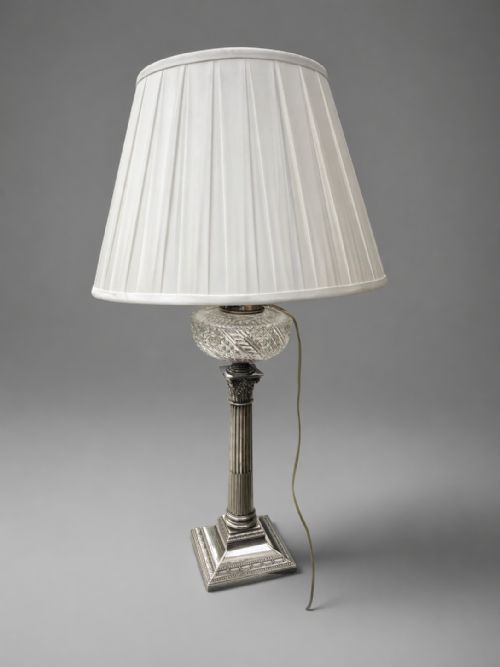


Cut Glass Shade
A cut glass shade focuses and refracts light, bringing genuine weight and period character to overhead fittings and lamps.
Cut Glass Shade
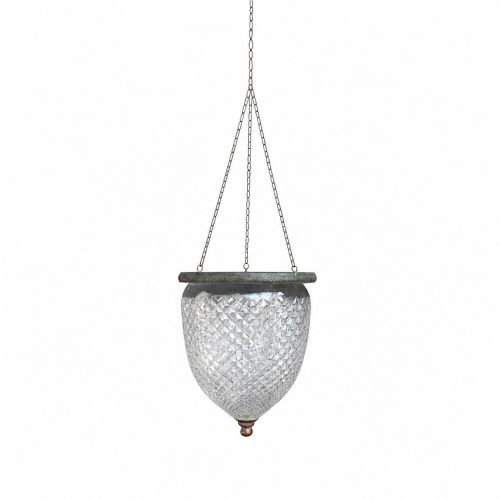
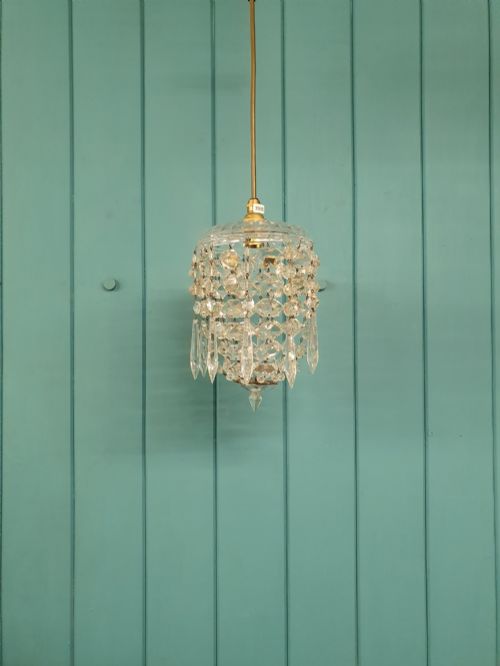
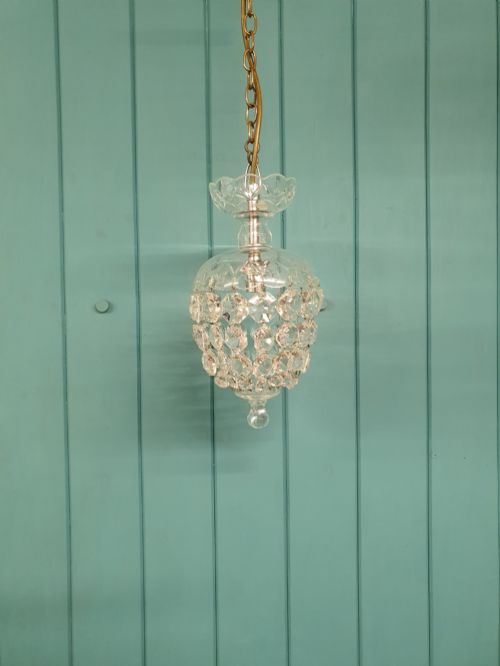
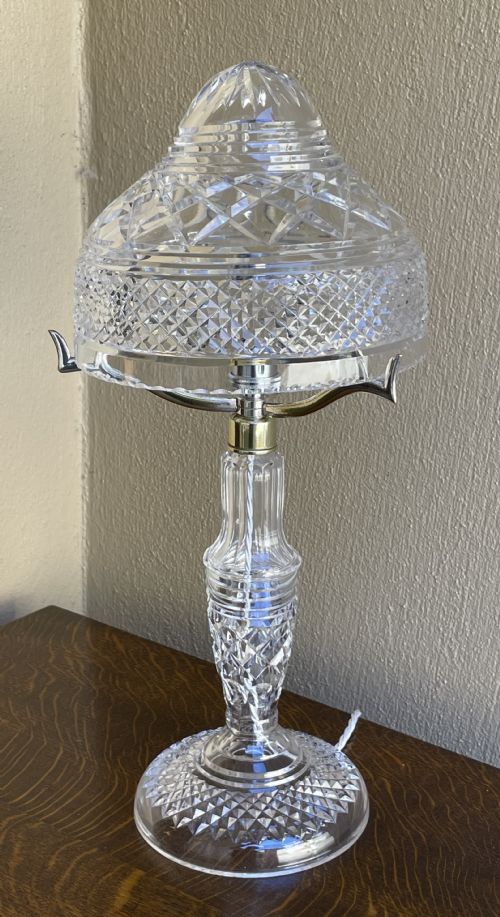
When searching for a cut glass shade, a buyer encounters a range of lighting forms designed to diffuse illumination through faceted or pressed glass. These pieces appear primarily as pendant lights, plafonniers, and individual shades paired with period lamps from the Victorian, Edwardian, and Art Deco eras.
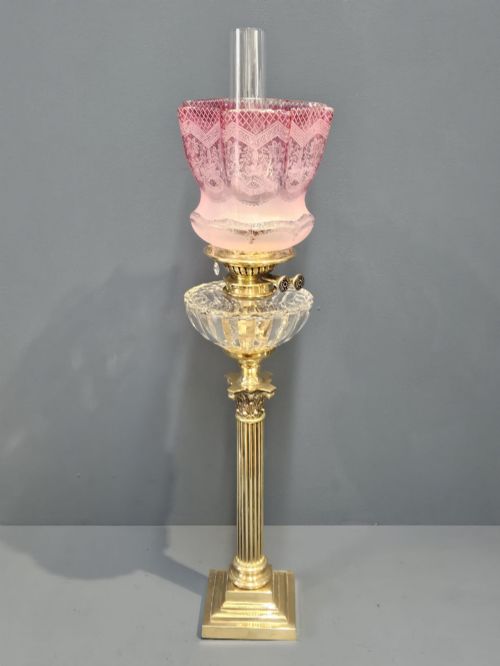
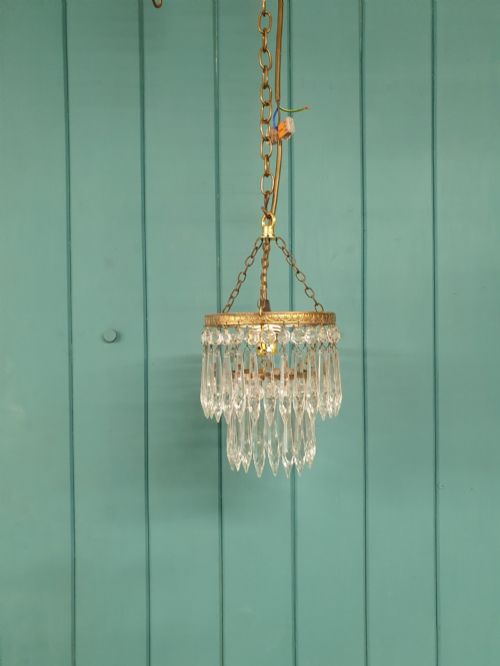
The selection on this page demonstrates the transition from heavy oil lamps and Corinthian columns to electrical ceiling pendants and dome chandeliers. These items span the nineteenth and early twentieth centuries, reflecting changing domestic habits and interior tastes across Britain and Europe.
How they were made
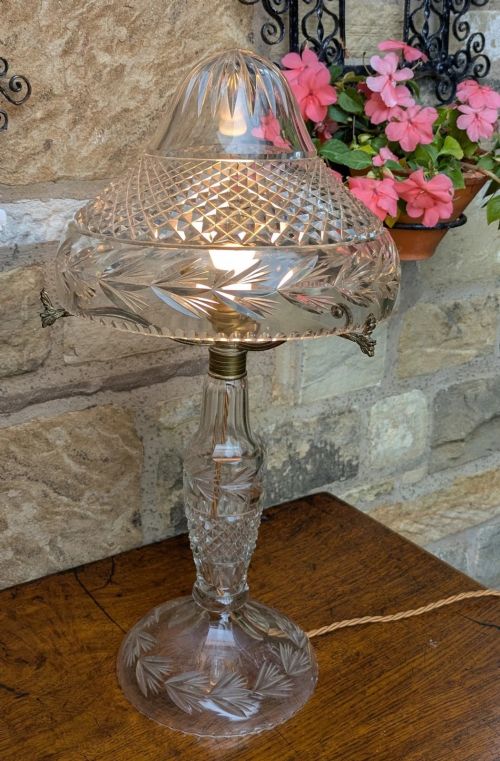
Makers shaped heavy crystal and glass using hand-blowing techniques before applying deep wheel-cut geometric patterns, diamonds, and flutes. This manipulation of the material created surfaces designed to catch and scatter light effectively.
Mounts, galleries, and columns combine brass, silver plate, bronze, and chrome to support the heavy glass components. These metal fixtures are frequently joined by bolted collars and threaded galleries specific to each manufacturing period.
Some Edwardian chandeliers arrive bearing stubborn red drips of old sealing wax, reminding us of boisterous past parties.
What varies in quality
The distinction between standard production and exceptional work rests on the crispness of the cutting and the weight of the raw material. Deeper facets and heavier lead crystal produce sharper refractions and a clearer ring when struck.
Proportion and the integration of metalwork define the finer examples. Superior pieces feature harmonious brass or silver-plated mounts that complement rather than overpower the glass body.
F. and C. Osler·Stuart Crystal·Galle·Messengers
The Cut Glass Shade Glossary
- Plafonnier
- A shallow bowl-shaped ceiling light fitting that sits flush or close to the ceiling. These fixtures often feature intricate cutting to disperse light evenly across a room.
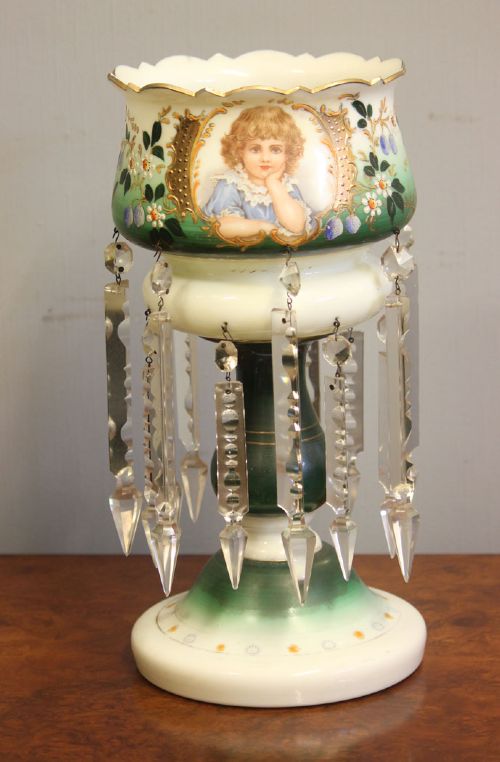
- Lustre
- A decorative tabletop ornament or candelabra hung with cut glass prisms. They create visual sparkle even when unlit by reflecting ambient daylight.
- Gallery
- The metal ring or collar that grips the top of a glass shade to suspend it from a fitting. They are commonly cast in brass or silver plate.
- Prism
- A small cut crystal pendant suspended from a chandelier or light fitting. These elements scatter light into distinct spectral colours.
Cut Glass Shade: Frequently Asked Questions
How do I hang a heavy cut glass shade safely?
Suspension requires a gallery and cord or chain rated to bear the substantial weight of lead crystal. Ensure the ceiling fixing is secured directly into a joist rather than plaster alone.
Professional rewiring using modern braided flex guarantees safety while preserving the external appearance of period brass fittings.
Can I fit an antique shade to a modern lamp base?
Compatibility depends on the fitter rim diameter and the gallery size of the modern lamp. Measuring the internal opening carefully prevents mismatched mountings.
Many period shades utilise standard collar measurements that adapt easily to contemporary brass or chromeholders.
How do I distinguish Edwardian cut glass from Victorian pieces?
Victorian items frequently exhibit heavier proportions, deep hand-cutting, and integration with oil lamp fonts or Corinthian columns. Brass mountings tend to be robust and cast with dark patination.
Edwardian and early twentieth-century examples often favour lighter basket chandeliers, mushroom lamps, and finer crystal spikes with brighter metallic finishes.
What is the best way to clean cut glass shades?
Submerging the glass in lukewarm water with mild detergent removes dust and grease accumulated from gas or early electric lighting. Avoid harsh chemical cleaners that can damage vintage metal collars or silver plate.
Allowing the piece to dry naturally on a soft towel prevents scratching the delicate facets and sharp edges.