



Cut Glass Salt Bottles
These cut glass salt bottles and related tablewares bring tactile weight to the dining table through deep-cutting and precious metal mounts.
Cut Glass Salt Bottles
When you search for cut glass salt bottles, you encounter a selection of tablewares and small receptacles spanning the Georgian, Victorian, and Edwardian periods. Many examples take the form of cruet sets, condiment bottles, and individual vessels designed to hold seasonings or personal scents.
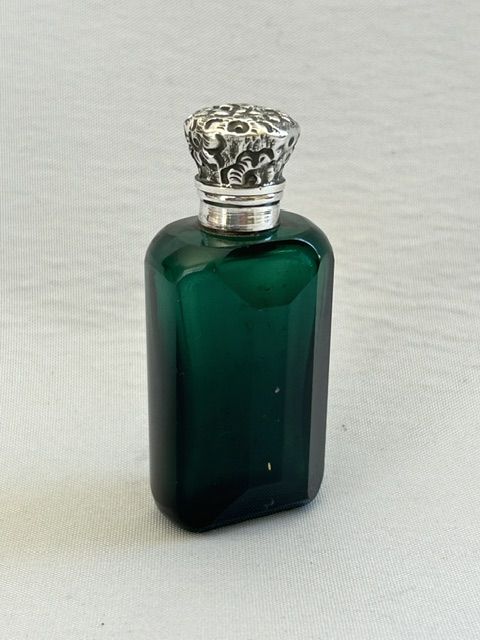
The objects listed on this page range from multi-bottle cruet frames in silver plate and sterling silver to single scent bottles rendered in coloured glass such as amethyst, cranberry, and Bristol Green. The variety includes Victorian novelties, Georgian sets, and heavy lead crystal Art Deco pieces.
Buyers will most frequently find nineteenth-century and early twentieth-century pieces that combine faceted glass bodies with hinged metal caps or collars. These items reflect the domestic dining and personal grooming habits of their respective eras.
Materials and construction
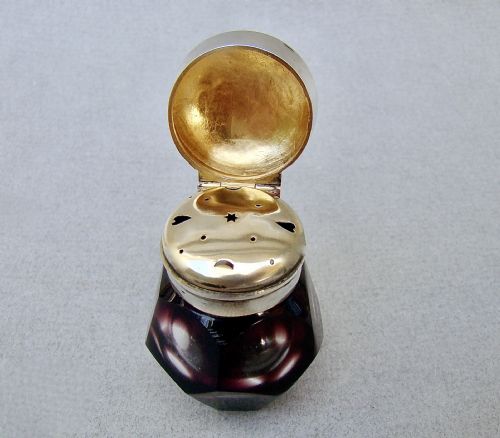
Makers produced these pieces using heavy lead crystal or coloured glass subjected to mechanical or hand-cut faceting, creating sharp geometric patterns that catch the light. The glass bodies were then paired with mounts, collars, and hinged lids formed from sterling silver, silver-gilt, or silver plate.
Metal components often display engraving or hallmarking, showing the specific standards of silversmithing workshops active in London and elsewhere during the nineteenth century. Glass techniques also encompass flash overlays and etching to contrast clear panels with coloured layers.
Cut Glass Salt Bottles Retail Price Guide 2026
Typical asking prices for cut glass salt bottles among the pieces listed under this phrase on Sellingantiques today, from the lower quarter to the upper quarter. They describe what is for sale here now, not the wider market.
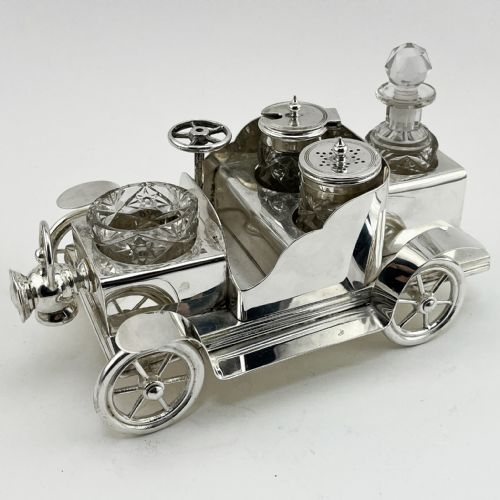
Early motorists could dine on the move with specialised vintage car cruet sets equipped to survive bumpy roads.
Distinctions in quality
Quality rests upon the crispness of the glass faceting and the depth of the hand-cutting, which separates sharp geometric definition from softer, moulded impressions. Weight and clarity of the metal-mounted crystal indicate the standard of the workshop.
The integration between the glass body and the silver or silver-plated mount dictates the overall execution, where tight closures and substantial gauge metal signify superior production. Complete sets retaining their original matching bottles demonstrate higher preservation than assembled groupings.
Walker & Hall·S. Morden & co london
The Cut Glass Salt Bottles Glossary
- Cruet set
- A matched collection of glass bottles or cruets held within a metal frame, designed for condiments such as oil, vinegar, salt, and pepper.
- Cranberry glass
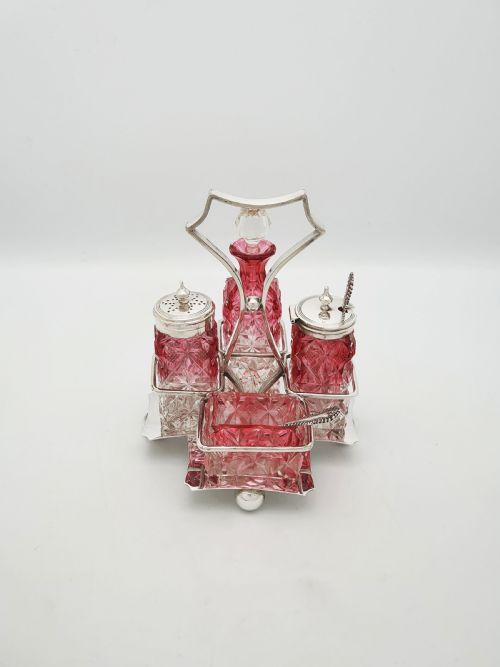
- A transparent pinkish-red glass produced by adding gold chloride to the molten batch, popular during the Victorian period.
- Sterling silver
- An alloy of silver containing 92.5 percent pure silver and 7.5 percent other metals, typically copper, used for bottle mounts and cruet frames.
- Silver-gilt
- Silver objects that have been coated with a thin layer of gold on their surfaces, often found on the interior of bottle caps and vinaigrettes.
- Double ended scent bottle
- A vessel featuring compartments at both extremities, allowing the owner to carry two different fragrances or salts simultaneously.
Cut Glass Salt Bottles: Frequently Asked Questions
How do I clean cut glass salt bottles?
Wash the glass gently in lukewarm water using mild detergent and a soft brush to clear residue from the cut facets without scratching the surface.
Keep metal mounts dry and polish them only with a soft cloth to avoid damaging the silver plating or sterling surface.
Were these bottles used only for salt?
While some served as salt cellars or condiment cruets on the dining table, many similar vessels functioned as scent bottles, vinaigrettes, or liquor flasks.
Multi-bottle sets usually accommodated a range of table seasonings including oil, vinegar, mustard, and pepper alongside salt.
How can I tell a Georgian bottle from a Victorian one?
Georgian pieces typically exhibit simpler, heavier hand-cutting and robust proportions designed for eighteenth-century dining routines.
Victorian examples often introduce brighter coloured glass, elaborate silver-plated frames, and specialised novelty designs reflecting industrial manufacturing advances.
Can I use these antique bottles on the table today?
Most of these pieces function well for modern dining provided the glass is sound and any metal collars are cleaned thoroughly before contact with food.
Care should be taken with antique silver plate and fragile hinged caps to preserve their mechanism during regular handling.