


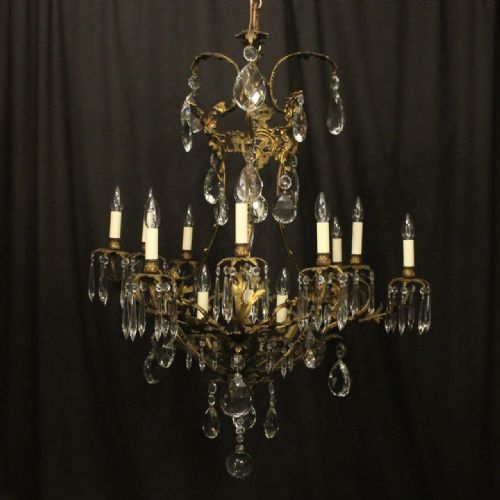


Cut Glass Prism Chandelier
These cut glass prism chandelier pieces bring weight and daylight refraction into a room, fashioned from brass, bronze, and glass.
Cut Glass Prism Chandelier
When you search for a cut glass prism chandelier, you examine ceiling fixtures designed to catch and scatter light through faceted drops, spikes, and bag formations. The pieces available here span the Victorian era, the Edwardian period, and the early decades of the twentieth century.
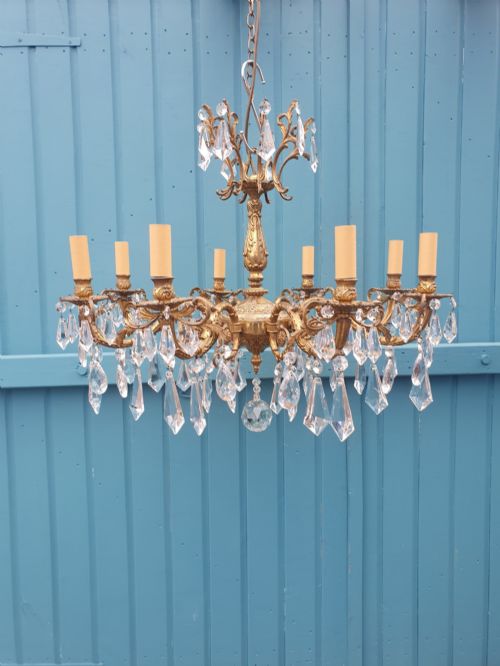
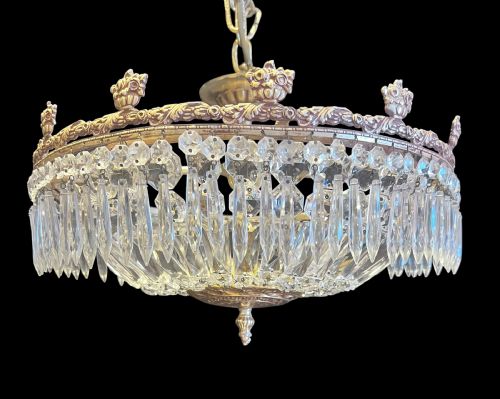
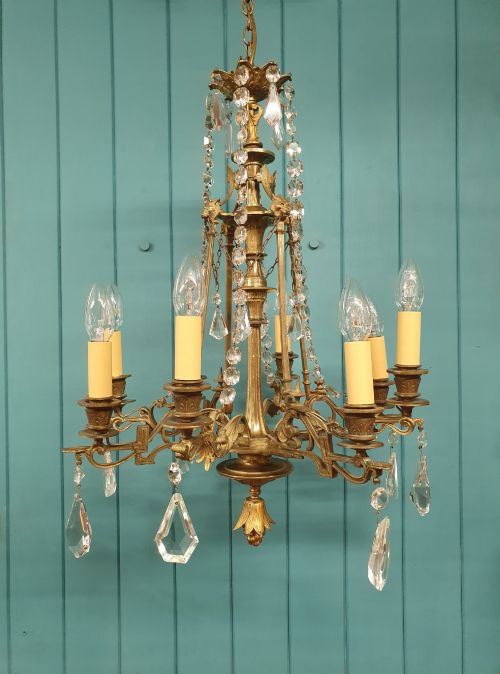
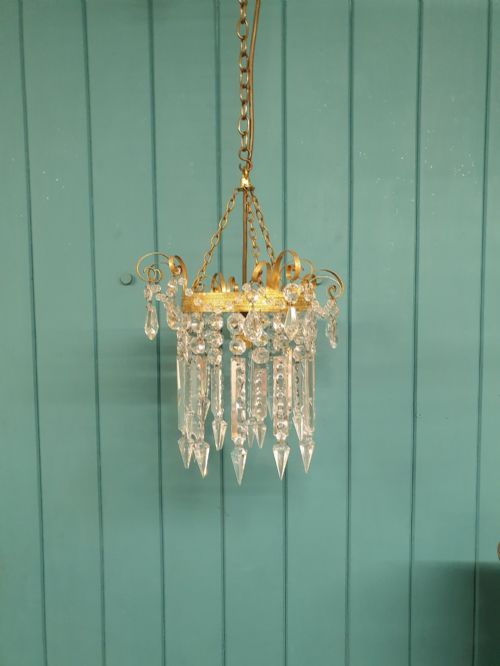
You will encounter various configurations ranging from small ceiling lights and single-tier lanterns to large French empire and rococo multi-arm candelabra. Many examples feature brass or gilded bronze frames supporting dense clusters of lead crystal and cut glass pendants.
The domestic forms include basket chandeliers, plafonieres, and matched pairs of lustres designed for principal rooms and hallways. These lighting fixtures rely on heavy metal frames to support the downward pull of numerous glass drops.
How they were made
The makers constructed the structural skeletons of these fixtures from cast brass, gilded bronze, and iron, forming arms, bands, and decorative mounts such as lion masks. These metal frameworks required substantial tensile strength to bear the considerable weight of suspended crystal drops and chains.
Workers shaped the glass and crystal elements through cutting and polishing techniques, producing sharp facets on spikes, prisms, and pear-shaped drops to maximise light refraction. Mechanics then wired the internal sockets and pinned individual glass components to the metal frames using brass wire loops.
Listings for this phrase include brass, bronze, and cut glass materials spanning the Victorian era through the Edwardian period.
What varies in quality
The density and purity of the crystal elements distinguish the finer examples from simpler production, determining how sharply light disperses through the room. Higher grade pieces utilise heavy lead glass with deep, crisp facet cutting rather than mould-pressed imitations.
The complexity of the metalwork also separates the range, with chased bronze mounts, detailed cast ornaments like lion masks, and multi-tier basket frames indicating superior workshop output. Complete sets of matching drops and substantial brass framing elevate the presence of the fixture.
The Cut Glass Prism Chandelier Glossary
- Prism
- A faceted glass pendant designed to refract light into spectral colours. These elements hang from the frame in various lengths and shapes.
- Lustre
- A decorative tabletop or mantelpiece stand hung with glass prisms, functioning similarly to a chandelier without ceiling suspension.
- Basket chandelier
- A lighting fixture shaped like an inverted bowl or basket composed of interwoven crystal strands and drops. The design concentrates illumination within a contained profile.
Cut Glass Prism Chandelier: Frequently Asked Questions
How do I clean a cut glass prism chandelier?
You remove dust using a soft feather duster before wiping individual glass drops with a mild cleaning solution applied to a cloth. Keeping the power disconnected during maintenance ensures safety while handling suspended crystal components.
Leaving the drops attached prevents accidental damage to the wire pins, though heavily soiled pieces may require careful dismantling for thorough washing and drying.
Were these chandeliers originally wired for electricity?
Most Edwardian and Victorian examples began life configured for candles or gas before conversion to electric power during the twentieth century. Earlier French chateau styles and basket lights accommodated multiple candleholders across brass arms.
Modern buyers generally find these fixtures adapted for standard electrical circuits, requiring professional installation to support the combined weight of metal and glass.
Where should I hang a prism chandelier?
These fixtures suit hallways, reception rooms, and dining spaces where ceiling height permits adequate clearance below the lowest hanging drops. Smaller basket lights and seven-inch prism designs work well in compact spaces or secondary rooms.
Larger multi-arm French fixtures require substantial floor space and high ceilings to balance their visual weight and light distribution properly.
How do I distinguish Edwardian from Victorian chandeliers?
Victorian examples often display heavier cast brass work and formal symmetry, reflecting mid to late nineteenth-century interior tastes. Edwardian pieces tend toward lighter basket forms and French revival styles influenced by rococo and empire motifs.
Examining the construction methods of the metal frames and the cut of the crystal drops helps clarify the manufacturing period.