

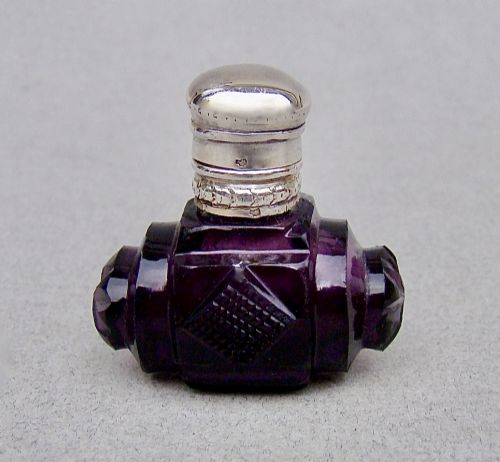
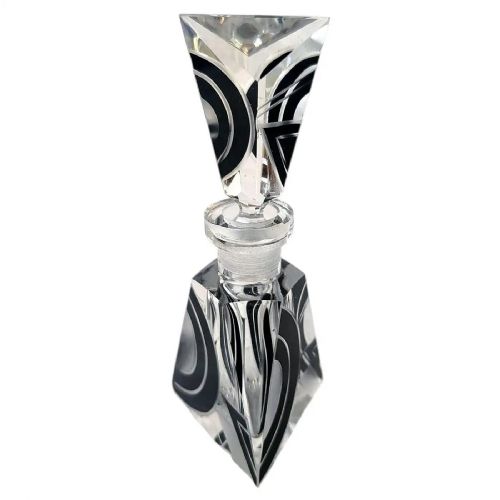
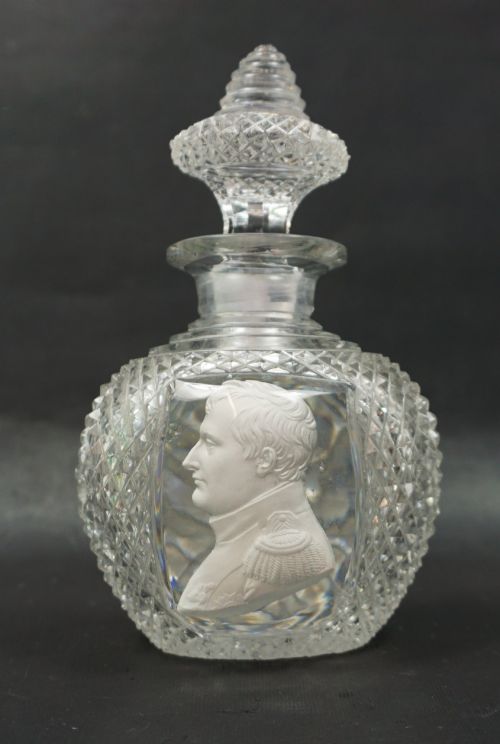

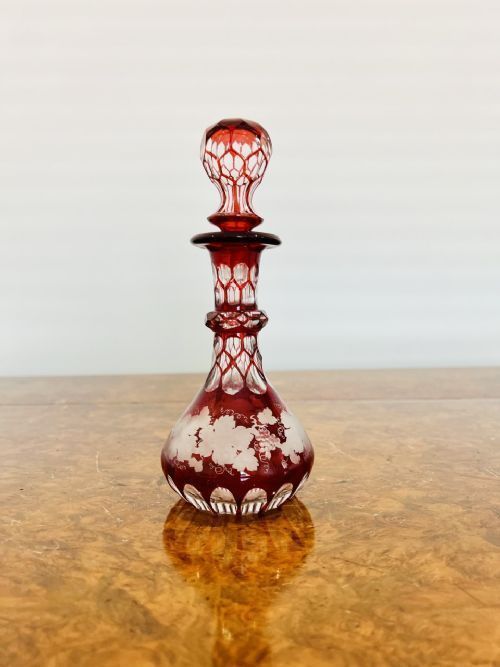


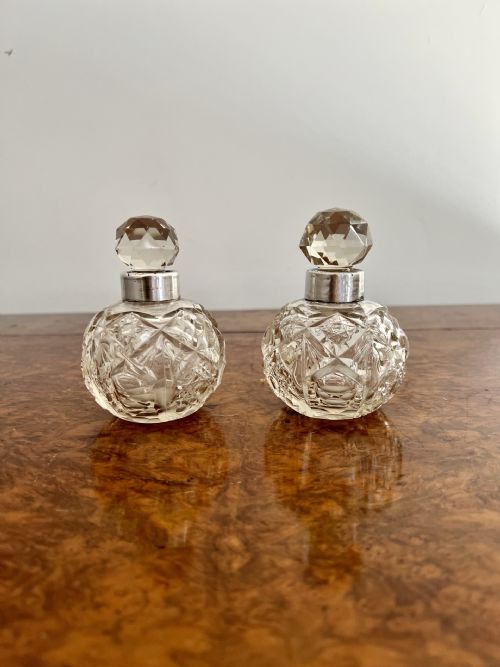


Cut Glass Perfume Flacon
These cut glass perfume flacons are tactile vessels of lead crystal, glass, and sterling silver designed to hold precious scents through the centuries.
Cut Glass Perfume Flacon
A cut glass perfume flacon is a small container fashioned to hold scent, appearing across periods from the early nineteenth century through the Art Deco era of the nineteen thirties. These pieces emerge in forms ranging from standalone crystal vessels to cased trios and miniature bottles fitted with stoppers.
The selection on this page centres heavily on Edwardian and Victorian examples alongside geometric Czech designs from nineteen thirty. Buyers encounter silver collars, enamel details, and overlay glass methods that reflect the shifting tastes of French, English, and Bohemian makers.
Materials and construction
Artisans formed these flacons using glass, crystal, and lead crystal, shaping the bodies through heavy cutting and engraving to catch the light. Overlay techniques added layers of ruby or blue glass that workers then cut away to reveal the clear glass beneath.
Metalwork played a structural role, with sterling silver, silver-gilt, and leather housings enclosing the glass. Enamel, guilloche enamel, and tortoiseshell were applied to caps and collars, frequently marked with hallmarks denoting Birmingham or London production.
Cut Glass Perfume Flacon Retail Price Guide 2026
Typical asking prices for cut glass perfume flacon among the pieces listed under this phrase on Sellingantiques today, from the lower quarter to the upper quarter. They describe what is for sale here now, not the wider market.
Listings feature lead crystal, sterling silver, and enamel across Victorian, Edwardian, and Art Deco styles.
Assessing the work
Quality rests upon the crispness of the glass cutting and the weight of the lead crystal. Sharp, deep facets and well-fitted stoppers distinguish finer examples from simpler production pieces.
The secondary materials further define the standard of a flacon. Smooth guilloche enamel, intact silver collars with clear hallmarks, and complex sulphide portraits embedded in the crystal elevate the piece.
Karl Palda·Mappin & Webb
The Cut Glass Perfume Flacon Glossary
- Flacon
- A small stoppered bottle designed for perfume or scent. These vessels often feature decorative cutting or precious metal mounts.
- Guilloche enamel
- A decorative engineering technique where a precise repeating pattern is mechanically engraved into metal beneath a translucent enamel layer. This finish appears frequently on twentieth-century caps.
- Overlay glass
- A method where a layer of coloured glass is fused over a clear body before portions are cut away to create contrast. Victorian makers utilised ruby and blue overlay extensively.
- Sulphide
- A small ceramic cameo embedded within crystal glass during manufacture. This technique creates a detailed white portrait against a clear or coloured background.
- Cologne bottle trio
- A matched set of three scent containers usually housed within a fitted leather or metal case. These travel pieces date prominently to the Edwardian period.
Cut Glass Perfume Flacon: Frequently Asked Questions
What is a cut glass perfume flacon?
A cut glass perfume flacon is a decorative container designed for holding liquid scent, featuring faceted glass or crystal bodies. They frequently incorporate precious metal mounts and stoppers.
These pieces range from pocket-sized Victorian examples to geometric Art Deco designs produced in Europe and Britain.
How do I date a silver mounted scent bottle?
Dating relies primarily on hallmarks stamped onto the silver collars or caps, which indicate the assay office and year of production. Stylistic markers such as Edwardian proportions or Art Deco geometry also help assign a period.
Changes in glass colour preferences, from nineteenth-century cranberry and blue overlay to nineteen thirties minimalism, offer further chronological clues.
Were these bottles meant for travel?
Many flacons were produced specifically for travel, evidenced by fitted cased sets and secure screw-down sterling silver or silver-gilt caps. Travelling trios allowed owners to carry multiple colognes safely.
Other larger examples remained on dressing tables as part of matching vanity sets.
What materials make up these flacons?
The primary body material is glass, lead crystal, or crystal, often enhanced by coloured glass overlays. Mounts and collars are typically fashioned from sterling silver or silver-gilt.
Additional decorative elements include enamel, guilloche enamel, tortoiseshell, and leather cases.