

Cut Glass Drop Pendant
These cut glass drop pendant examples catch the light across rooms, bringing sharp refraction and historic form to any ceiling or interior space.
Cut Glass Drop Pendant
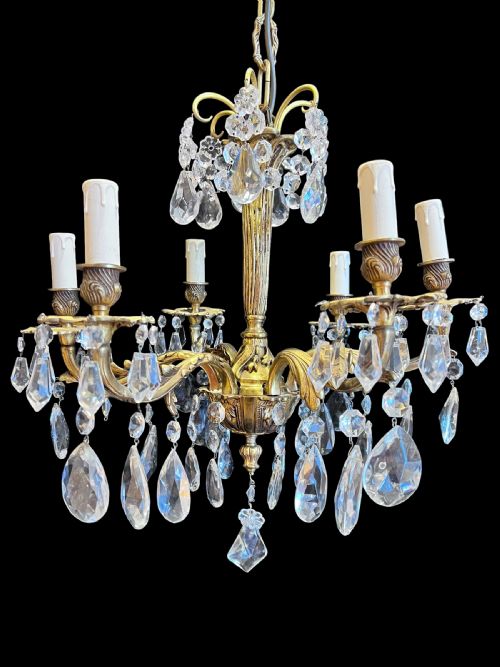
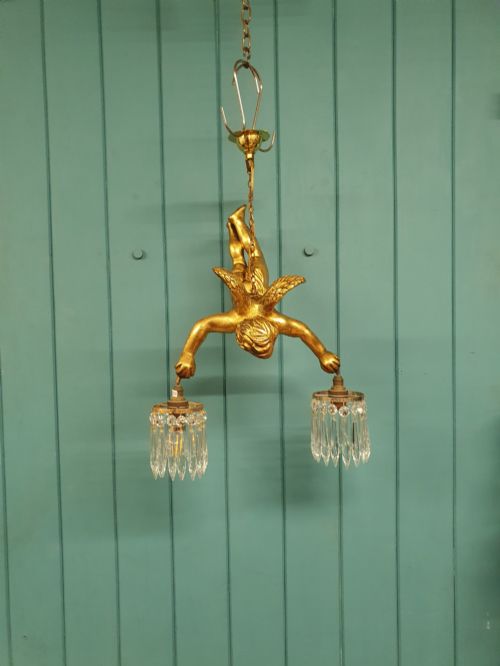
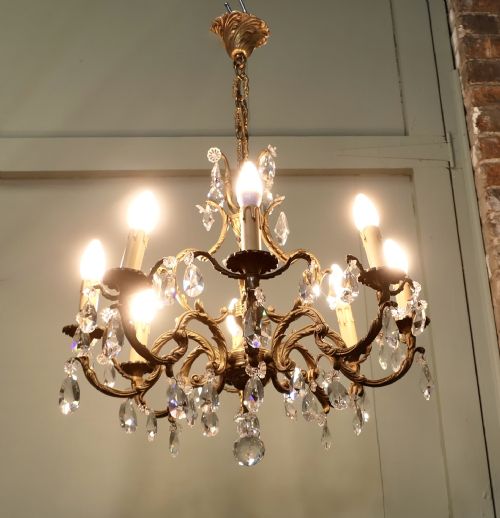
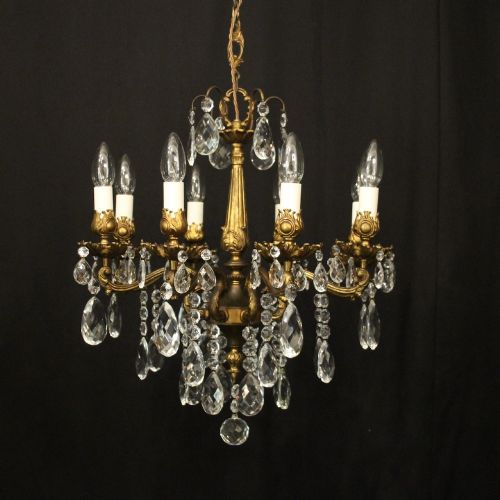
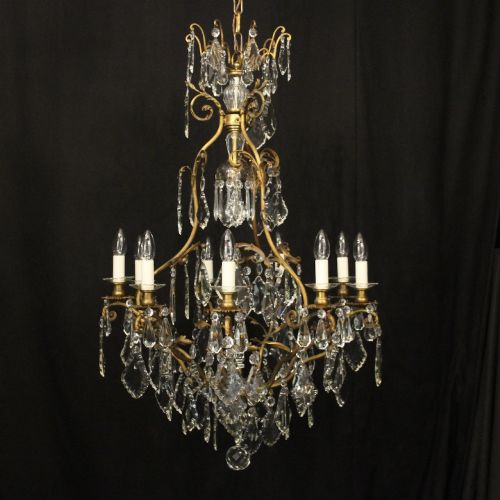
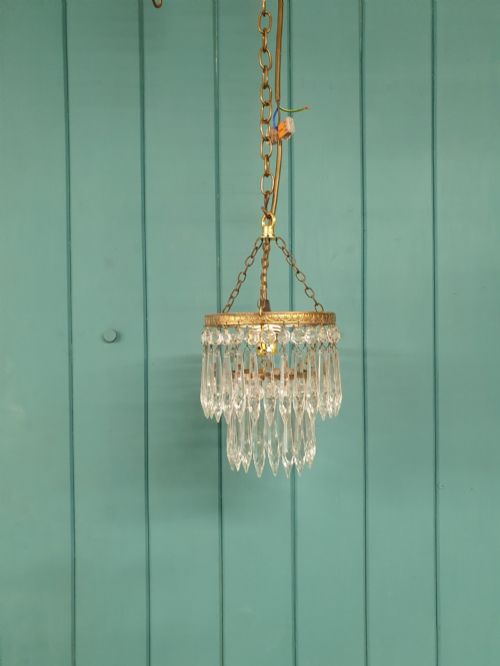
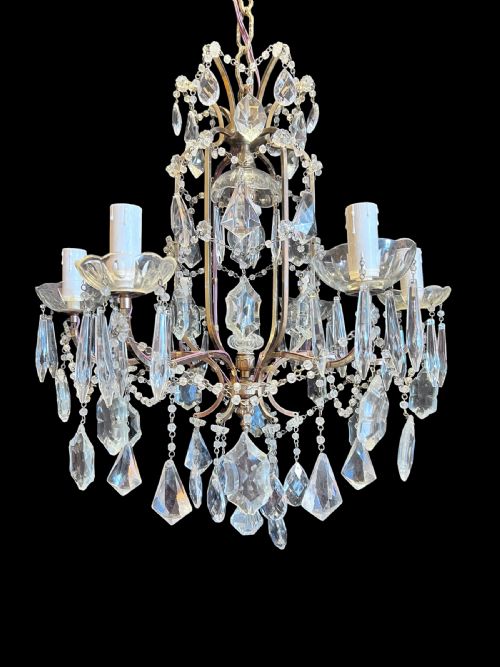
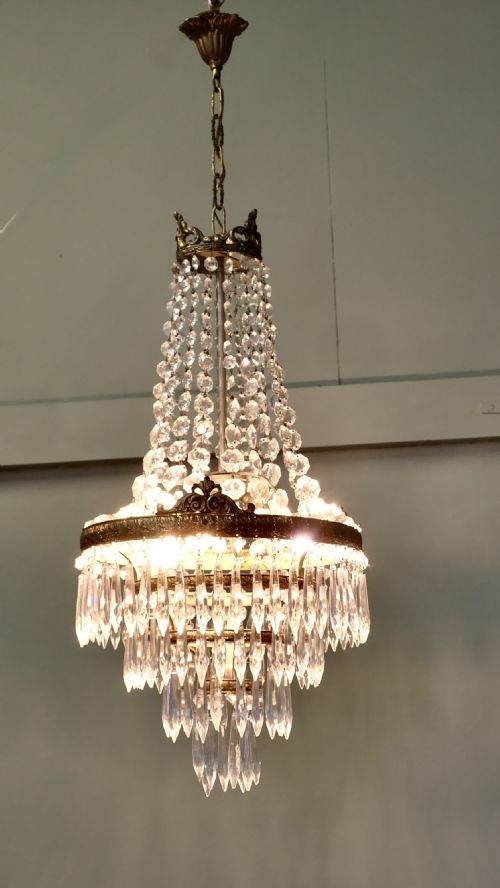
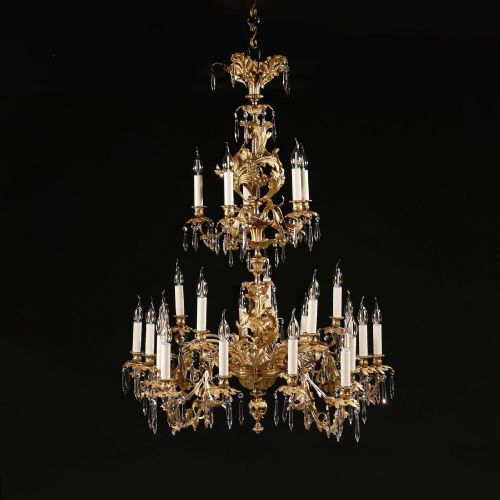
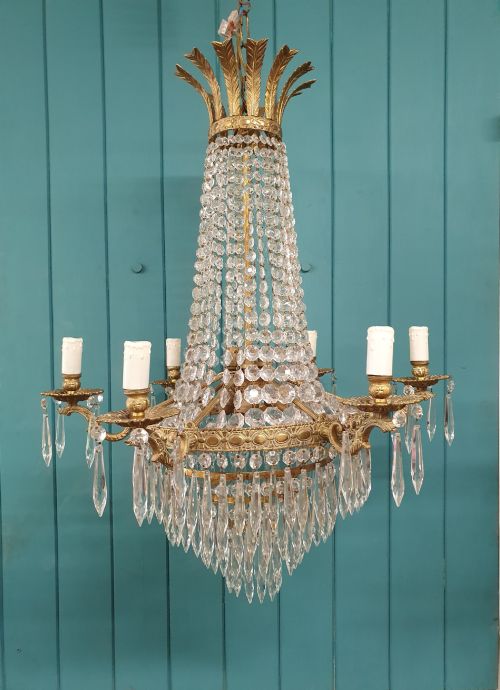
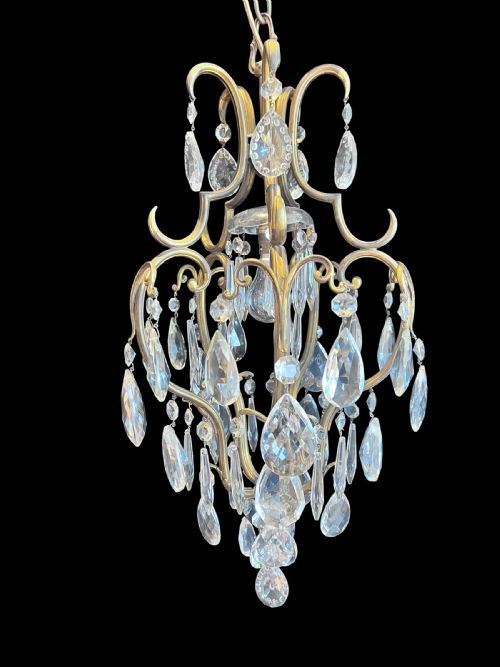
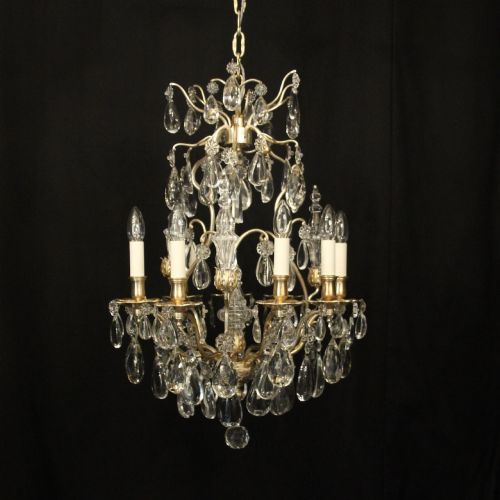
A cut glass drop pendant brings together faceted components and lighting fixtures designed to hang from ceilings. When you search for a cut glass drop pendant, you encounter fixtures ranging from compact bag and tent forms to larger multi-armed chandeliers spanning the nineteenth and twentieth centuries.
The selection includes Edwardian, Victorian, and Art Deco iterations alongside French and Italian regional variants. Many pieces incorporate brass, gilt bronze, or silver metal mounts supporting crystal lustres and drops.
How they were made
Craftsmen shaped glass and crystal through hand-cutting and polishing to maximise light dispersion. Metal frameworks in brass, gilt bronze, and gilt metal hold the glass elements via wire pins or metal loops.
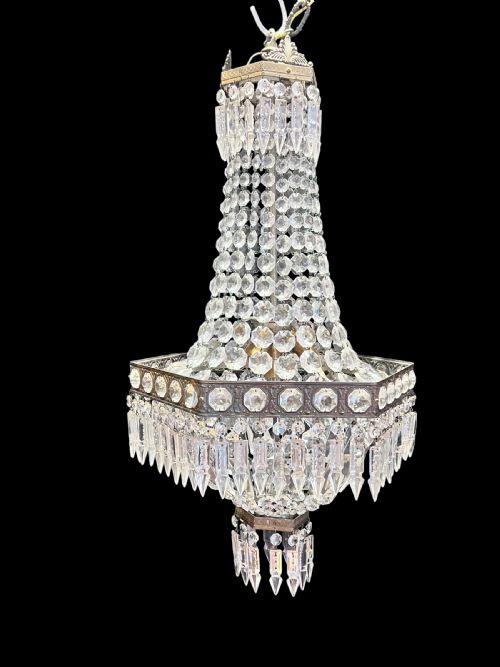
Makers integrated various hanging components such as spikes, beads, and teardrop lustres into structured frames including tent and bag configurations.
Listings span from the 1900s through the 1930s, featuring materials such as crystal, gilt bronze, brass, and cut glass.
What varies in quality
Quality depends on the clarity of the glass and the precision of the facets, which determine how cleanly light splits. The weight and finish of the metal mounts, whether gilt brass or bronze, separate standard production from finer work.
The completeness and originality of the hanging lustres and drops influence the integrity of each piece.
The Cut Glass Drop Pendant Glossary
- Lustre
- A cut glass or crystal pendant hung from a lighting fixture to refract light. These elements swing gently in air currents.
- Tent and bag
- A lighting structure where upper strings of beads form a tent shape above a gathered bag of drops. This configuration defines many twentieth-century ceiling lights.
- Spike
- A long, pointed cut glass pendant used as a fringe element on chandeliers and pendant lights. They provide a sharp vertical accent.
- Gilt bronze
- Metal cast in complex forms and coated in gold leaf or wash, often found on French frames. It offers a warm metallic base for crystal elements.
Cut Glass Drop Pendant: Frequently Asked Questions
How do I hang a heavy cut glass pendant?
Support the weight using a structural ceiling joist rather than plaster alone. Attach an appropriate metal hook and chain rated for the specific mass of the fixture.
Ensure the electrical supply is isolated at the mains before connecting any wiring to the ceiling rose.
Can these pendants be rewired for modern standards?
Most historic light fittings accept modern wiring routed through their central channels. Professional rewiring secures safe operation while preserving original sockets and frames.
Check that the internal channels accommodate standard cable diameters without straining the historic metalwork.
How do I clean cut glass drops?
Remove detachable drops and wash them in warm water with mild detergent. Wipe metal frames carefully with a dry cloth to avoid disturbing patinated surfaces.
Allow all glass components to dry completely before rehanging them on the frame.
What periods do these pendants span?
The available pieces originate primarily from the nineteenth century, the Edwardian era, and the early twentieth century up to the 1930s. Design characteristics shift from ornate Victorian and French styles toward cleaner Edwardian and Art Deco lines.
Each era employs distinct metal alloys and cutting patterns on the glass elements.