

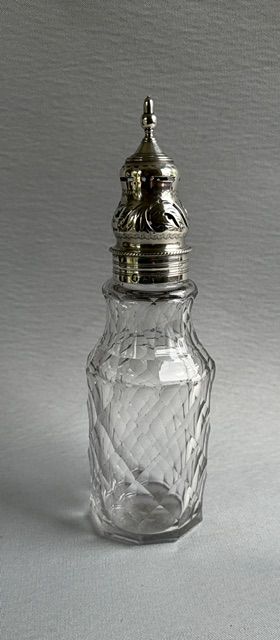


Cut Glass Condiment Shaker
A cut glass condiment shaker brings bright refraction and polished metal to the dining table, offering timeless functional elegance.
Cut Glass Condiment Shaker
When you search for a cut glass condiment shaker, you encounter tableware designed for holding salt, pepper, or sugar at meals. These items appear across multiple eras, including Georgian, Victorian, Edwardian, Art Deco, and mid-century periods.
Most examples found here form part of larger cruet sets or stand as individual vessels such as pepper pots and sugar casters. Materials combine clear glass or crystal bodies with sterling silver, silver plate, or enamel mounts.
How they were made
Makers shaped vessels from lead crystal and glass using heavy hand-cut techniques to create deep facets that catch the light. Metal tops and stands utilised sterling silver or silver plate, often paired with coloured enamel accents.
Craftsmen fitted pierced silver or plated lids to the glass bodies, allowing contents to be shaken or cast evenly over food.
Cut Glass Condiment Shaker Retail Price Guide 2026
Typical asking prices for cut glass condiment shaker among the pieces listed under this phrase on Sellingantiques today, from the lower quarter to the upper quarter. They describe what is for sale here now, not the wider market.
Victorian dining culture produced novelty carriage cruet sets, ensuring your salt cellar arrived on wheels.
What varies in quality
Quality rests upon the depth and crispness of the glass cutting, alongside the weight and purity of the metal mounts. Superior pieces display sharp facets without chips, coupled with substantial silver work and well-fitted maker-marked lids.
Proportion and balance also distinguish finer items, where the heavy crystal body sits securely within its stand and the metal components retain their original polish and form.
Preece & Willicombe
The Cut Glass Condiment Shaker Glossary
- Cruet set
- A matched collection of condiment bottles or shakers held within a fitted frame or stand. These assemblies often include compartments for mustard, oil, vinegar, and various seasonings.
- Lead crystal
- Glass containing metallic oxide to increase weight, brilliance, and refractive index. This material allows deep, sharp cutting that remains bright over time.
- Silver plate
- A base metal coated with a thin layer of pure silver. This technique provided the appearance of solid silver at a more accessible cost for nineteenth-century dining tables.
- Sugar caster
- A tall container with a pierced dome top used for sprinkling powdered sugar onto food. They frequently share form characteristics with large pepper pots.
- Hallmark
- Official stamps punched into precious metal objects to guarantee purity and origin. These marks identify the assay office, metal standard, and maker.
Cut Glass Condiment Shaker: Frequently Asked Questions
How do I date an old shaker?
Dating relies on stylistic clues like Edwardian proportions, Art Deco geometric cutting, or Georgian silhouettes, supported by metal hallmarks.
Examining the manufacturing technique of the glass and the wear patterns on the base also helps establish the period.
Were these used every day?
These vessels served formal dining tables across the Georgian, Victorian, and Edwardian eras for family meals and dinner parties.
Their sturdy lead crystal construction meant they were built for regular domestic service rather than mere display.
How do I clean cut glass?
Clean cut glass using warm water and mild washing liquid, avoiding harsh abrasives that might scratch the surface or damage the metal mounts. Soft cloths help restore the brilliance of the facets after drying.