

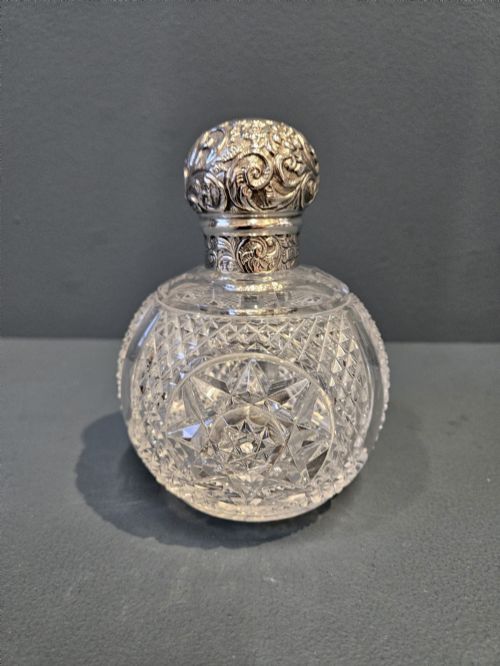
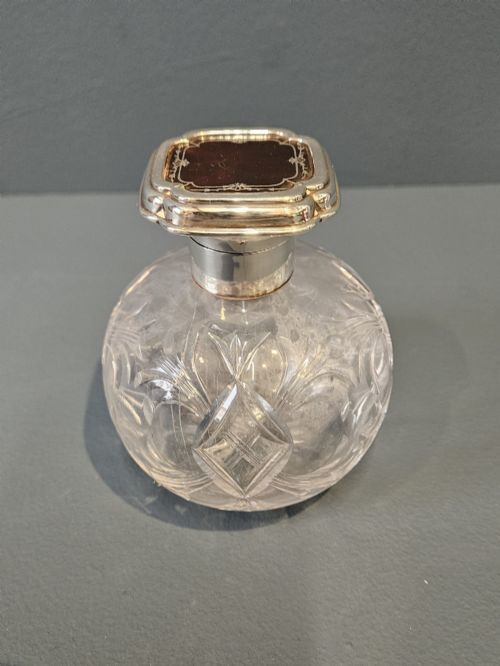
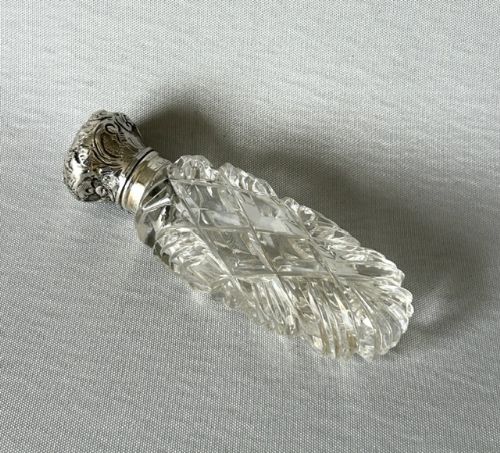
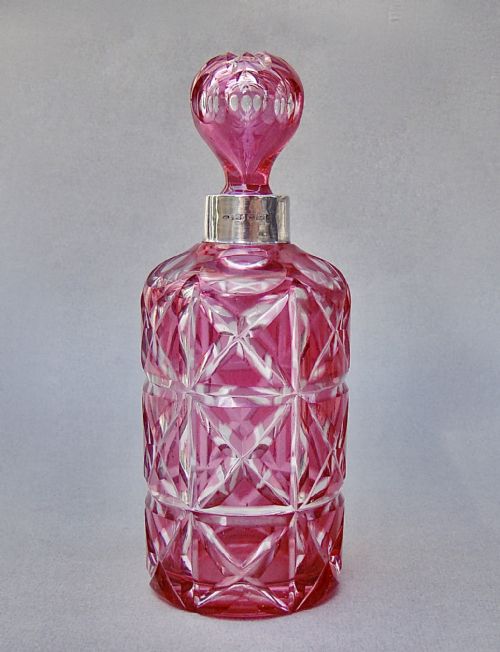


Cut Crystal Perfume Flask
These cut crystal perfume flask pieces are tactile vanity vessels designed for dressing tables and pockets, prized for their heavy faceted glass and precious metal mounts.
Cut Crystal Perfume Flask
A cut crystal perfume flask is a portable glass container intended for holding scent, often finished with a fitted metal lid or collar. When exploring a cut crystal perfume flask selection, buyers encounter pocket and dressing table forms spanning the Victorian, Edwardian, and Art Deco periods.
The objects listed take several forms, including scent bottles and cologne bottles alongside standard perfume flasks. Surviving examples frequently combine heavy cut glass or crystal with sterling silver, silver gilt, tortoiseshell, and enamel mounts.
Victorian and Edwardian versions appear alongside later Art Deco designs from continental makers and English silversmiths. These pieces range from ruby and cranberry glass to green overlay and blue glass bodies.
Materials and Construction Methods
Makers shaped heavy glass and crystal vessels by cutting deep geometric or floral facets into the material to catch the light. Molten glass was also blown into moulds or overlaid with coloured glass before being wheel-cut.
Mounts and lids were fashioned from sterling silver or silver gilt, frequently incorporating tortoiseshell panels or guilloché enamel details. Silversmiths then secured these metal collars and hinged caps directly to the glass necks.
Cut Crystal Perfume Flask Retail Price Guide 2026
Typical asking prices for cut crystal perfume flask among the pieces listed under this phrase on Sellingantiques today, from the lower quarter to the upper quarter. They describe what is for sale here now, not the wider market.
Gentlemen required lockable cologne bottles, proving that Victorian vanity called for secure personal fragrance management.
Distinguishing Quality in Scent Vessels
Quality rests in the crispness of the glass cutting and the weight of the crystal body. Superior pieces exhibit sharp, uniform facets and thick walls that feel substantial in the hand.
The refinement of the metalwork further separates examples, seen in the density of sterling silver mounts and the precision applied to enamel or tortoiseshell insets. Maker marks on the silver components add a layer of documented origin.
Harold Bushell & Co·Karl Palda·Barnsley & Co·S Morden & Co
The Cut Crystal Perfume Flask Glossary
- Guilloché enamel
- A decorative technique where an intricate mechanical pattern is engraved beneath a translucent layer of coloured enamel. This finish appears frequently on Edwardian and Art Deco metal lids.
- Sterling silver
- An alloy consisting of ninety-two point five percent silver by mass, with other metals added for durability. Most fitted lids and collars on these pieces are struck with hallmarks indicating this standard.
- Overlay glass
- A method where a layer of coloured glass is fused over a clear or contrasting glass body before being cut through to reveal the base colour. Green overlay and cranberry glass pieces utilise this technique.
- Silver gilt
- Sterling silver that has been coated with a thin layer of gold on its surface. This treatment provides a warm golden sheen to the interior or exterior of bottle mounts.
Cut Crystal Perfume Flask: Frequently Asked Questions
How do I clean a cut crystal perfume flask?
Gently wash the interior with warm soapy water using a bottle brush, taking care not to submerge antique metal mounts or tortoiseshell panels.
Dry the glass thoroughly and leave the lid open to ensure no moisture remains trapped inside the vessel.
Were these flasks meant for travel or display?
Many examples served both purposes, functioning as decorative items for dressing tables or secure containers for travel.
Gentleman's cologne bottles and smaller pocket flasks included secure screw caps or lockable mechanisms to prevent leakage.
How can I tell a Victorian flask from an Art Deco one?
Victorian and Edwardian pieces often feature ornate cut glass patterns, ruby or cranberry hues, and detailed silver repoussé mounts.
Art Deco flasks favour clean geometric lines, blue or clear glass, and smooth guilloché enamel work by continental designers.
What is the purpose of the inner stopper?
The glass or crystal inner stopper forms a tight seal within the neck to prevent volatile perfume oils from evaporating.
Many surviving pieces retain their original matching stoppers tucked beneath the outer metal lid.