



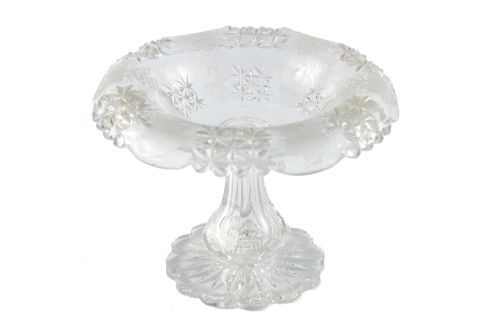


Cut Crystal Pedestal Dish
These cut crystal pedestal dish options bring heavy refractivity and raised form to a table, combining clear glass with elevated bases.
Cut Crystal Pedestal Dish
A cut crystal pedestal dish stands above the surface on an elevated foot or stem, holding fruit, sweets or centrepiece arrangements. When you search for a cut crystal pedestal dish, you find pieces designed to catch the light from multiple angles through faceted bowls and stems.
The selections span from the Georgian period through the Victorian and Edwardian eras up to the nineteen-twenties, alongside pieces from traditional Irish crystal makers. Forms include tazzas, centrepiece bowls, fruit bowls, and covered sweet jars mounted on raised supports.
Victorian and late nineteenth-century examples dominate the offerings, often featuring deep diamond cutting and heavy lead content. You also encounter mounted hybrid pieces that combine clear lead crystal with gilt bronze or Dutch silver mounts.
Materials and construction methods
The primary material is heavy lead crystal or cut glass, shaped by blowing or pressing before artisans applied wheel-cutting to create geometric facets. This abrasive cutting process removes layers of glass to produce deep prismatic patterns that scatter light.
Certain examples incorporate mixed media, such as gilt bronze frameworks, porcelain elements, or Dutch silver covers fitted to the glass body. Cased glass techniques appear in pieces like the yellow over crystal tazza, where a coloured glass layer is fused over clear metal before cutting.
Cut Crystal Pedestal Dish Retail Price Guide 2026
Typical asking prices for cut crystal pedestal dish among the pieces listed under this phrase on Sellingantiques today, from the lower quarter to the upper quarter. They describe what is for sale here now, not the wider market.
The listings span the Victorian era, Georgian period, and Edwardian years, utilising materials such as lead crystal, gilt bronze, and cased glass.
Judging quality and execution
Quality rests on the crispness of the wheel-cut facets and the weight of the metal itself. Superior pieces show sharp, clean edges to the diamonds and flutes without softening or rounding from hasty polishing.
The clarity and brilliance of the crystal distinguish better work, alongside the proportion between the elevated stem and the upper bowl. Integrated metal mounts, where present, display fine chasing and secure fitment to the glass.
The Cut Crystal Pedestal Dish Glossary
- Tazza
- An Italian term for a shallow saucer or bowl mounted on a stem and foot. These elevated dishes served sweetmeats or fruit in formal settings.
- Sweetmeat jar
- A covered vessel designed to hold small confections, nuts, or preserved fruits. They often feature matching lids and rest on pedestals or low feet.
- Lead crystal
- Glass containing a high proportion of lead oxide, which increases the weight, refractive index, and working time for deep cutting. It rings when struck gently.
- Cased glass
- Glass made by fusing a thin layer of coloured glass over a clear body. Cutting through the outer layer reveals the clear glass beneath.
Cut Crystal Pedestal Dish: Frequently Asked Questions
What were pedestal dishes used for?
These elevated vessels held fruit, sweetmeats, or ornamental displays during formal dining services. Their height lifted the contents above the table surface to improve visibility and decoration.
Over time, their role shifted towards purely decorative centrepieces or display objects in drawing rooms and sideboards.
How do I date a cut crystal dish?
Dating relies on combining the cutting style, glass colour, and mounting materials with any visible wear on the base. Georgian and early Victorian pieces often display hand-polished facets and heavier pontil marks.
Later Victorian and Edwardian examples show more mechanical precision in the cutting patterns, while twentieth-century pieces adopt cleaner, simpler profiles.
Are these dishes dishwasher safe?
Antique lead crystal requires hand washing in lukewarm water with mild soap to protect the brilliant surface and prevent thermal shock. Sudden temperature changes can crack historic glass.
Metal mounts, particularly gilt bronze or silver, should be kept away from harsh detergents and dried thoroughly immediately after washing.
What is the difference between glass and crystal?
True crystal contains a significant percentage of lead oxide, which makes the material heavier, softer to cut, and more refractive of light. This composition allows artisans to achieve deep, sharp facets that sparkle intensely.
Standard glass lacks this lead content, resulting in lighter weight and less prismatic fire when exposed to light.