

Cut Crystal Lighting
Cut crystal lighting brings sparkle and grandeur to a room through faceted glass and gleaming metal frames.
Cut Crystal Lighting
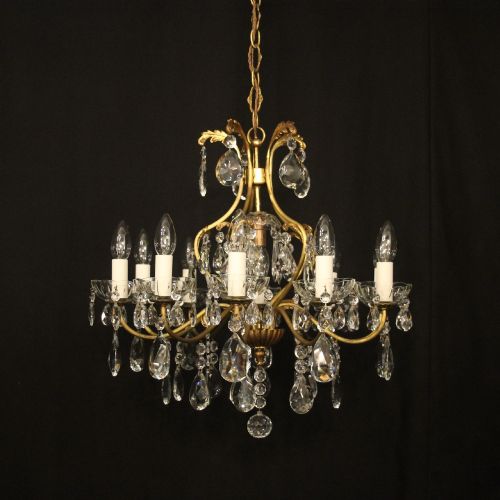
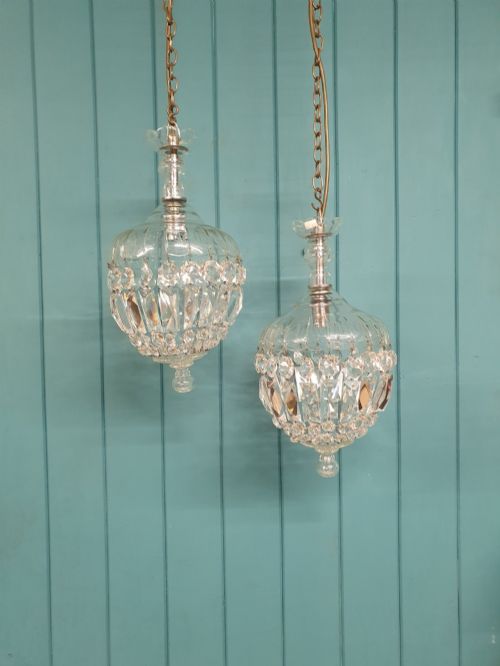
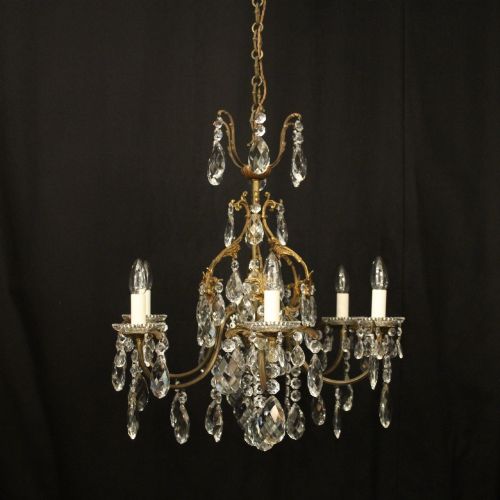
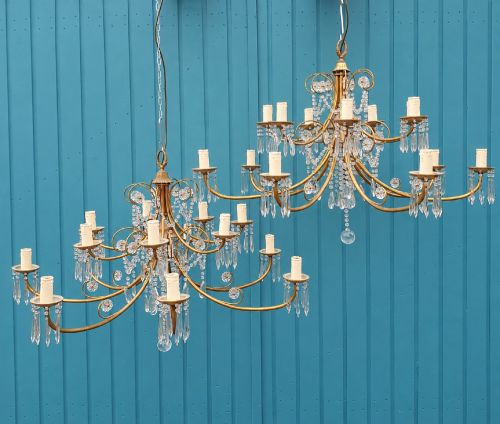
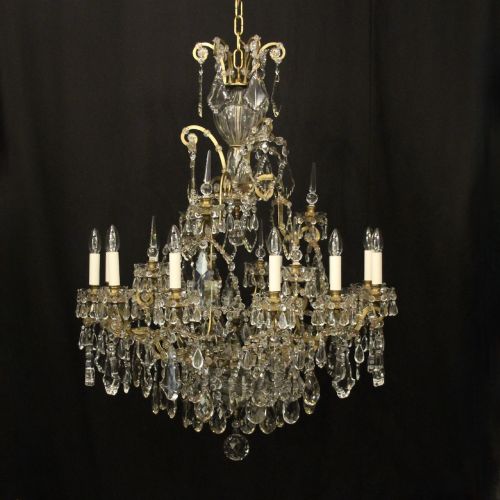
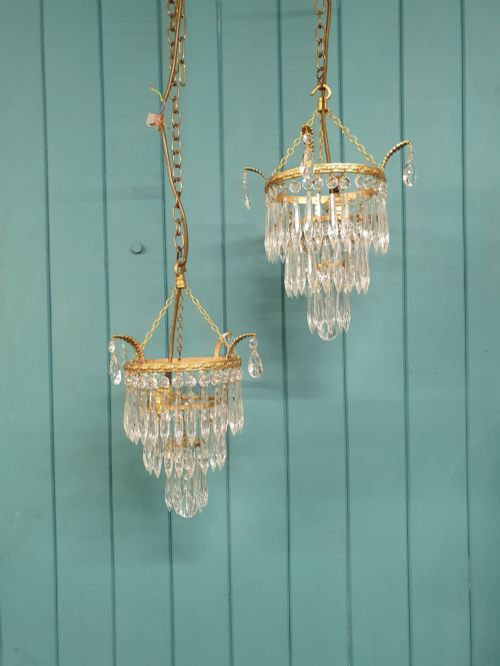
Cut crystal lighting encompasses chandeliers, ceiling lights, table lamps, and wall lights designed to refract light across a space. Buyers searching for cut crystal lighting encounter fixtures dating from the nineteenth century through the early twentieth century, with a strong representation of Edwardian pieces and 1920s French designs.
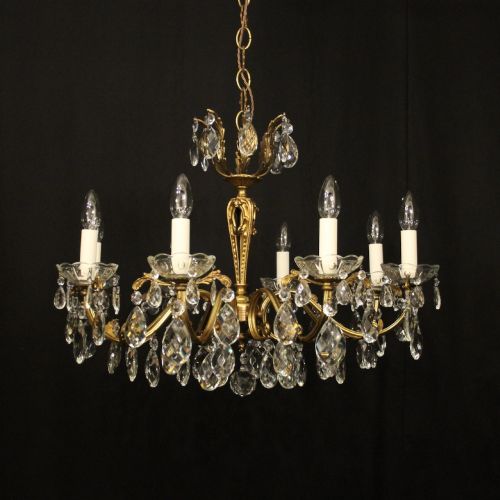
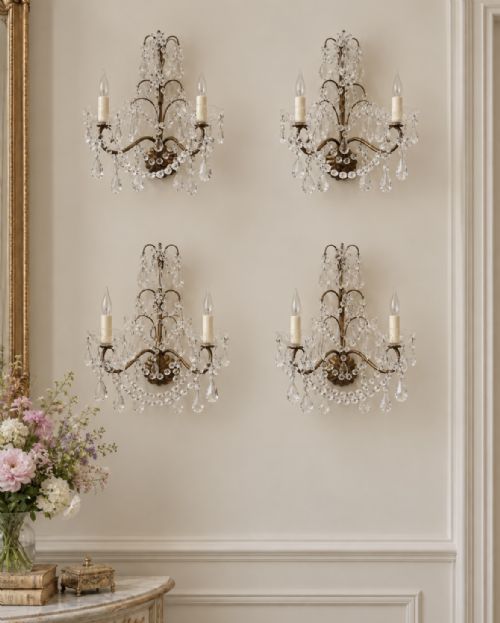
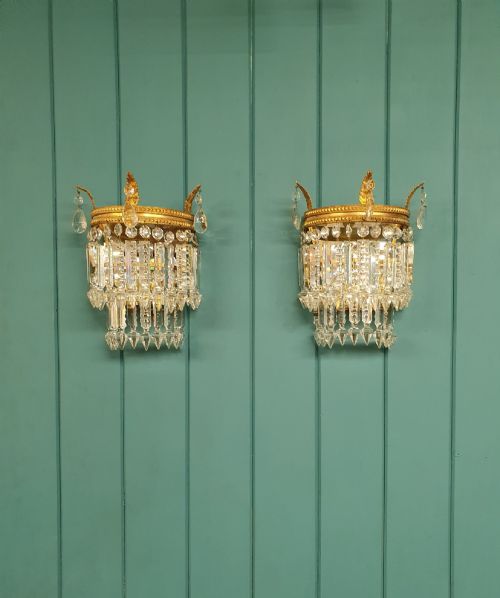
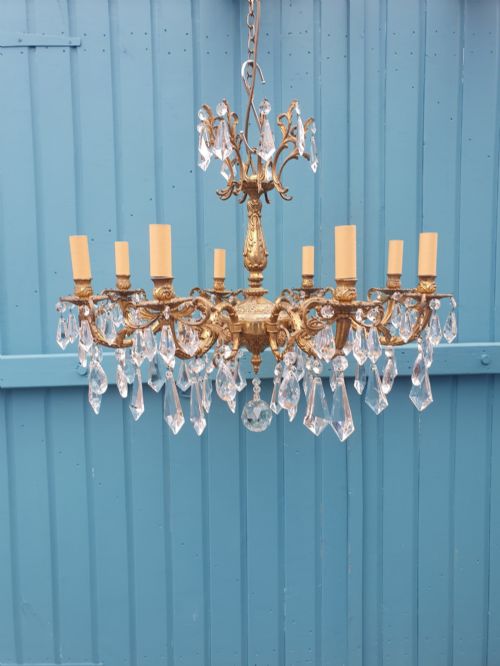
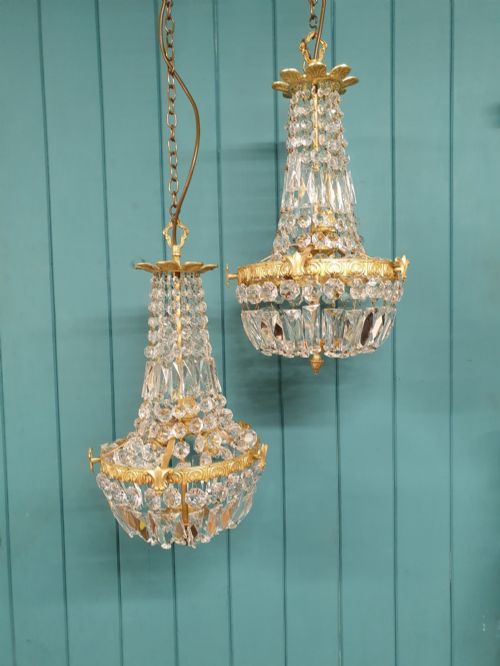
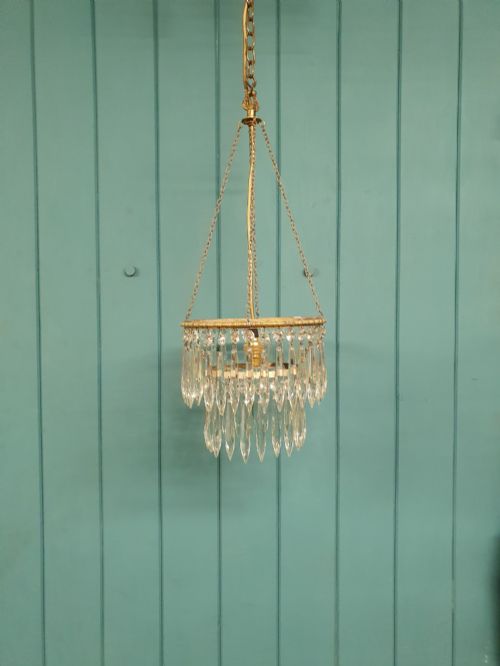
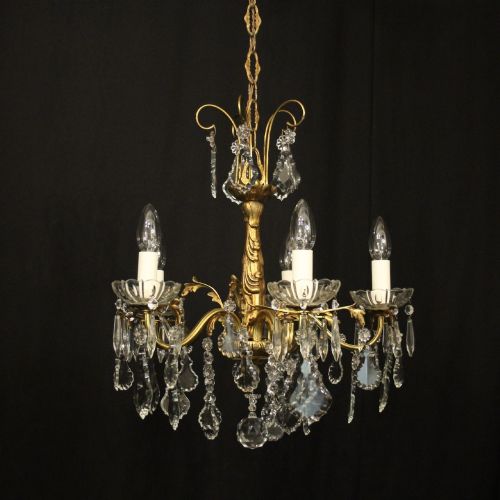
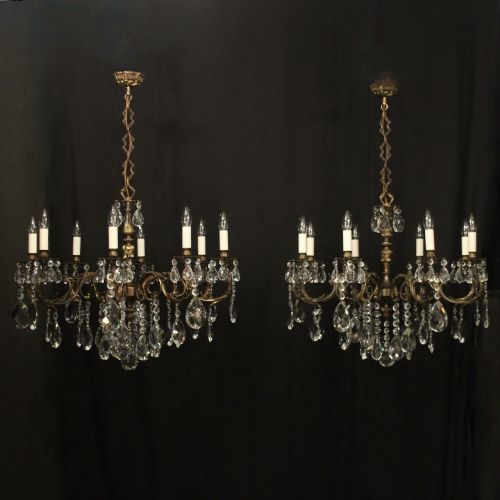
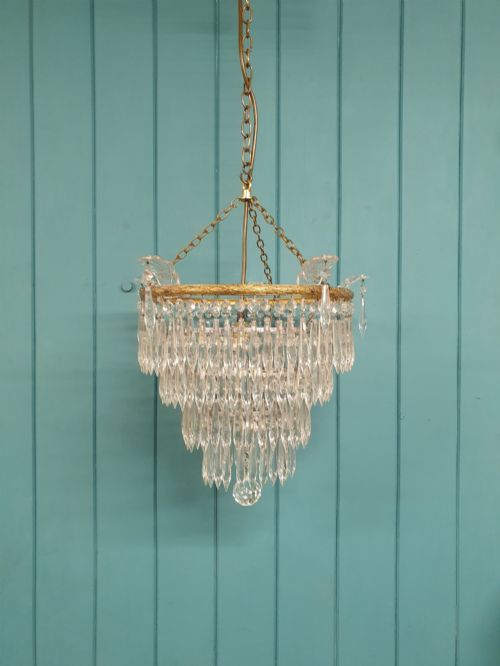
The most common forms on this page are multi-armed chandeliers, including spike, tent, and basket configurations, alongside smaller wall lights and mantel lustres. These objects combine metal frames with glass drops that catch and scatter illumination from candles or bulbs.
Origins span France, Italy, and Britain, with French styles such as Empire, Rococo, and Louis Revival appearing frequently alongside Edwardian British pieces. Brass, gilt bronze, and cut glass dominate the construction, creating decorative focal points for period interiors.
Materials and Construction
Makers built the structural frameworks of cut crystal lighting using cast or spun brass, gilt bronze, and gilt brass, sometimes incorporating gilt spelter or porcelain flowers. These metal armatures supported the weight of numerous glass drops, pendeloques, and chains.
The optical elements relied on glass and crystal cut by hand with faceted surfaces designed to maximise light refraction. Individual prisms, spikes, and beads were wired or pinned to the metal frames by hand, creating complex tiered and draped silhouettes.
Cut Crystal Lighting Retail Price Guide 2026
Typical asking prices for cut crystal lighting among the pieces listed under this phrase on Sellingantiques today, from the lower quarter to the upper quarter. They describe what is for sale here now, not the wider market.
Flying cherubs occasionally join the brass framework, holding cut glass spikes aloft above unsuspecting dining tables.
Evaluating Quality and Craftsmanship
Quality in cut crystal lighting rests on the clarity of the glass and the precision of the hand-cutting on each facet. Finer pieces use heavy, high-lead crystal that produces sharp light dispersion, whereas simpler examples employ standard pressed or moulded glass.
The metalwork dictates structural integrity, with cast bronze and heavy brass frameworks supporting large numbers of arms more securely than lighter stamped metals. The presence of matching original drops and consistent patination across the gilt surfaces also separates standard production from superior examples.
The Cut Crystal Lighting Glossary
- Plafonnier
- A ceiling light fixture that mounts directly flat against the ceiling rather than hanging on a chain or drop. These fixtures often feature cut glass bowls or shallow metal frames.
- Mantel lustre
- A decorative ornamental candle holder hung with cut glass prisms designed to sit on a fireplace mantelpiece. They reflect ambient light from candles placed in the central nozzle.
- Tent chandelier
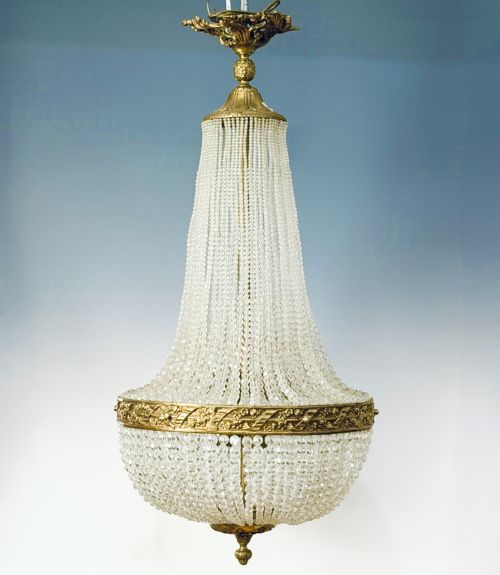
- A lighting fixture featuring an upper canopy of concentric glass bead strings that taper down to a central ring of arms. This configuration creates a draped tent effect characteristic of the period.
- Spike chandelier
- A vertical hanging light centred around an elongated central glass spike surrounded by radiating arms and drops. These fixtures typically measure on a more compact scale.
- Pendeloque
- A hanging glass or crystal drop, often pear-shaped or oval, cut with facets to catch and reflect light. They dangle from the arms and frames of chandeliers and wall lights.
Cut Crystal Lighting: Frequently Asked Questions
How do I clean cut crystal lighting?
Cleaning requires a gentle solution of warm water and mild soap applied carefully to each glass drop by hand. Technicians remove drops individually when heavy accumulation demands thorough restoration of the facets.
After washing, the crystal components need careful drying with a lint-free cloth before reattachment to the brass or bronze frame to restore maximum brilliance.
Are these antique lights converted for electricity?
Most surviving pieces from the Edwardian era and the 1920s adapt readily to modern electrical wiring standards. Electricians run insulated internal cables through the hollow brass arms and central spindles.
Original candle-form drip pans and sockets accommodate modern candle tubes while preserving the historical appearance of the fixture from below.
How do I tell an Edwardian chandelier from a 1920s piece?
Edwardian examples frequently exhibit refined British brasswork combined with delicate cut glass spikes and simpler frames. They often date from the opening decade of the twentieth century.
By contrast, 1920s pieces often reflect French Empire or Louis Revival styles featuring gilt bronze, elaborate basket weaves, and more numerous light tiers.
Can heavy crystal chandeliers hang safely from standard ceilings?
Hanging these substantial fixtures requires locating a secure ceiling joist or installing a heavy-duty metal mounting bracket capable of supporting the combined weight of metal and glass. Professional installation prevents strain on older plasterwork.
Smaller pieces like plafonniers or compact spike chandeliers place less demand on structural fixings than multi-tiered ballroom fixtures.