





Cut Crystal Caster
These cut crystal caster pieces bring refined brilliance to the table, combining heavy cut glass with precious metal mounts for daily dining.
Cut Crystal Caster
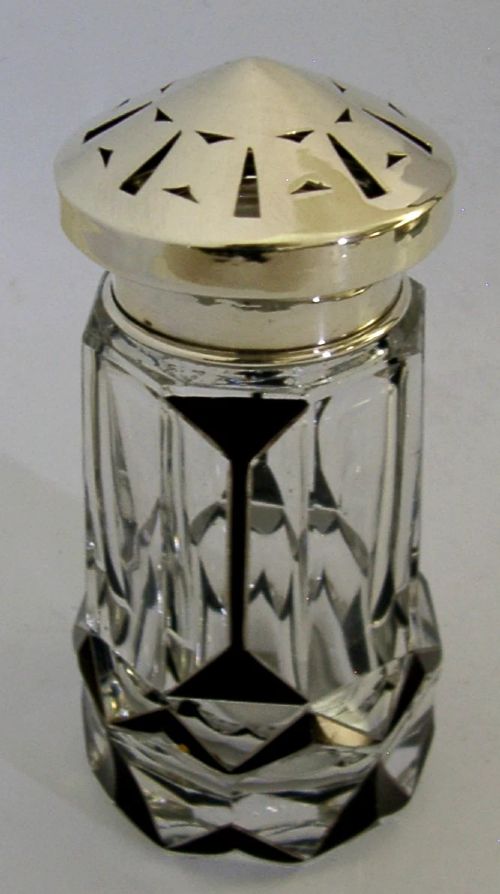
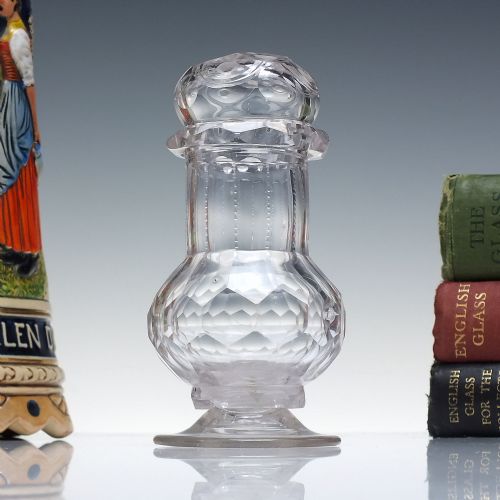
A cut crystal caster is a functional vessel designed for dispensing sugar, pepper, or condiments at the dining table. You encounter forms ranging from single sugar shakers to multi-bottle cruet sets housed in fitted frames.
The pieces listed here span the eighteenth century through to the mid-twentieth century, capturing Georgian, Victorian, Edwardian, Art Deco, and mid-century British periods. Single sugar casters with screw feet sit alongside extensive seven-bottle cruet sets.
Materials combine lead crystal, cut glass, and sterling silver with silver plate and enamel. Certain examples feature specific hallmarks, such as London work from nineteen sixty by Preece and Willicombe.
How they were made
Glass bodies are heavily cut to catch the light, utilising deep facets and geometric patterns that demand precise hand-workmanship. This cut glass is paired with cast and pierced metal tops made from sterling silver or silver plate.
Mounts and lids often screw securely onto the glass neck or fit snugly over a collar. Enamel additions and specialised screw foot mountings demonstrate the technical detail applied during manufacturing periods from the eighteenth to the twentieth century.
Cut Crystal Caster Retail Price Guide 2026
Typical asking prices for cut crystal caster among the pieces listed under this phrase on Sellingantiques today, from the lower quarter to the upper quarter. They describe what is for sale here now, not the wider market.
A good eighteenth-century caster comes with a screw foot, ensuring the glass does not part ways with the table during an over-enthusiastic sugar dusting.
What varies in quality
Quality rests in the crispness of the glass cutting and the weight of the crystal body. Sharp, deep facets reflect light cleanly, whereas softer facets indicate simpler production.
The metal components also dictate standard, where substantial gauge sterling silver mounts and fully intact enamel work separate finer examples from standard silver plated condiment sets.
Preece & Willicombe
The Cut Crystal Caster Glossary
- Cruet set
- A matched collection of bottles or castors for holding vinegar, oil, pepper, and other seasonings on a frame. These sets often incorporate multiple glass bottles with silver or plated tops.
- Lead crystal
- Glass containing lead oxide to increase weight, brilliance, and clarity. This material allows deep, sharp cutting that defines high-quality tablewares.
- Silver plate
- A base metal coated with a thin layer of silver to provide the appearance of solid silver. This technique became common during the Victorian and Edwardian periods for dining sets.
- Screw foot
- A threaded base mounting attached to glass bodies, typical of eighteenth-century sugar casters. It secures the glass vessel firmly to its metal base.
- Sugar sifter
- An alternative term for a caster, fitted with a pierced dome top to sprinkle powdered sugar. These items appear across Georgian and later twentieth-century styles.
Cut Crystal Caster: Frequently Asked Questions
What is a cut crystal caster used for?
These vessels serve to dispense powdered sugar, mustard, pepper, or other dry seasonings at the dining table. Single casters focus on sugar, while cruet sets hold multiple condiments simultaneously.
Their perforated lids allow controlled sprinkling over food or beverages, combining practical utility with decorative presence on the dining surface.
How do I date a cut crystal caster?
Dating relies on combining the style of the glass cutting, the shape of the metal mounts, and any visible silver hallmarks. Georgian pieces often feature distinct screw foot fittings and heavier hand-cut patterns.
Later Victorian, Edwardian, and Art Deco examples shift toward silver plate frames and different pierced top designs. Maker marks provide precise calendar years where hallmarked.
What is the difference between a caster and a cruet set?
A caster is a single standalone jar with a pierced top for sugar or pepper. A cruet set is a collection of several glass bottles and casters held together in a metal frame.
Cruet sets typically contain compartments for oil, vinegar, mustard, pepper, and salt alongside sugar, whereas a caster operates independently.
How should I clean cut crystal and silver?
Clean the glass body using warm soapy water and a soft brush to clear residue from the deep facets. Avoid harsh abrasives that scratch the surface.
Polish silver mounts with a dedicated cloth while avoiding direct contact between silver polish and the glass or enamel sections.