

Curved Wood Desk
These curved wood desks and associated seating span periods from the Georgian era through to Art Deco, uniting rich timbers with fluid, ergonomic lines.
Curved Wood Desk
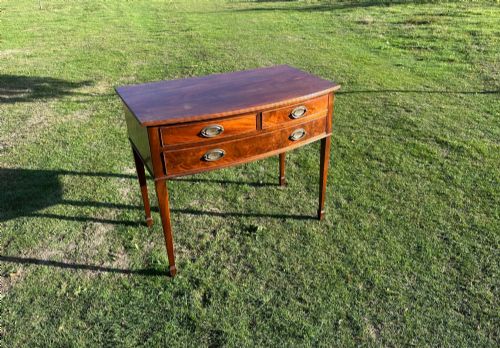
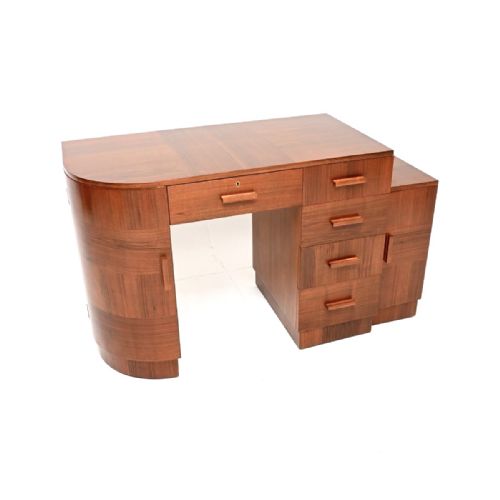
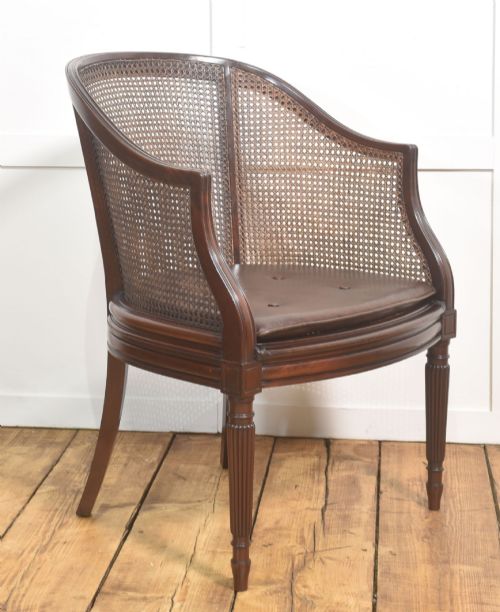
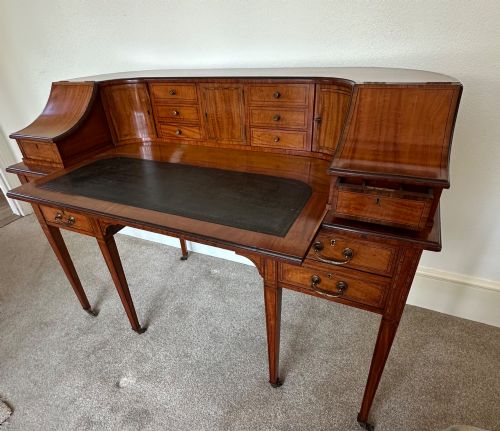
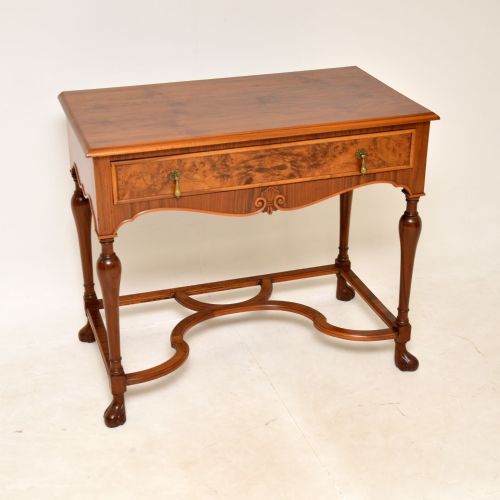
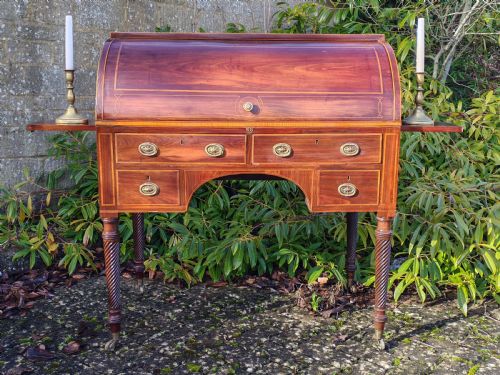
A curved wood desk brings together substantial writing surfaces and seating with rounded profiles, drawing from Georgian, Victorian, Edwardian, and Art Deco traditions. You encounter forms ranging from cylinder top writing tables and kidney shaped desks to revolving desk chairs and upholstered tub armchairs.
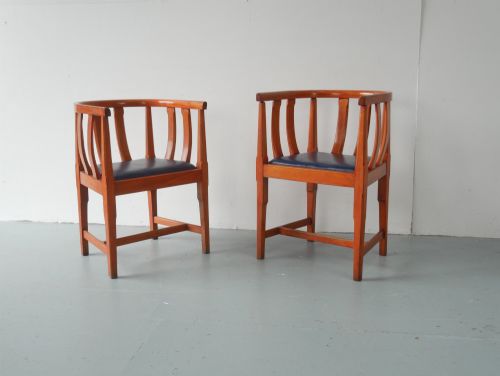
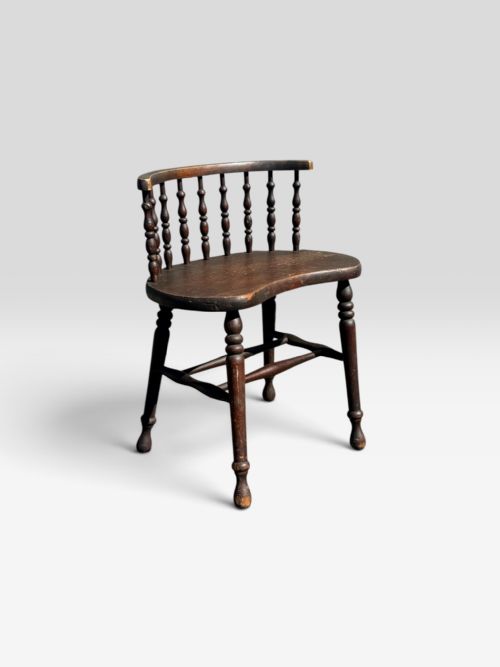
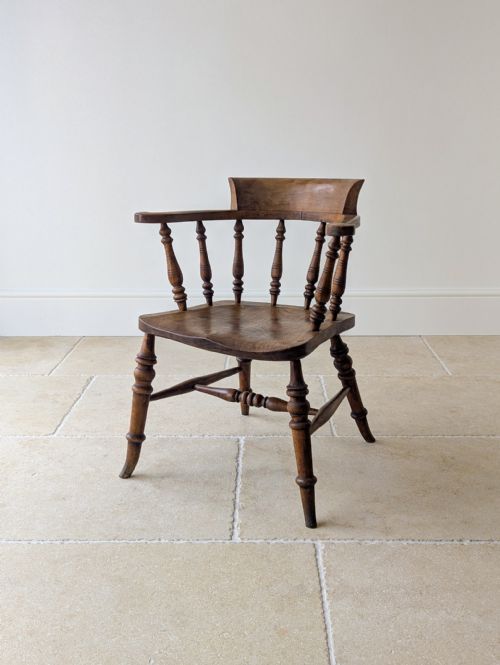
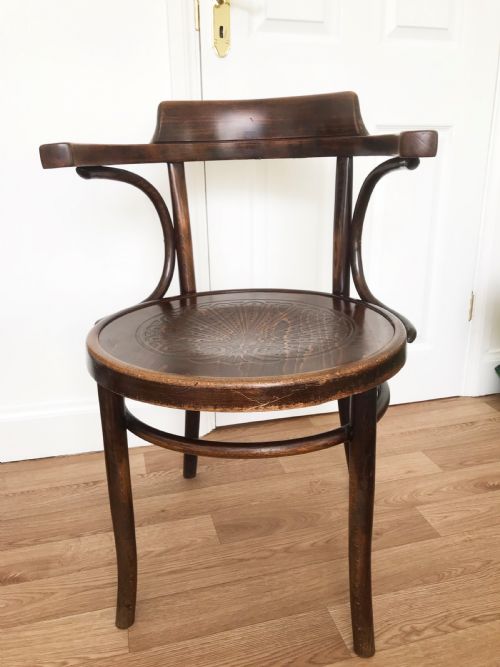
The selection encompasses specific writing furniture alongside companion seating like elm and beech captain's chairs, Windsor armchairs, and bentwood carvers. These pieces demonstrate how makers utilised natural curvature for both structural strength and comfort in domestic workspaces.
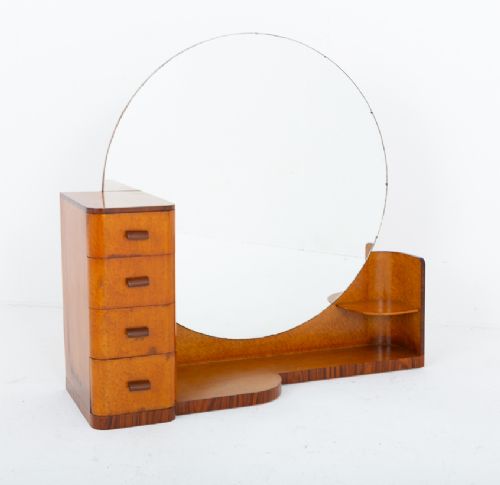
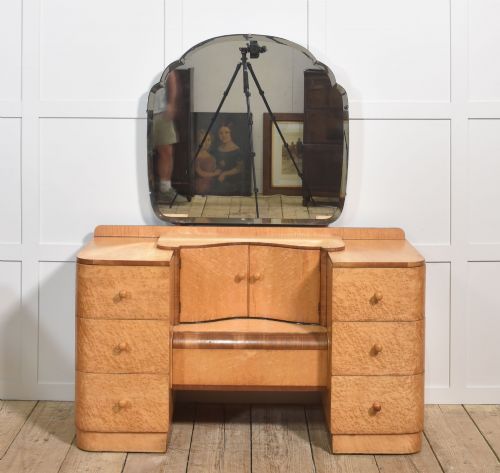
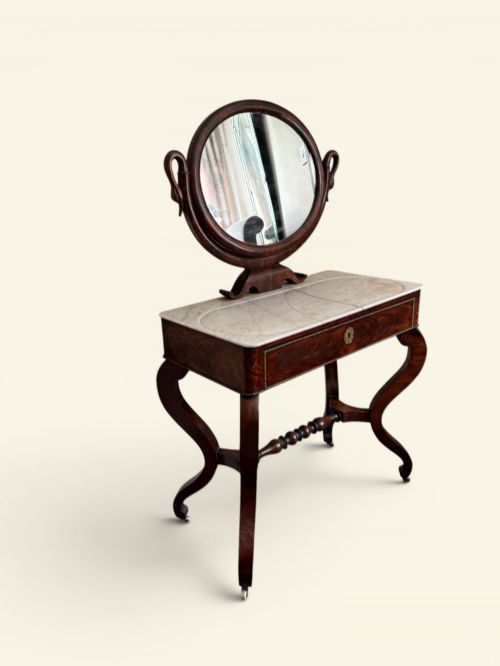
Originating across Britain, France, Sweden, and China, the inventory demonstrates varied regional interpretations of rounded timber forms. Whether examining a mahogany cylinder desk or a maple dressing table, the emphasis remains on sweeping structural lines.
Materials and construction
Makers relied on timbers such as mahogany, walnut, elm, beech, birchwood, and maple, often selecting figured veneers like burr elm and birds eye maple for visual depth. These woods were chosen for their grain patterns and capacity to hold smooth, sweeping curves without splitting.
Construction techniques include steam bending for components like hoop backs and bentwood frames, alongside precise joinery for cylinder tops and kidney shaped writing surfaces. Brass fittings, cane panels, leather inserts, and marquetry inlay frequently complete the fabrication of these desks and chairs.
Curved Wood Desk Retail Price Guide 2026
Typical asking prices for curved wood desk among the pieces listed under this phrase on Sellingantiques today, from the lower quarter to the upper quarter. They describe what is for sale here now, not the wider market.
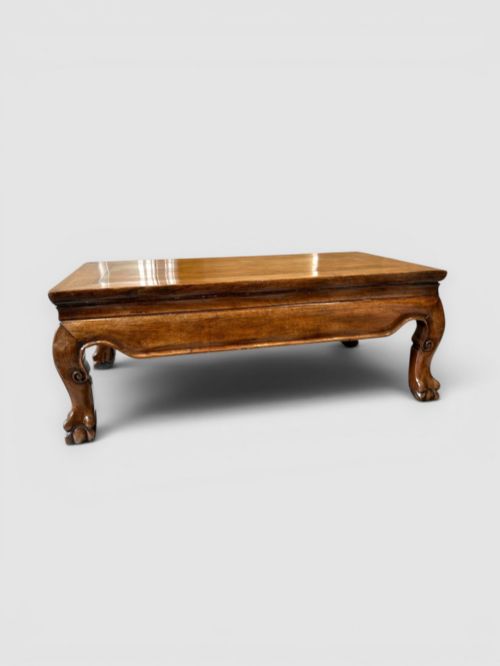
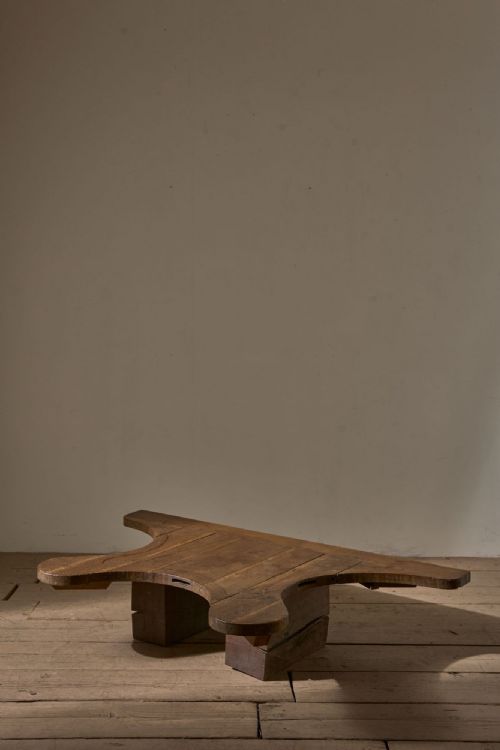
Watch makers and jewellers also left behind specialised workbenches turned into coffee tables.
Assessing quality and craftsmanship
Quality rests in the precision of the curved joinery and the selection of timber veneers, where figuration in walnut, mahogany, or maple is matched with care across the writing surface. Superior examples maintain structural integrity in their steam-bent components and sliding mechanisms without excessive play.
The sophistication of the secondary woods, the retention of original leather or brass hardware, and the subtlety of marquetry inlay distinguish workshop output. Pieces attributed to specific designers or makers demonstrate a higher grade of finish in hidden areas and interior drawers.
Harry and Lou Epstein
The Curved Wood Desk Glossary
- Cylinder desk
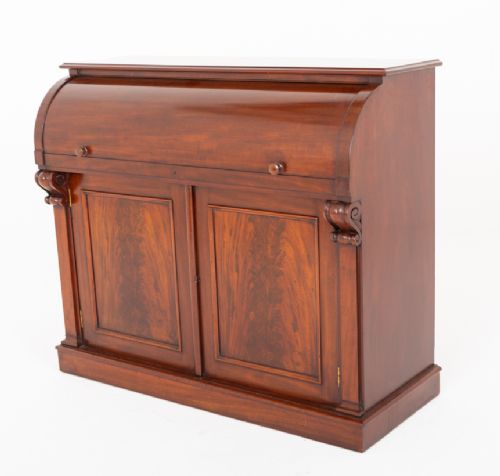
- A writing table featuring a quarter-cylinder rolling shutter that conceals the writing surface and inner pigeonholes when closed. This form protects the desk interior while presenting a smooth wooden curve.
- Kidney shaped desk
- A writing table with a concave front curve that wraps around the user, popular in Georgian and Victorian iterations. This shape allows closer access to the central drawers.
- Bentwood
- Wood shaped by applying steam to soften the fibres before bending them into rounded forms. It defines lightweight chairs and structural framing from the nineteenth and early twentieth centuries.
- Winsor chair
- A wooden seating form featuring a solid saddle-seated base into which shaved spindles and a bentwood hoop back are wedged. Elm and yew are typical materials for these sturdy traditional seats.
- Marquetry
- The art of applying decorative veneer pieces to a structure to form intricate picture designs or geometric patterns. French and English desks often employ this technique on top surfaces.
Curved Wood Desk: Frequently Asked Questions
What is a curved wood desk?
A curved wood desk is a writing table or companion chair featuring rounded profiles, cylinder fronts, or kidney shaped surfaces. These pieces draw from Georgian, Victorian, Edwardian, and Art Deco periods.
They combine functional workspaces with ergonomic wooden curves, utilising timbers such as mahogany, walnut, elm, and maple.
How do I date a curved wood desk?
Dating relies on stylistic markers, timber choice, and construction methods characteristic of specific eras like the Georgian period, the Victorian age, or Art Deco. Examining the secondary woods and hardware also helps establish age.
Cabinetmakers shifted from heavy solid mahogany in earlier centuries to exotic veneers and steam-bent components by the early twentieth century.
Where were these desks used?
These desks and associated armchairs served primarily in domestic studies, libraries, drawing rooms, and bedrooms as writing surfaces or dressing tables. They provided organised storage with pigeonholes and drawers.
Companion seating such as captain's chairs and bentwood armchairs were designed for prolonged sitting at the desk.
How do I care for antique wood desks?
Care involves maintaining stable indoor humidity levels and keeping wooden surfaces away from direct heat sources to prevent veneer lifting. Regular dusting with a soft dry cloth preserves the polished finish.
Leather writing inserts benefit from specialised conditioning to keep the material supple without damaging the surrounding timber.