




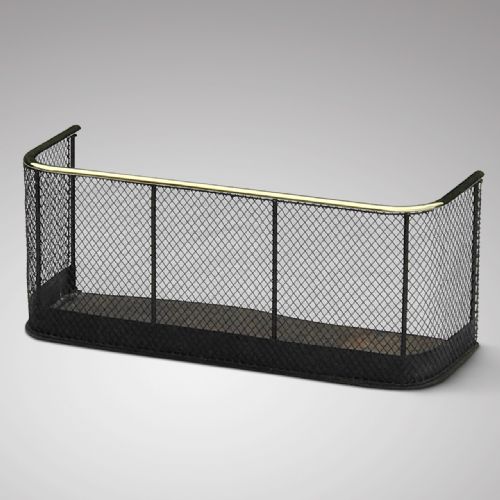
Curved Wire Fender
These curved wire fenders protect hearths and rooms from stray embers, bringing period charm and practical safety to an open fireplace.
Curved Wire Fender
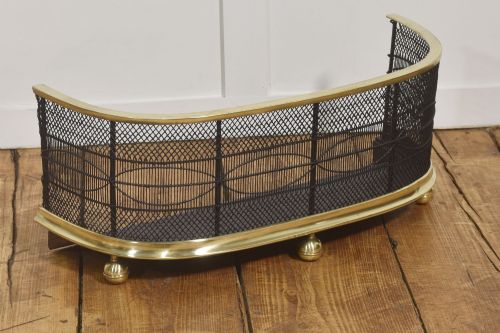
When you search for a curved wire fender, you are looking at nineteenth-century and early twentieth-century hearth furniture designed to contain sparks. These pieces shield rooms from open fires while maintaining warmth and visibility into the grate.
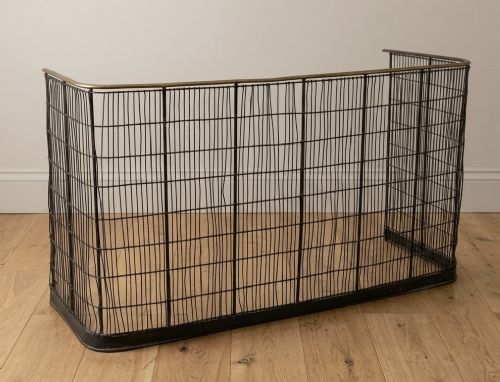
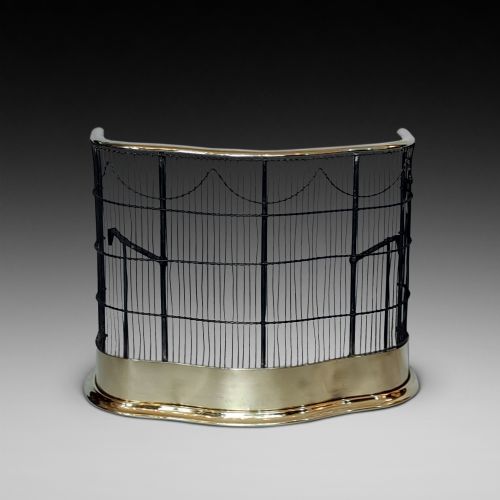
The versions you are most likely to meet on this page span the Victorian, Regency, and Edwardian periods. They appear as bowed, serpentine, or nursery guards featuring woven or mesh wire bounded by brass frames and top rails.
How they were made
Maker workshops built these fire guards using iron and steel wire for the mesh body, often woven by hand to form secure barriers. This wire mesh was then fitted into robust brass or wrought iron frames that gave the guards their curved or bowed shape.
Many examples incorporate polished brass top rails and rims fastened directly to the wirework body. The combination of structural iron or steel with decorative brass provided both durability against heat and a finished appearance for the hearth.
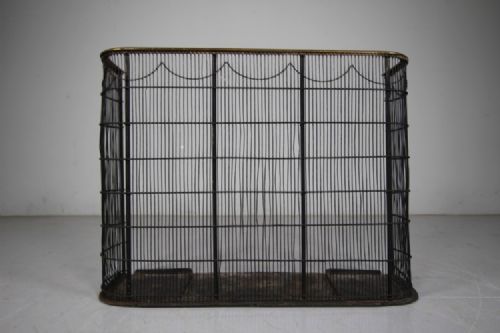
Victorian nurseries relied on these tall mesh cages so children could warm their toes without getting too close to the flames.
What varies in quality
Quality rests in the precision of the metalwork and the weight of the materials used in the frame. Fenders with heavy brass top rails and tightly woven wire mesh represent the upper tier of construction.
Simpler iron or steel wire versions show differences in how neatly the mesh attaches to the structural frame. The refinement of the curved or bowed silhouette separates standard utility guards from finer domestic examples.
The Curved Wire Fender Glossary
- Nursery fender
- A tall protective guard designed to keep children and pets away from an open fire. These pieces enclose the hearth area more completely than low fenders.
- Serpentine
- A gentle undulating curve shape seen in the framework of certain guards. This contour allows the fender to fit neatly against the hearth stones.
- Wire mesh
- A woven or interlaced metal grid forming the body of the guard. It allows heat to radiate into the room while stopping sparks.
- Top rail
- The upper horizontal border of the guard, frequently fashioned from polished brass. It provides a finished edge and a sturdy grip point.
Curved Wire Fender: Frequently Asked Questions
How do I measure for a fender?
Measure the width and depth of your hearth space to ensure the curved shape clears the fireplace opening safely.
Account for any protruding hearth stones so the guard sits squarely on the floor.
Are these safe for modern fires?
These historical guards were built for period coal and wood grates to contain stray sparks and embers.
Check the mesh integrity closely before using them with active modern open fires.
How do I clean brass and wire?
Dust the wire mesh gently with a soft brush to remove accumulated soot and debris over time.
Use appropriate metal polish on brass top rails while protecting the surrounding wirework.
What periods do these date from?
The pieces span the nineteenth and early twentieth centuries, including Regency, Victorian, and Edwardian eras.
Construction details and brass framing styles help indicate the specific period of origin.