



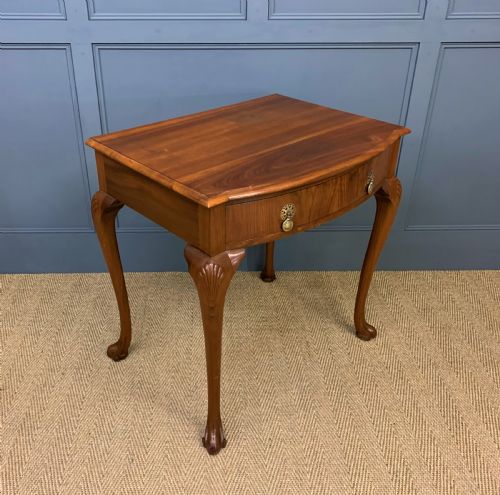
Curved Walnut End Table
A curved walnut end table brings warmth and smooth twentieth-century lines to a room, offering a neat surface beside a sofa or chair.
Curved Walnut End Table
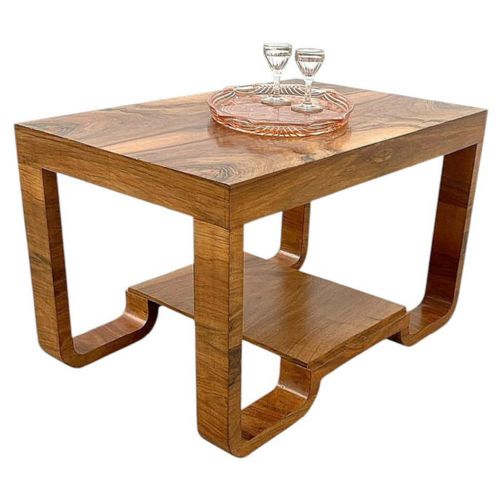
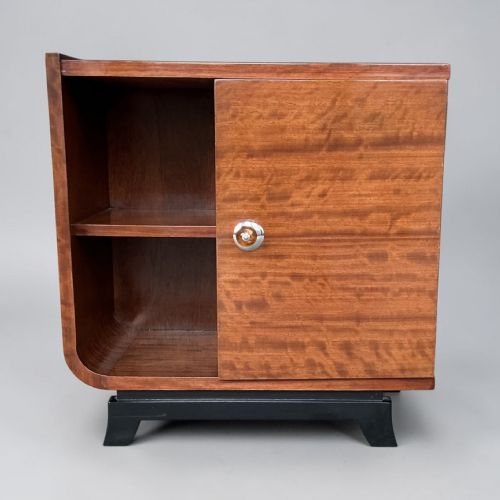
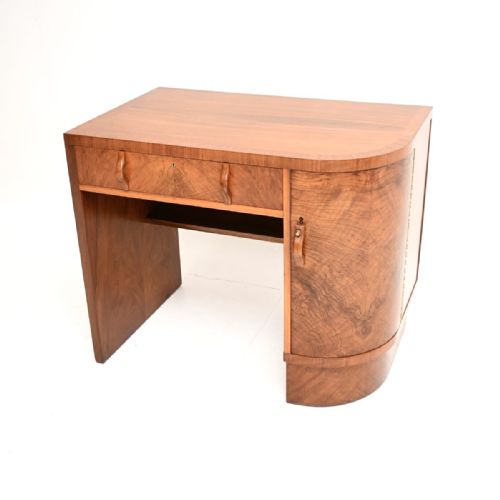
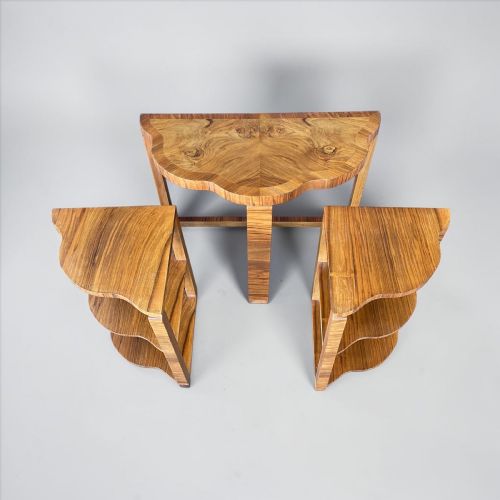
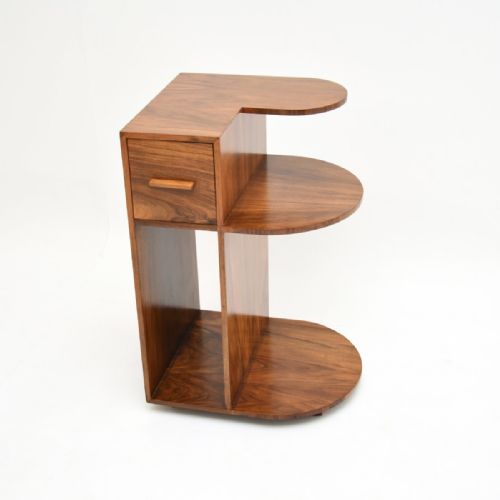
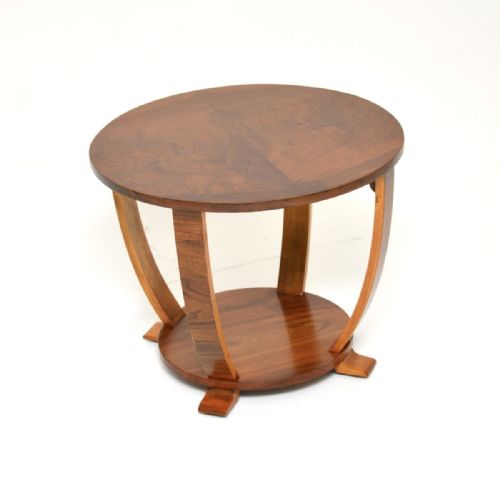
A curved walnut end table appears primarily in the Art Deco style, dating from the early decades of the twentieth century. These pieces encompass side tables, occasional tables, side cabinets, desks, and nests of tables designed for domestic utility.
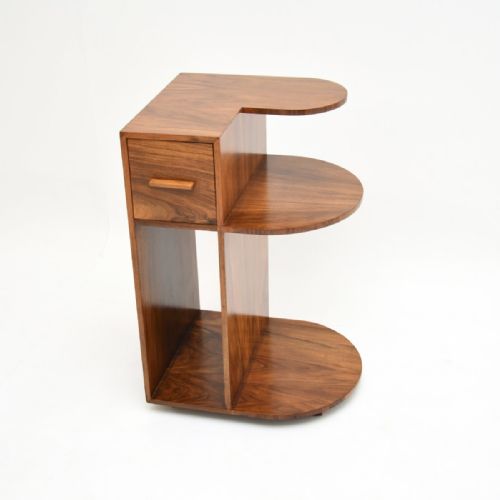
The version most commonly met on this page is the Art Deco figured walnut side table from around nineteen thirty. Alongside these standalone tables, the selection includes multi-tiered designs, lamp tables, and pairs intended for sofa placement.
Makers working in this period shaped walnut timber and veneer into geometric and rounded forms that suited modern interiors. Buyers encounter variations including octagonal occasional tables and illuminated top sofa tables originating from the nineteen tens to the nineteen forties.
How they were made
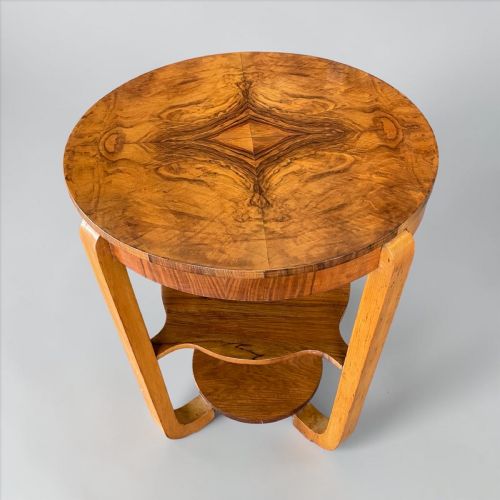
Makers constructed these pieces using solid timber and veneer over a supporting core, selecting walnut and burr walnut for rich grain patterns. Surfaces often display figured walnut veneer arranged to highlight natural swirls and figures in the wood.
Construction techniques combined traditional cabinetmaking with modern industrial styling, sometimes integrating brass or chrome hardware. Selected examples incorporate ebonised wood or mahogany to create contrast against the warm walnut tones.
Curved Walnut End Table Retail Price Guide 2026
Typical asking prices for curved walnut end table among the pieces listed under this phrase on Sellingantiques today, from the lower quarter to the upper quarter. They describe what is for sale here now, not the wider market.
Some tables feature illuminated tops, ensuring your evening reading material receives a theatrical glow from within the furniture itself.
What varies in quality
Quality rests in the selection of the walnut veneer and how seamlessly the curved sections are joined and finished. Grain matching across circular or octagonal tops reveals the skill of the cabinetmaker.
Design complexity distinguishes standard production from finer pieces, such as those featuring three tiers, illuminated tops, or attribution to notable designers. The crispness of the curves and the depth of the polished finish determine the standing of each table.
Gilbert Rohde·Maurice Adams
The Curved Walnut End Table Glossary
- Walnut
- A dense hardwood prized for its dark brown colour and varied grain patterns. It served as the primary material for high-end twentieth-century case furniture.
- Art Deco
- A design style spanning the nineteen twenties and nineteen thirties characterised by sleek geometric shapes, streamlined forms, and modern materials. It dominates the tables found in this selection.
- Occasional table
- A small, movable table designed for specific, intermittent use in a living space. These pieces function easily beside seating areas.
- Burr walnut
- A prized wood growth featuring intricate, swirling grain patterns caused by tree deformities. It is sliced into decorative veneers for table tops.
Curved Walnut End Table: Frequently Asked Questions
What is a curved walnut end table?
A curved walnut end table is a compact twentieth-century surface piece, usually created in the Art Deco style. These tables use walnut timber and veneer to provide functional placement beside seating.
They appear as side tables, occasional tables, and lamp tables, shaped with rounded edges and polished wood surfaces.
How do I date these tables?
Dating relies on the stylistic markers of the pieces, predominantly from the nineteen tens to the nineteen forties. Art Deco geometry and specific veneer treatments point to the interwar decades.
Construction methods and recorded design periods help place each table within its manufacturing era.
Where should I place an end table?
These tables fit beside sofas, armchairs, or beds to hold lighting, books, or decorative objects. Their compact footprints suit both small corners and open living spaces.
Curved designs soften the angles of a room while matching the warm tones of twentieth-century wooden furniture.
What woods are used besides walnut?
Makers occasionally incorporated mahogany, ebonised wood, and various timber supports alongside walnut and its veneers. Brass and chrome elements also appear on selected pieces.
Walnut remains the dominant material, utilised for both solid components and decorative veneer surfaces.