



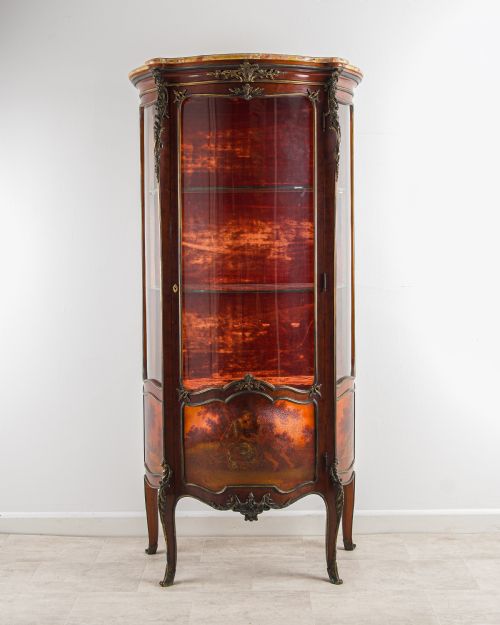


Curved Top Cabinet
A curved top cabinet brings French and English elegance into a room, offering refined storage with distinctive arched or rounded profiles.
Curved Top Cabinet
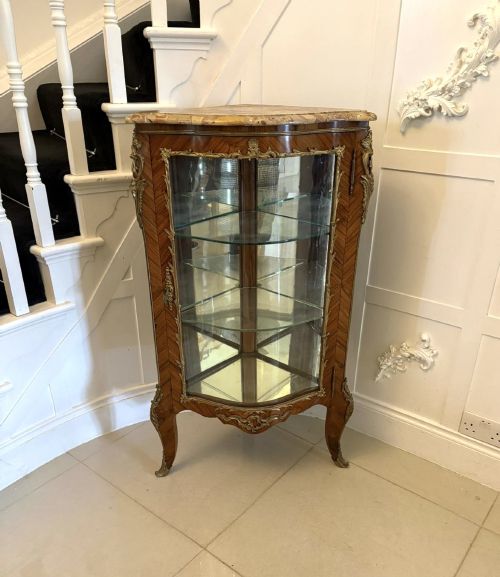
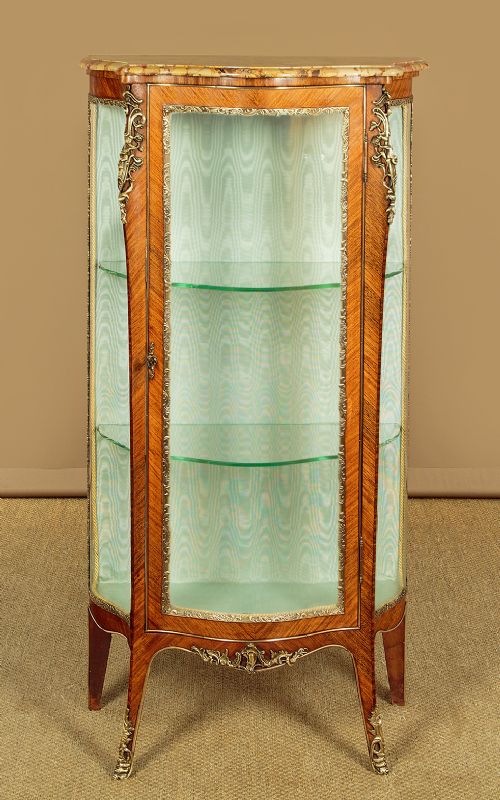
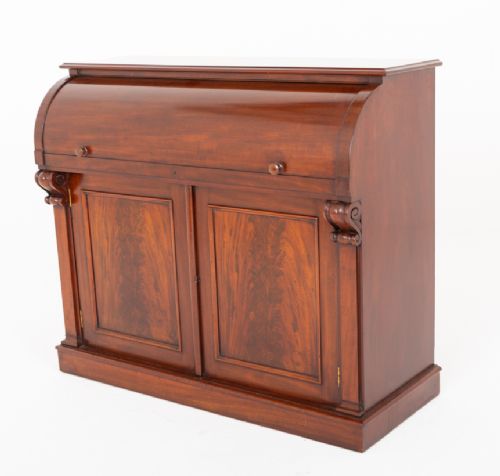
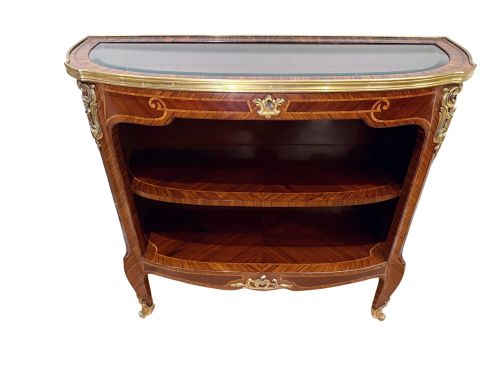
A curved top cabinet encompasses diverse forms designed for display and storage, ranging from towering vitrines to low side cabinets. When searching for a curved top cabinet, buyers encounter pieces spanning the eighteenth to the twentieth centuries, with French Revival and Louis styles appearing frequently.
Origins vary across England, France, Italy, and the Netherlands, reflecting regional tastes in timber and ornamentation. Pieces date from the Georgian era through Edwardian times and into the twentieth century, showing sustained interest in rounded architectural lines.
How they were made
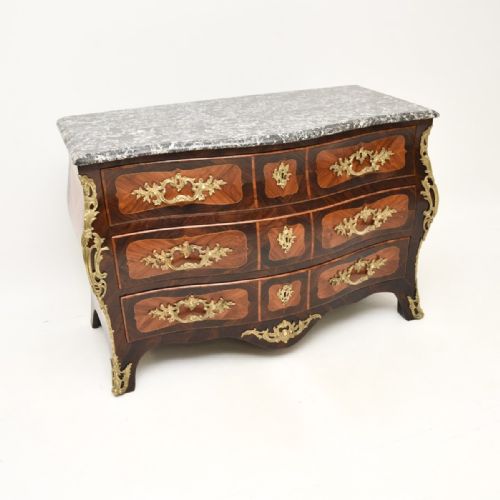
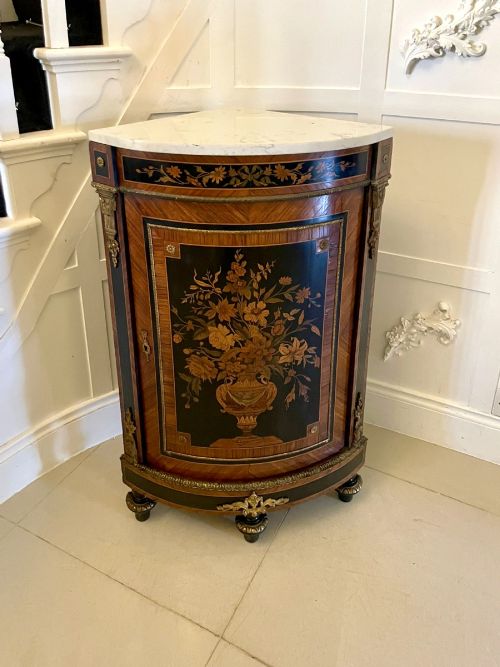
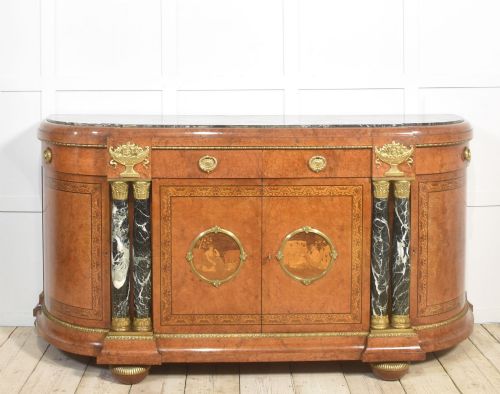
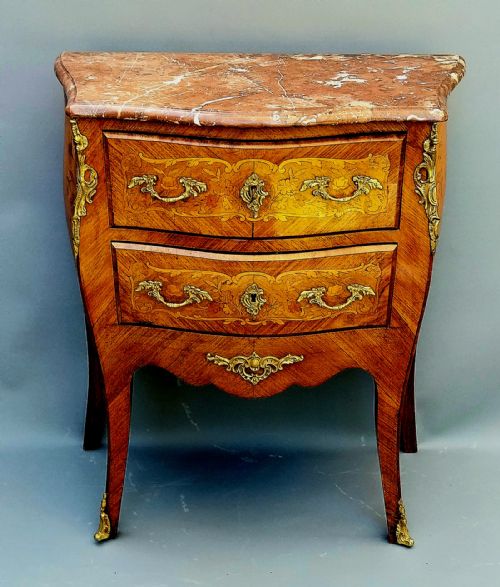
Cabinet makers utilised dense hardwoods such as mahogany, walnut, and kingwood as foundational structures, frequently applying intricate marquetry and parquetry veneers in geometric or floral patterns. Satinwood and painted finishes also appear, providing lighter colour palettes and decorative panels.
Surface luxury relied heavily on marble tops, cast ormolu, and gilt bronze mounts that framed doors and highlighted corners. Glass panels for vitrines and display sections required careful framing to accommodate the curved profiles characteristic of these pieces.
Several pieces include illuminated tops, proving that even antique display cabinets appreciate a well-lit stage for their porcelain.
What varies in quality
The distinction between standard examples and the finest pieces rests upon the crispness of the gilt bronze mounts and the precision of the marquetry inlay. Heavy, finely chased ormolu and meticulously matched wood veneers indicate superior workshops.
Structural integrity of the curved or serpentine timber work defines durability, as shaping wood to rounded forms demands advanced joinery. The weight and quality of the fitted marble top further separate standard production items from master cabinet maker outputs.
Jacques Bircklé·François Linke·Mercier Frères
The Curved Top Cabinet Glossary
- Ormolu
- Gilded bronze ornamentation applied to furniture. It provides metallic contrast against dark hardwoods and marble.
- Vitrine
- A glass-fronted display cabinet intended for porcelain and curiosities. These pieces often feature mirrored backs and glazed sides.
- Marquetry
- Inlaid wood pieces forming decorative pictures or patterns. Artisans utilise contrasting veneers to create detailed surface designs.
- Bombé
- A swelling, outward-curving furniture shape associated with continental commodes and cabinets. This profile requires complex carpentry to achieve balanced proportions.
- Serpentine
- A wave-like front contour that curves inward at the centre and outward at the ends. It adds dynamic movement to cabinet facades.
Curved Top Cabinet: Frequently Asked Questions
Where should a curved top cabinet go?
These cabinets suit living rooms, dining spaces, or hallways where their distinctive silhouettes draw the eye. Corner variations utilise neglected architectural angles efficiently.
Freestanding display versions benefit from placement near natural light sources to illuminate glass shelves and interior contents effectively.
How do I clean marble tops?
Wipe surfaces with a soft, damp cloth using mild, pH-neutral soap when necessary. Avoid acidic substances like vinegar or citrus cleaners that etch stone.
Dry thoroughly with a clean microfibre cloth to maintain the polished finish without scratching the delicate surface.
Are curved top cabinets English or French?
Both traditions contributed significantly to this furniture category, with distinct regional characteristics. English pieces often favour mahogany and subtle stringing.
French examples frequently showcase kingwood veneers, elaborate ormolu mounts, and painted Vernis Martin panels inspired by rococo tastes.
What is Vernis Martin?
This technique involves a specialised layered varnish mimicking Asian lacquer work, developed in eighteenth-century France. Artisans applied multiple translucent coats over painted scenes.
Cabinets featuring this finish display distinctive tonal depth and glossy decorative panels within the woodwork.