

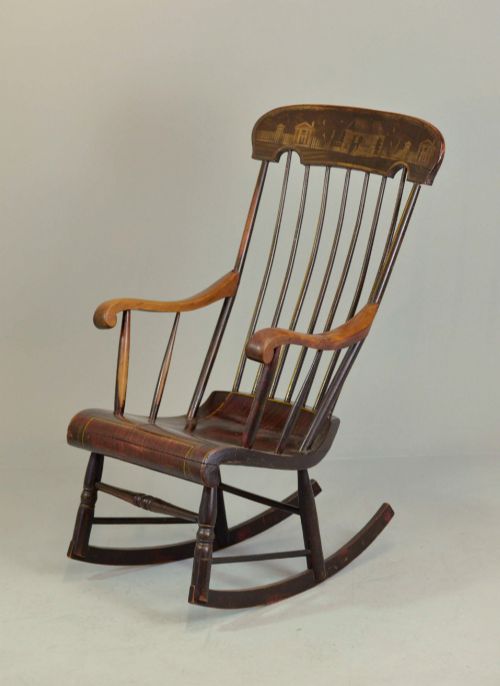
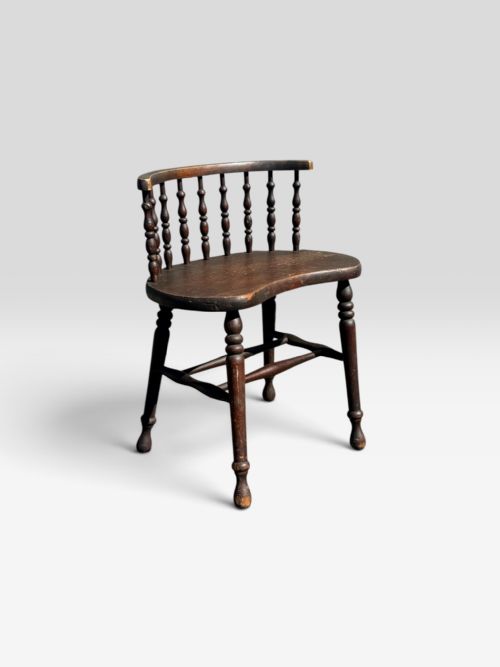
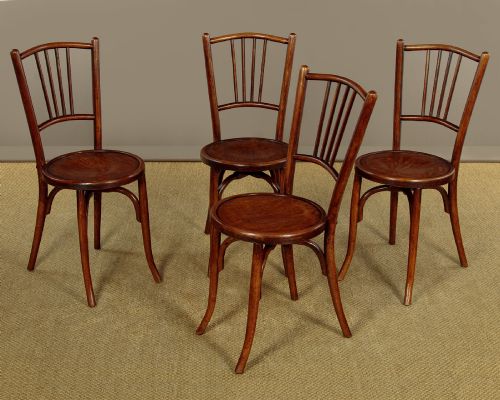


Curved Spindle Back Chair
These curved spindle back chair examples offer sturdy timber frames and arched backrests designed for comfort.
Curved Spindle Back Chair
A curved spindle back chair brings together traditional seating designs built for daily use in kitchens, studies and parlours. When searching for a curved spindle back chair, buyers encounter forms ranging from low country armchairs to revolving desk seats.
The pieces on this page span the Victorian, Edwardian and early twentieth century periods, utilising timbers like elm, beech and oak. Kitchen chairs, smokers bows and captains chairs dominate the selection.
Origins stretch from rural workshops to urban offices, resulting in diverse seating configurations including rocking chairs, swivel models and dining sets.
How they were made
Construction relies heavily on solid hardwoods such as elm for seats and beech or oak for turned spindles and legs. Benders utilised steam to shape flexible bentwood components for bistro dining seats.
Joinery methods combine traditional pegged joints with turned components and metal swivel mechanisms on later desk chairs. Ebonising and painted finishes appear on select nineteenth century rocking models.
Curved Spindle Back Chair Retail Price Guide 2026
Typical asking prices for curved spindle back chair among the pieces listed under this phrase on Sellingantiques today, from the lower quarter to the upper quarter. They describe what is for sale here now, not the wider market.
Smokers bow armchairs provided the ideal perch for nineteenth century gentlemen enjoying an after-dinner pipe.
What varies in quality
Quality rests in the selection of timber, particularly the grain and figuring found in solid elm seats and oak frames. Superior examples display precise turning on spindles and robust structural joinery that withstands decades of use.
Design sophistication also separates standard utility seating from finer architect-designed pieces or labeled studio items. The integration of swivel mechanisms and leather upholstery adds complexity to desk variants.
Codina·Edward William Godwin
The Curved Spindle Back Chair Glossary
- Smokers bow
- A low-backed Windsor-style armchair featuring a rounded continuous arm and spindle rail. These robust seats were common in public houses and smoking rooms.
- Captains chair
- A sturdy timber armchair with a rounded steam-bent backrest supported by vertical spindles. They frequently serve as desk seating.
- Bentwood
- Timber shaped into curves by the application of steam and pressure. This technique allows for lightweight and durable chair frames.
- Ebonising
- A finishing process that treats timber to resemble ebony. It was widely utilised during the Victorian period for decorative effect.
- Spindle
- A slender, turned piece of wood forming part of the chair back. They provide structural support while maintaining an open visual profile.
Curved Spindle Back Chair: Frequently Asked Questions
Are curved spindle back chairs comfortable?
Most examples feature contoured wooden seats and supportive arched backrests shaped to fit the body.
Desk and armchair variations provide additional support for extended sitting periods.
How do I date a curved spindle back chair?
Dating relies on identifying timber types, construction methods and stylistic markers associated with Victorian or Edwardian periods.
Turned spindle patterns and the presence of metal swivel mechanisms offer further chronological clues.
Can I use these chairs around a dining table?
Dining sets and individual kitchen chairs fit well around standard household tables.
Armchairs require more clearance beneath the table surface compared to standard side chairs.
What is the difference between an elm and beech chair?
Elm typically provides a heavily figured, durable surface ideal for solid carved seat bases.
Beech offers a straight grain suitable for intricate spindle turning and structural framing.