

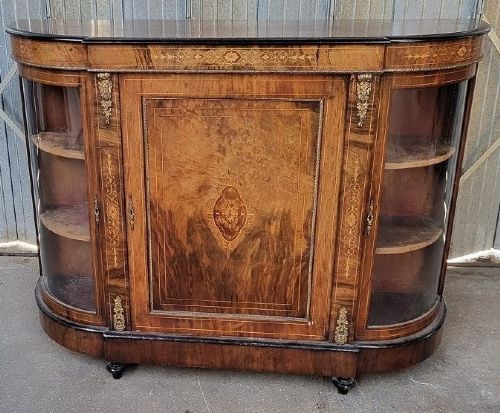
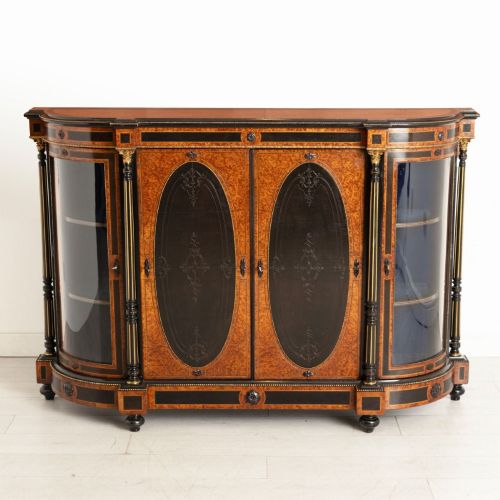
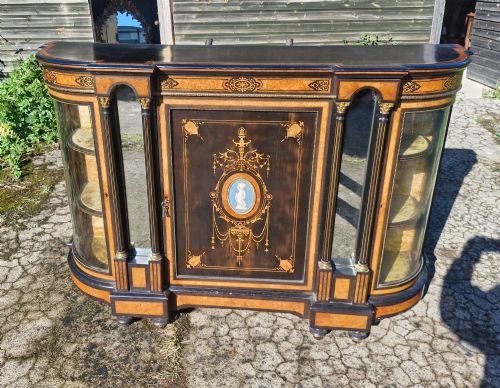
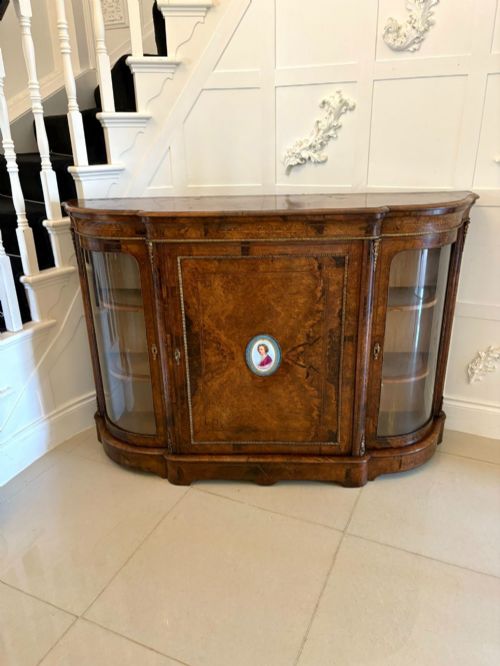



Curved Side Display Cabinet
A curved side display cabinet brings domestic elegance to any room, offering graceful glazed storage for cherished collections from the Victorian period onwards.
Curved Side Display Cabinet
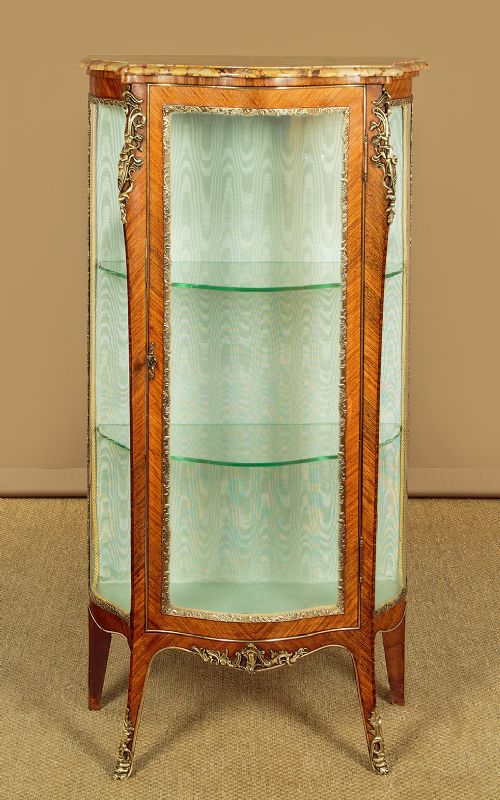
A curved side display cabinet encompasses sophisticated forms like credenzas, vitrines, and side cabinets designed to showcase objects through glass panels. These pieces serve as functional furniture that frames precious items with architectural polish.
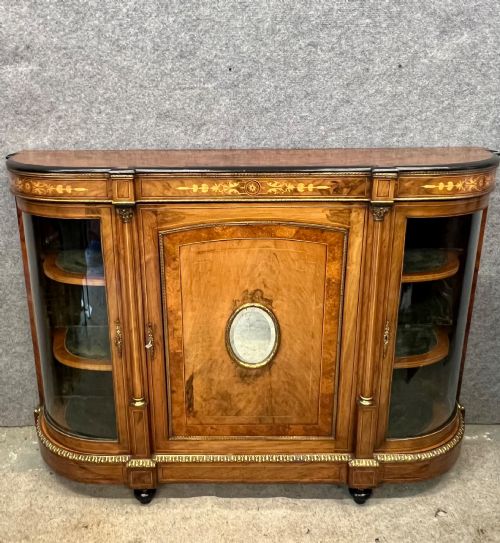
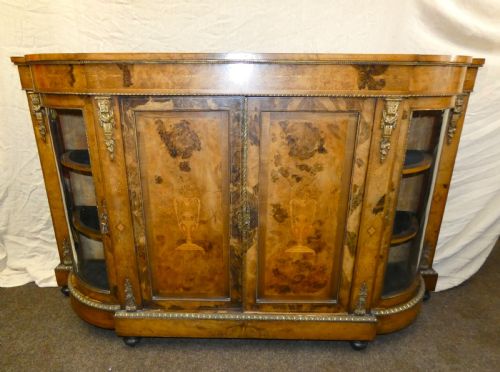
The selection here draws heavily on the nineteenth century, featuring Victorian creations alongside later twentieth-century interpretations in the Louis XV and Art Deco styles. Buyers encounter various configurations, from bow-fronted satinwood cabinetry to porcelain-mounted walnut credenzas.
Originating predominantly from British and French workshops, these items integrate display space with enclosed cabinetry. The curved sides soften traditional rectangular silhouettes, introducing fluid movement to the room.
How They Were Made
Cabinet makers utilised choice timbers such as burr walnut, amboyna, mahogany, and satinwood, frequently applying intricate marquetry patterns across the surfaces. Ebonised wood and cross-banded kingwood provide striking contrast in specific examples.
Metal mounts in ormolu and gilt bronze accent the timber frames, while pietra dura plaques and porcelain panels embellish the front sections. Curved glass panes require specialist bending techniques to fit snugly within the timber rebates.
Curved Side Display Cabinet Retail Price Guide 2026
Typical asking prices for curved side display cabinet among the pieces listed under this phrase on Sellingantiques today, from the lower quarter to the upper quarter. They describe what is for sale here now, not the wider market.
The listings span the nineteenth and early twentieth centuries, incorporating Victorian, Edwardian, and Art Deco design aesthetics.
What Varies in Quality
The standard of timber selection and marquetry execution dictates the tier of the piece, with exhibition-grade items displaying exceptionally figured burr walnut and meticulous hand-cut inlay. Plain veneers and simpler surface patterns place a piece further down the spectrum.
The refinement of the cast ormolu mounts and the integration of porcelain plaques separate standard production from superior craftsmanship. Precision in the glass curvature and the seamless alignment of curved doors demonstrate the maker's skill.
The Curved Side Display Cabinet Glossary
- Credenza
- A low cabinet, frequently featuring glazed central doors flanked by curved side compartments, designed for display and storage. Originating as a sideboard, it became a focal point in Victorian drawing rooms.
- Ormolu
- Gilt bronze mounts cast and chased to embellish furniture corners and panels. This technique adds metallic lustre and sculptural depth to timber surfaces.
- Marquetry
- The art of applying pieces of veneer to a structure to form decorative patterns. Craftsmen use various coloured woods to create floral or geometric designs.
- Vitrine
- A glass-fronted cabinet specifically built for displaying fine porcelain or curiosities. These pieces emphasise visibility from multiple angles through glazed sides.
- Pietra dura
- An artistic technique using cut and fitted polished coloured stones to create inlaid images. It appears on select high-status nineteenth-century cabinets.
- Burr walnut
- Wood taken from a tree growth featuring intricate, swirling grain patterns. It provides a highly decorative surface highly prized by period cabinet makers.
Curved Side Display Cabinet: Frequently Asked Questions
What is a curved side display cabinet used for?
These cabinets serve as elegant storage solutions designed to exhibit porcelain, silver, and decorative objects behind protective glass. The curved side panels soften room corners while providing visibility from oblique angles.
Historically placed in formal reception rooms and drawing rooms, they combined surface display space with secure lower cabinetry. Today, they function similarly in domestic interiors to house curated collections.
How do I distinguish a Victorian credenza from later styles?
Victorian credenzas frequently feature heavy burr walnut veneers, marquetry inlay, and mounted porcelain plaques reflecting mid-nineteenth-century taste. Ormolu mounts and ebonised details are common markers of this period.
Later interpretations, such as those from the Art Deco period or Louis XV style revival, adopt cleaner geometric lines or lighter French influences. Examining the timber preparation and internal construction helps confirm the era of manufacture.
How do I care for antique veneer and ormolu?
Maintain burr walnut and satinwood surfaces by dusting with a dry, soft cloth and applying appropriate wax polish sparingly. Avoid placing the cabinet near direct sunlight or heat sources to prevent timber shrinkage and veneer cracking.
Clean ormolu and gilt bronze mounts gently with a dry brush, avoiding abrasive chemical cleaners that strip the original gilding. Stable indoor humidity protects both the wooden structure and the delicate glass panels.
Where were these cabinets originally placed in a home?
Victorian and nineteenth-century homes positioned these statement pieces against principal walls in drawing rooms, dining rooms, or large hallways. They acted as visual anchors that commanded attention upon entering the space.
The curved glass sides allowed guests to admire the contents from various vantage points around the room. Modern interiors often use them in living areas or studies for similar decorative impact.
What materials are most common in these cabinets?
Walnut and burr walnut dominate the selection, often enhanced by satinwood, mahogany, or amboyna veneers. Marquetry details utilise contrasting woods to form intricate floral or geometric ornamentation.
Glazing forms the primary visual element, supported by brass hardware, porcelain inserts, and ormolu mounts. Ebonised wood surfaces also appear alongside pietra dura panels in select grand examples.