




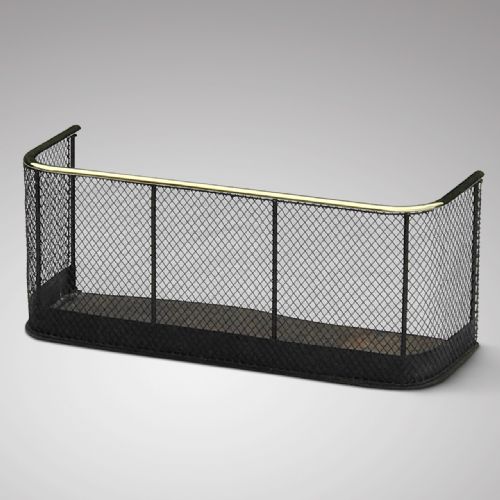
Curved Mesh Spark Guard
A curved mesh spark guard keeps stray embers in the hearth while offering a clear view of the fire.
Curved Mesh Spark Guard
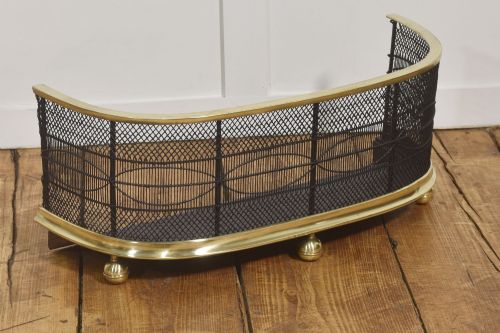
A curved mesh spark guard protects the room from leaping cinders whilst framing the hearth in metal. These guards take forms such as fire guards, nursery fenders, and fireplace screens, often curved or bowed to sit neatly around the grate.
Most examples found here date from the nineteenth century, including the Regency and Victorian eras, alongside Edwardian pieces and items from around nineteen hundred. They combine functional wire mesh with solid metal frames to balance safety with visibility.
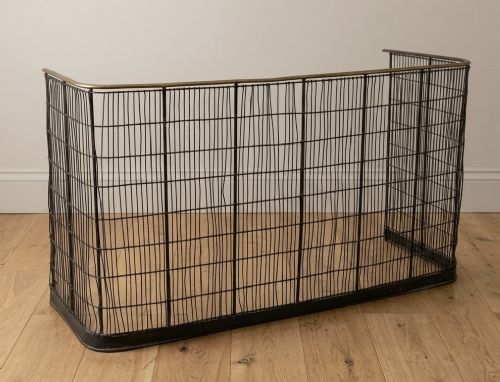
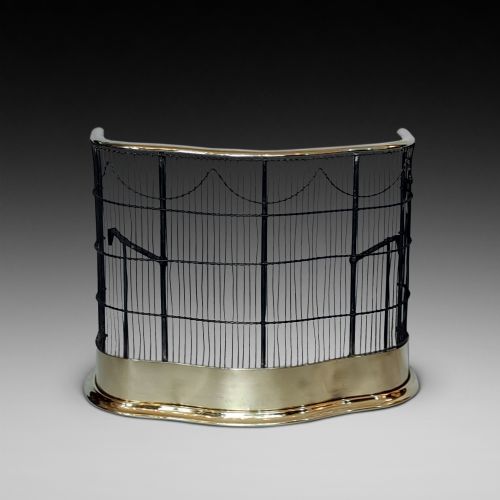
Buyers frequently encounter designs featuring brass top rails or brass rims paired with woven iron wire or steel wire mesh. The forms range from serpentine and bowed configurations to large nursery fenders built to encompass the entire hearth area.
How these guards were made
Makers constructed these pieces using a combination of structural metal frames and fine wirework. Brass was commonly employed for top rails, rims, and frames, offering a polished contrast to the dark woven iron wire and steel wire mesh.
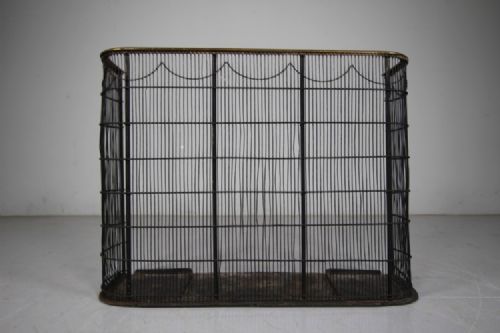
The mesh itself consists of woven iron wire or steel wire, stretched and secured within rigid frames of wrought iron or steel. Skilled artisans shaped the metal into bows and serpentine curves to fit domestic fireplaces safely and securely.
Victorian nursery fenders were practically built like small iron fortifications, ensuring curious toddlers stayed safely beyond the reach of leaping embers.
What varies in quality
The distinction between standard examples and finer pieces lies in the choice of framing materials and the precision of the metalwork. Heavy brass top rails and robust brass frames denote superior production compared to lighter iron alternatives.
Attention to detail in the wirework also defines the grade of the guard, with tightly woven mesh and carefully fitted serpentine edges showing superior craftsmanship. The integration of solid brass rims adds both structural rigidity and visual refinement.
The Curved Mesh Spark Guard Glossary
- Nursery Fender
- A protective barrier designed to encircle the hearth and prevent children from approaching the fire too closely. These often feature an elevated brass top rail for added safety.
- Serpentine
- A gentle undulating curve shaped into the frame or mesh of the guard. This contour allows the piece to project outwards from the fireplace opening with elegance.
Curved Mesh Spark Guard: Frequently Asked Questions
What is a curved mesh spark guard used for?
These guards serve primarily to catch stray sparks and hot embers leaping from open hearths, protecting flooring and furnishings.
They also provide a physical barrier to keep children and pets at a safe distance from active fires.
How do I date a brass and wire fire guard?
Dating relies on observing construction methods, materials, and stylistic cues associated with periods like the Regency or Victorian era. Details such as heavy brass top rails and serpentine iron frames point to nineteenth-century manufacture.
Later pieces from the Edwardian period or around nineteen hundred often display lighter steel wire construction and simpler frames.
Are these guards suitable for modern fireplaces?
Most antique guards fit standard hearth layouts well, though measuring the depth and width of the fireplace area is essential. The curved and bowed shapes accommodate various hearth projections while maintaining stability.
They integrate easily into contemporary interiors by combining period brasswork with functional wire mesh.
What maintenance do wire mesh spark guards need?
Routine care involves gentle dusting of the wire mesh and occasional polishing of any brass elements with a suitable metal cleaner.
Avoiding abrasive materials preserves the woven iron wire and keeps the finish intact over years of use.