

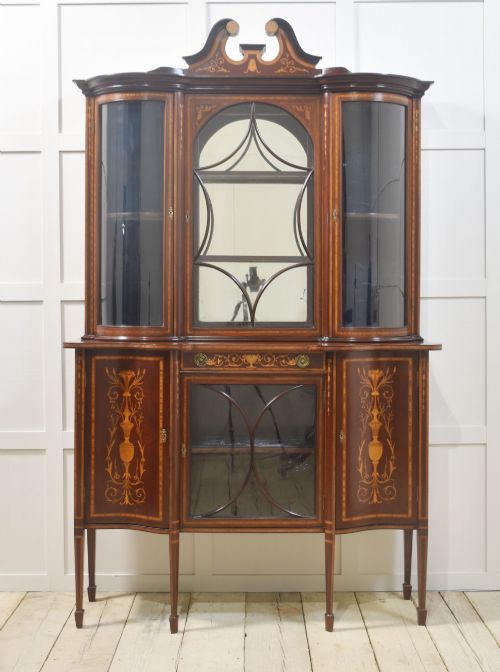
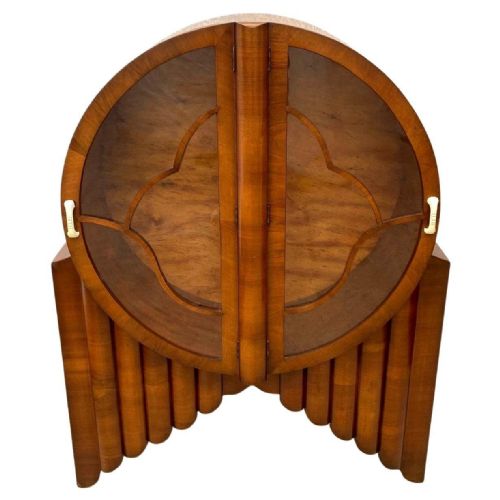


Curved Glazed Bookcase
A curved glazed bookcase offers a refined way to display volumes while softening the linear layout of a room.
Curved Glazed Bookcase
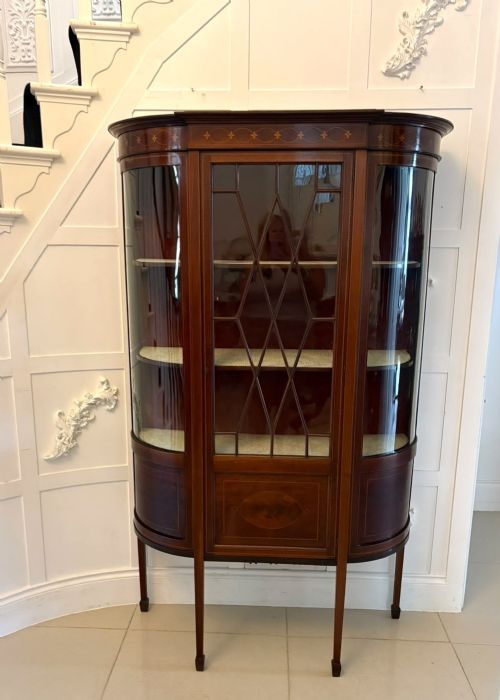
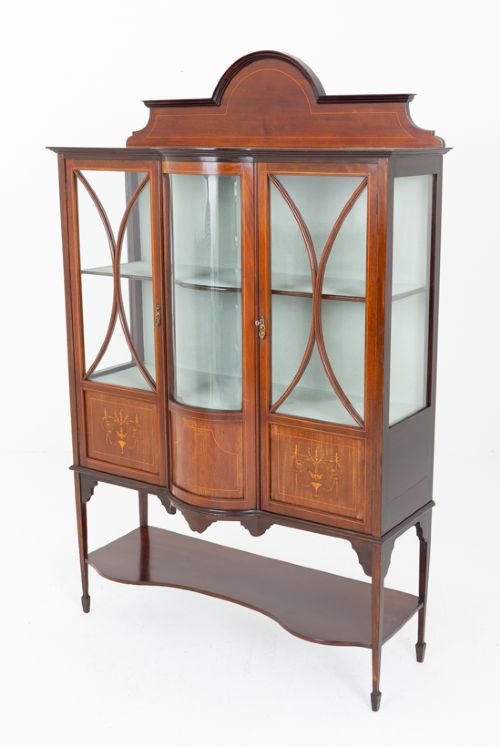
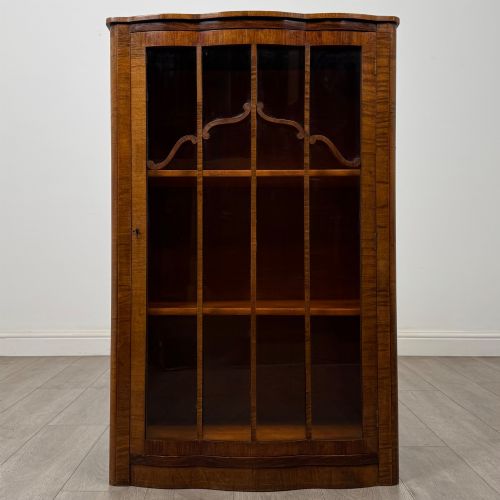
A curved glazed bookcase brings together curved glass panels and timber framing to protect and exhibit books or decorative objects. When you search for a curved glazed bookcase, you encounter pieces spanning the nineteenth century through the Art Deco era, with Edwardian and 1930s examples appearing frequently.
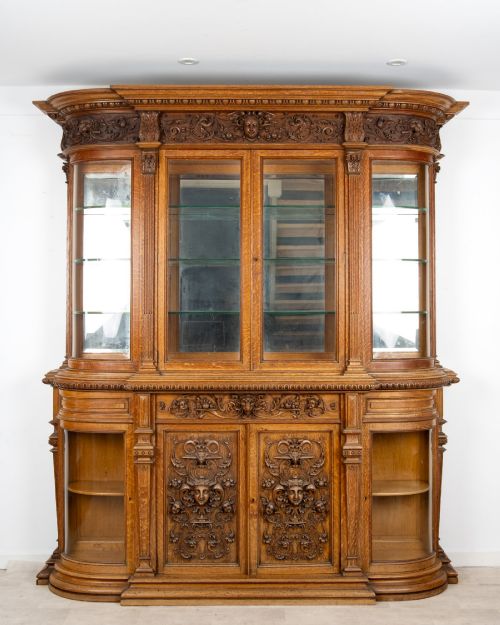
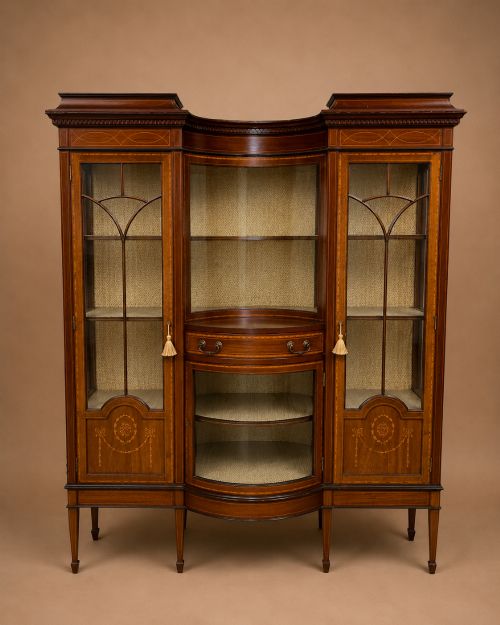
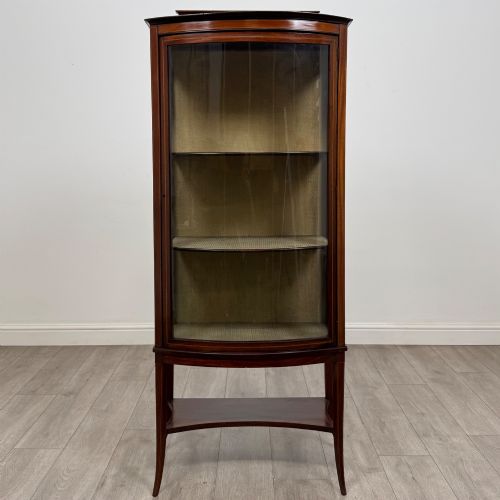
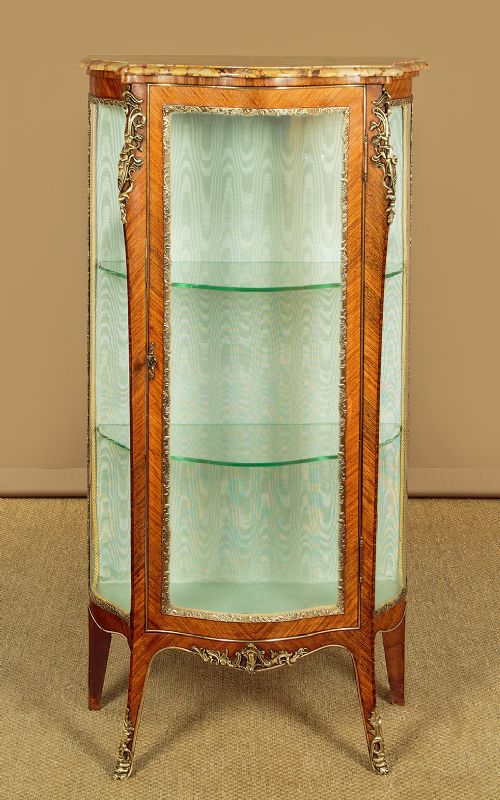
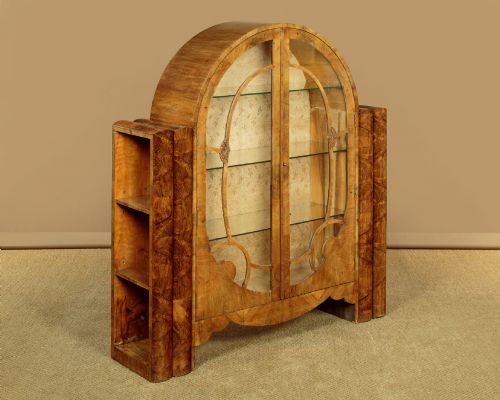
The inventory on this page shows formats ranging from substantial Victorian carved oak display cabinets and credenzas to compact Edwardian mahogany bow-ended cabinets and circular Art Deco vitrines. Makers utilised concave, serpentine, and demi-lune shapes to introduce fluid silhouettes into domestic interiors.
Origins stretch across English workshops and continental makers, incorporating styles such as Sheraton Revival, Louis XVI, and Louis XV. Many listings double as display cabinets, china cabinets, or bureau bookcases, uniting enclosed shelving with prominent glass fronts.
Materials and construction
Cabinet makers constructed these pieces using solid timbers like mahogany and oak, frequently applying veneers of burr walnut, satinwood, and figured walnut to curved surfaces. Brass hardware, ormolu mounts, and delicate fabric linings frequently complete the interior and exterior detailing.
Curving glass required specialised glazing techniques to fit bowed, circular, or concave doors and side panels. Marquetry inlay, marquetry panels, and gilt metal mounts appear across Edwardian and Victorian pieces to accentuate the sweeping structural lines.
Curved Glazed Bookcase Retail Price Guide 2026
Typical asking prices for curved glazed bookcase among the pieces listed under this phrase on Sellingantiques today, from the lower quarter to the upper quarter. They describe what is for sale here now, not the wider market.
Some Art Deco pieces acquired the nickname rocket cabinets due to their soaring, streamlined vertical curves.
Assessing craftsmanship
Quality rests in the execution of the curved woodwork and the precision of the glazed doors. Superior examples feature seamless veneer matching across bowed surfaces and tightly fitted joinery that withstands the structural tension inherent in curved designs.
Refinement shows in the intricacy of marquetry inlay, the weight of brass fittings such as Hobbs and Co locks, and the clarity of the curved glass. Lesser pieces rely on simpler construction without the detailed decorative carving or gilt metal mounts seen at the higher end.
Edwards & Roberts·Maurice Adams·Paul Somani·Linke
The Curved Glazed Bookcase Glossary
- Vitrine
- A glass-fronted cabinet designed specifically for displaying fine objects or china. These pieces often feature glass on the sides as well as the doors to maximise light.
- Credenza
- A low cabinet, frequently associated with the Victorian period, used for storage and display. They often incorporate marquetry panels and gilt metal mounts.
- Marquetry
- Decorative patterns formed by inserting pieces of contrasting wood veneer into a solid wood background. It appears frequently on Edwardian and Victorian cabinets.
- Serpentine
- A shaped furniture front featuring a convex centre flanked by concave curves. This contour requires precise carpentry to execute properly.
- Demi-lune
- A half-moon or semicircular shape utilised for cabinets designed to sit flat against a wall. Edwardian makers applied this form to save floor space while maintaining display capacity.
Curved Glazed Bookcase: Frequently Asked Questions
How do I clean the curved glass?
Use a soft microfiber cloth and a gentle glass cleaner applied to the cloth rather than directly onto the panel. This prevents liquid from seeping into the wooden framing or historic putty.
Take care around older panes, which may be thinner or possess slight waviness inherent to period manufacturing methods.
Can these hold heavy books?
Many examples on this page function as display cabinets or china cabinets with relatively light wooden or glass shelves. Check the internal support structure before loading them with dense volumes.
Bureau bookcases and sturdier nineteenth-century pieces generally accommodate heavier collections, while delicate Edwardian vitrines suit lighter display items.
How do I identify an Edwardian piece?
Edwardian cabinets often display Sheraton Revival influences, lighter mahogany timbers, and refined marquetry inlay. They frequently utilise bow-ended or demi-lune shapes designed for domestic sitting rooms.
Compare the lighter wood tones and subtle stringing against heavier, darker Victorian oak and walnut examples from earlier decades.
Where should I place a curved cabinet?
Bow-fronted and concave designs look effective positioned in room corners or against flat walls where their curved profiles soften angular spaces. Ensure they sit away from direct sunlight to protect vulnerable wood veneers and interior fabrics.
Allowance should be made for door clearance, particularly on circular Art Deco or serpentine models with wide-swinging glass doors.