



Curved Front Bookcase
These curved front bookcase pieces bring subtle lines and rich timber tones into a room, offering practical storage with distinct period charm.
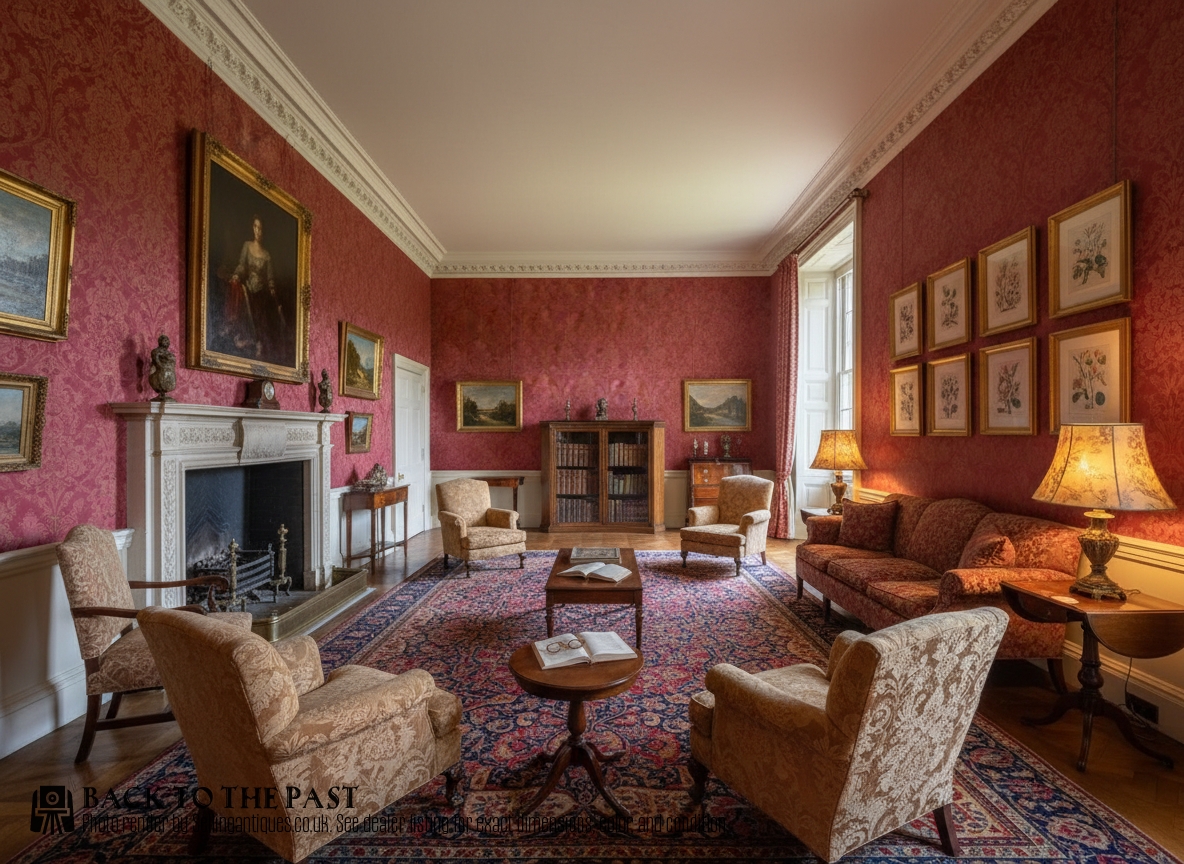
Curved Front Bookcase
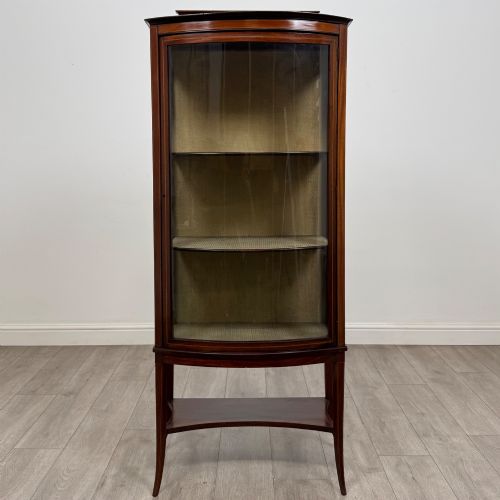
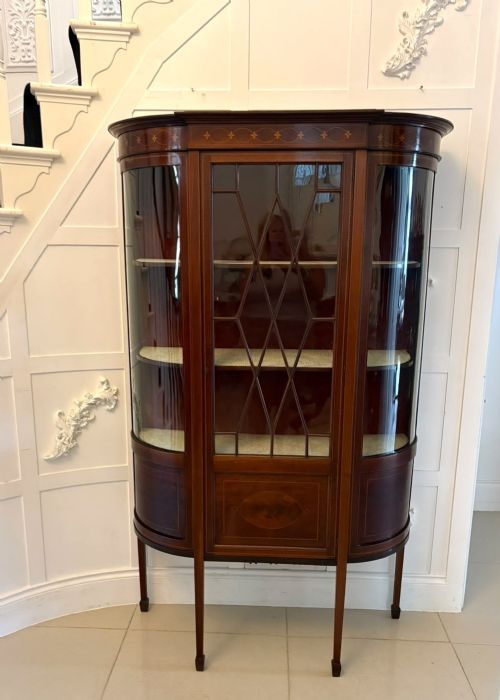
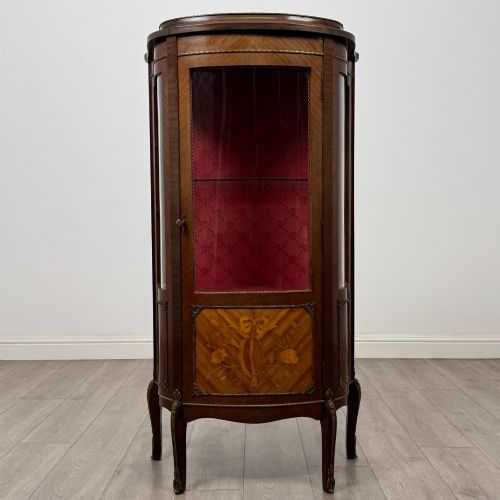
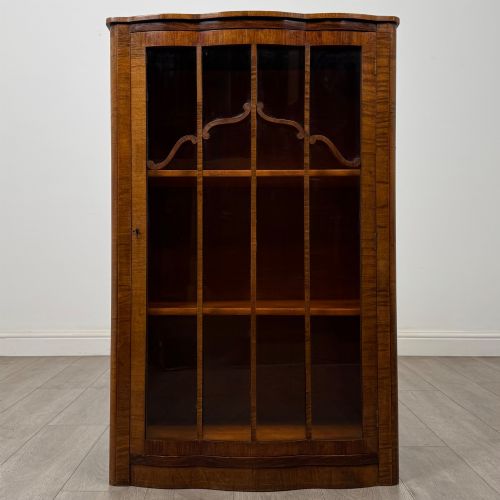
A curved front bookcase presents a rounded facade, incorporating bow, concave, serpentine, or rounded shapes rather than flat rectilinear panels. These items combine open shelving or glazed display areas with enclosed lower storage, suiting studies, drawing rooms, and hallways alike.
The versions most commonly met on this page span the Victorian and Edwardian eras, alongside pieces dating from around eighteen hundred to nineteen thirty. Formats range from tall double height corner cupboards and standing display cabinets to bureau bookcases and credenzas.
Makers utilised mahogany, burr walnut, and satinwood, frequently finishing surfaces with marquetry inlay, ormolu mounts, or glass panels. These pieces provide refined utility while softening the corners of a traditional interior.
How they were made
Cabinetmakers built these forms using solid timbers and carefully selected veneers, applying mahogany, burr walnut, and satinwood over supportive base woods. Curved doors and bowed glass required specialist joinery to achieve smooth radii without compromising structural integrity.
Decoration relied on marquetry inlay, brass mounts, and ormolu detailing, set into polished timber surfaces. Glazing bars segmented doors into geometric or arched patterns, while interior shelves rested on adjustable wooden or glass supports.
Curved Front Bookcase Retail Price Guide 2026
Typical asking prices for curved front bookcase among the pieces listed under this phrase on Sellingantiques today, from the lower quarter to the upper quarter. They describe what is for sale here now, not the wider market.
Some cabinets feature curved glass panes that distort reflections just enough to make a passing cat look remarkably stout.
What varies in quality
Quality rests upon the selection of timber veneers and the precision of the curved joinery, where superior examples exhibit seamless grain continuity across bowed doors and frames. Finer pieces demonstrate intricate marquetry inlay and well-cast ormolu mounts rather than simple printed decoration.
Construction standards differ between workshops, distinguishing standard utilitarian furniture from pieces bearing signature maker details and high-grade glass. The handling of curved glass and internal linings marks the division between ordinary production and exceptional cabinet work.
Edwards & Roberts
The Curved Front Bookcase Glossary
- Bow Front
- A convex curved exterior surface projecting outward from the centre. This shape softens room angles and was widely used on cabinets and sideboards.
- Concave
- A curved inward contour creating a recessed central profile. This shape appears on specific period bookcases and display cabinets.
- Serpentine
- A line featuring a convex centre flanked by concave curves, forming an undulating edge. It requires advanced woodworking skill to execute properly on cabinet doors.
- Marquetry
- Decorative patterns formed by fitting contrasting veneer pieces onto a timber surface. Cabinetmakers used floral and geometric motifs to enrich panel fronts.
- Ormolu
- Gilded bronze mounts applied as decorative ornaments on furniture. These elements highlight corners, friezes, and door frames on higher-end pieces.
- Vitrine
- A glass-fronted display cabinet designed for exhibiting porcelain and small objects. These pieces rely on clear glazing and slender frames to maximise visibility.
Curved Front Bookcase: Frequently Asked Questions
How do I date a curved front bookcase?
Dating relies on timber choices, construction methods, and stylistic cues present in the marquetry and handles. Victorian and Edwardian examples often display specific veneer figures and proportions distinct from earlier Georgian pieces.
Examining the backboards, drawer linings, and interior shelf supports provides further evidence of the manufacturing period.
Where should I place a curved front bookcase?
These cabinets suit corners or focal walls where their rounded profiles soften straight architectural lines. They function effectively in drawing rooms, studies, and dining spaces for displaying books and collections.
Keeping them away from direct sunlight protects vulnerable wood veneers and antique glass from fading or thermal stress.
How do I clean mahogany and walnut surfaces?
Maintenance involves dusting with a soft, dry cloth to prevent abrasive particles from accumulating on the polished timber. Periodic application of appropriate wax polish maintains the lustre of the wood without building up heavy residues.
Harsh chemical cleaners and excessive moisture must be avoided to protect antique finishes and inlay work.
What is the difference between a vitrine and a bookcase?
A vitrine primarily functions as a display case for fragile items, featuring glass panels on the sides and front. A bookcase focuses on housing volumes, often combining open shelving with lower enclosed cupboards.
Many period pieces overlap these functions by incorporating adjustable wooden or glass shelves behind glazed doors.