

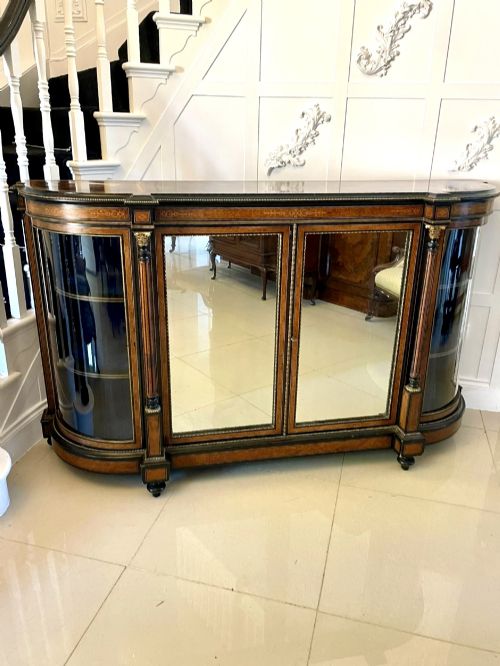
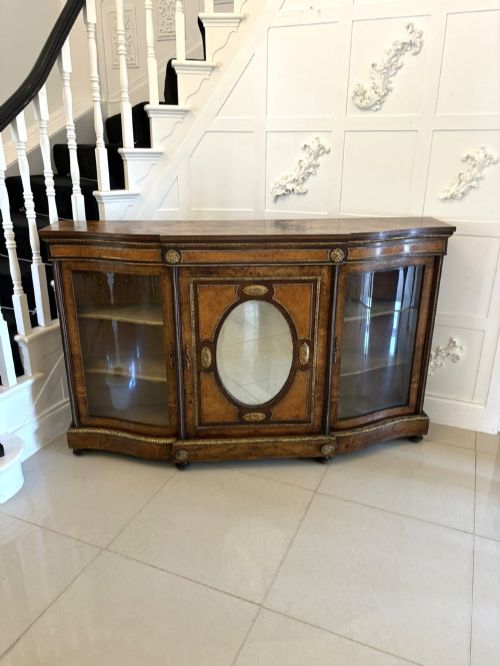


Curved Display Mirror
A curved display mirror forms part of these cabinet and sideboard designs, offering reflection and light inside Victorian and Edwardian sitting rooms.
Curved Display Mirror
A curved display mirror is encountered here within larger cabinet forms such as credenzas, sideboards, and wall-hanging display cases. These pieces originate from the nineteenth century, including Victorian and Mid-Victorian periods, alongside Edwardian examples.
The primary forms take shape as credenzas with mirrored backs, serpentine-fronted cabinets, and console tables. Walnut, burr walnut, satinwood, and ebonised wood construct the main bodies of these items.
Buyers looking at this selection will find walnut credenzas and display cabinets featuring glass panels and shaped mirror glass. Aesthetic Movement and Biedermeier styles also appear among the listed items.
How they were made
Maker techniques combine cabinet-making in burr walnut, amboyna, maserbirch, and satinwood with applied ormolu mounts in brass and bronze tones. Inlaid marquetry details decorate the wooden surfaces of Victorian credenzas.
Glass is set into doors and shaped mirror plates are fitted into wooden display backs. Ebonised wood finishes provide contrast against inlaid panels and gilt bronze mounts.
Curved Display Mirror Retail Price Guide 2026
Typical asking prices for curved display mirror among the pieces listed under this phrase on Sellingantiques today, from the lower quarter to the upper quarter. They describe what is for sale here now, not the wider market.
Periods represented range from the early nineteenth century through Victorian and Edwardian eras.
What varies in quality
The standard of timber selection and inlay work separates finer examples from simpler ones, particularly in the use of burr walnut veneers and marquetry patterns. Ormolu mounts show variation in their casting and chasing detail.
Structural complexity influences the character of each piece, such as serpentine fronts and integrated mirror-back superstructures. The integration of glass panels and curved components demands precise carpentry.
The Curved Display Mirror Glossary
- Credenza
- A sideboard or cabinet used for display and storage, often featuring glass doors and a mirrored back. These pieces date predominantly to the Victorian era.
- Ormolu
- Gilded bronze or brass mounts applied to furniture for decoration. This technique adds metallic highlights to wood surfaces.
- Marquetry
- Decorative veneer patterns inlaid into the wooden body of a piece. Woods such as satinwood and walnut are used to create designs.
- Serpentine front
- A furniture front curving inward in the centre and outward at the ends. This shape requires skilled woodworking to construct.
- Burr walnut
- Wood grain featuring swirling knot formations highly prized for cabinet veneers. It provides distinctive patterning on Victorian furniture.
Curved Display Mirror: Frequently Asked Questions
What is a curved display mirror?
A curved display mirror is integrated into the back or upper structure of period cabinets and sideboards to reflect light and objects within the room.
These mirrored elements complement the glass doors and polished wood finishes characteristic of nineteenth-century furniture design.
How were these cabinets used?
Cabinets and credenzas served to display porcelain, silver, and decorative objects while providing enclosed storage beneath.
Their placement in formal reception rooms allowed them to showcase household possessions and reflect interior lighting.
How do I date a Victorian credenza?
Dating relies on identifying timber choices like burr walnut, construction methods, and decorative styles such as the Aesthetic Movement or Mid-Victorian carving.
Ormolu mounts and inlay techniques also provide stylistic indicators pointing to specific decades within the nineteenth century.
Where should I place a mirror-back cabinet?
These pieces suit dining rooms or sitting rooms where natural light can strike the mirror glass and illuminate displayed items.
Sufficient floor space is required to accommodate the substantial depth of credenzas and side cabinets.