





Curved Dining Table
These curved dining table pieces bring organic flow to a room, offering tactile warmth and clever spatial arrangement for entertaining.
Curved Dining Table
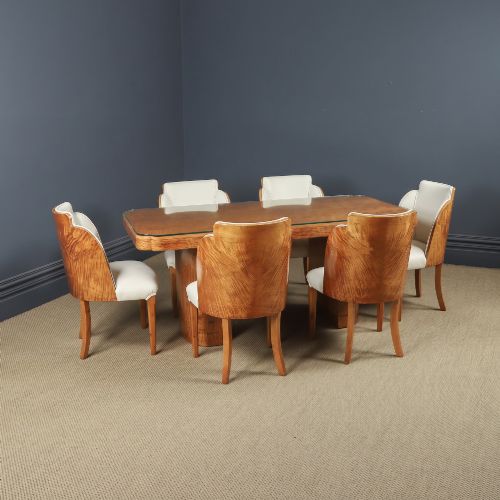
A curved dining table introduces softer architectural lines into a dining space compared to traditional rigid rectangles. Buyers exploring this category will frequently encounter dining suites from periods such as Art Deco alongside related curved dining furniture.
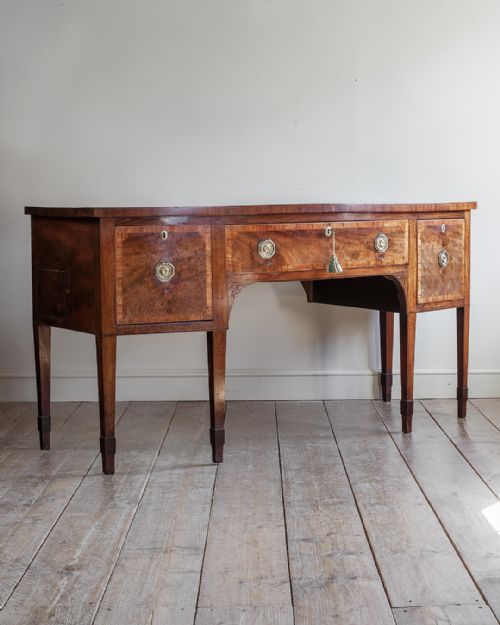
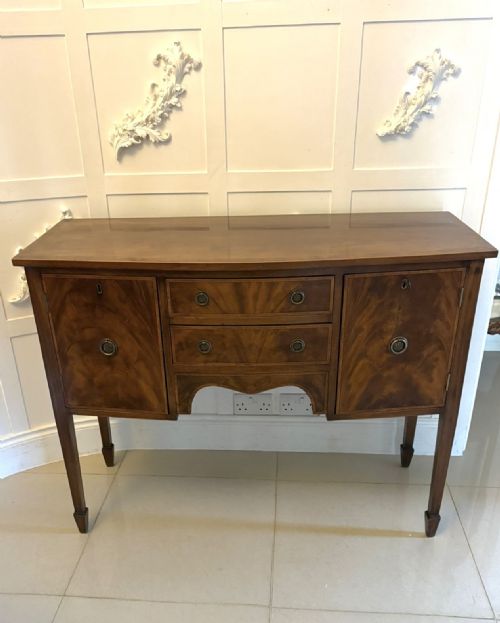
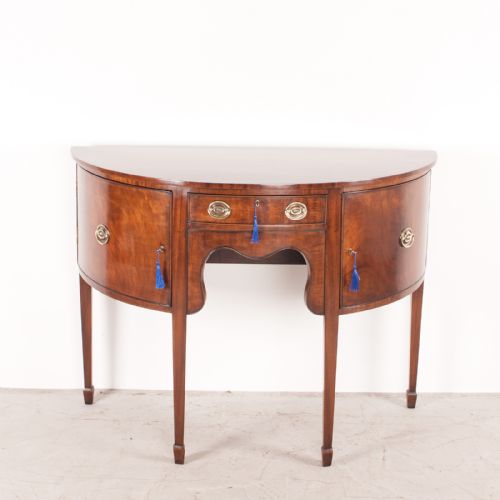
The inventory leans heavily towards related serpentine and bow front forms in mahogany, reflecting the curved aesthetic across sideboards and suites. These pieces combine practical serving surfaces with sweeping silhouettes designed to ease movement around the room.
Materials and construction
Constructed primarily in mahogany, satinwood, and maple, these pieces utilise rich timber grains to enhance their sweeping contours. Cabinetmakers employed precise bending and inlay techniques using boxwood to articulate the curved surfaces.
Details such as brass fittings and original castors appear alongside leather upholstery in complete dining suites. The craftsmanship relies on balancing structural support with fluid lines, particularly visible in bow front and serpentine forms.
Curved Dining Table Retail Price Guide 2026
Typical asking prices for curved dining table among the pieces listed under this phrase on Sellingantiques today, from the lower quarter to the upper quarter. They describe what is for sale here now, not the wider market.
Listings feature mahogany, satinwood, maple, and burr walnut, spanning periods from the eighteenth century through the Art Deco era.
Assessing quality
Quality reveals itself in the continuity of timber grain across curved sections and the precision of inlaid details. Superior examples demonstrate expert timber selection where figured veneers match harmoniously along the radius of the curve.
The integrity of the structural joinery underpins the longevity of these curved forms. Master craftsmanship shows in the seamless integration of drawers and doors that follow the strict geometry of the overall design.
Harry And Lou Epstein
The Curved Dining Table Glossary
- Bow front
- A convex curved cabinet front that projects outward in a smooth arc. This shape softens the corners of dining room furniture.
- Serpentine
- A furniture front characterised by a concave central section flanked by two convex ends. It creates a subtle undulating profile requiring advanced woodworking skill.
- Demi-lune
- A half-moon shape used for console tables and sideboards. This design fits flat against a wall while projecting a curved edge.
- Inlay
- A technique where contrasting materials like boxwood are inserted into recesses within the base wood. It defines borders and accentuates curved shapes.
Curved Dining Table: Frequently Asked Questions
How do I style a curved dining table?
Pair the sweeping lines of the table with complementary curved seating or surrounding sideboard cabinetry to create a cohesive room layout. Keeping central table decorations low allows the natural grain and curve of the timber to remain visible.
Allow sufficient clearance around the perimeter of the room to accommodate the outward projection of the curved edges. This ensures smooth movement and highlights the architectural silhouette of the piece.
What rooms suit a curved table?
These tables suit spaces that benefit from softened geometry, breaking up the harsh right angles typical of modern or traditional box rooms. The curved profile assists with navigation in tighter dining spaces.
Larger dining rooms can use these pieces to anchor the centre of the floor, creating distinct zones for dining and entertaining. The shape encourages more conversational seating arrangements among guests.
How do I identify Art Deco pieces?
Look for streamlined forms, symmetrical designs, and the use of exotic timbers like satinwood, maple, and burr walnut. These characteristics define the modernist aesthetic of the interwar period.
Art Deco suites often feature integrated designs where dining tables and chairs share matching geometric motifs and curved profiles. The emphasis rests on sleek surfaces and luxurious materials rather than heavy carving.