

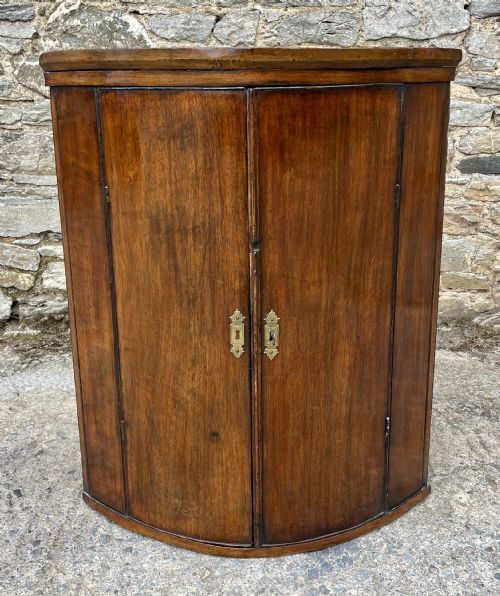


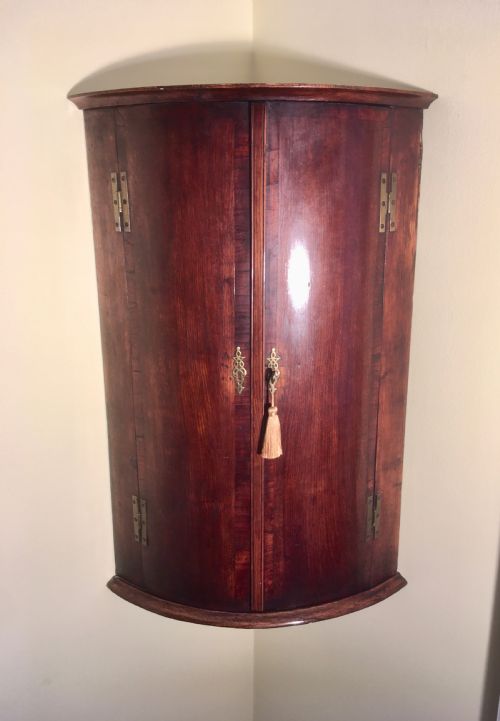


Curved Corner Wall Cabinet
These curved corner wall cabinet pieces are hanging cupboards built to fit room angles, bringing period timber and brass into domestic spaces.
Curved Corner Wall Cabinet
A curved corner wall cabinet is typically encountered as a bow front or serpentine hanging cupboard designed to utilise neglected room angles. The pieces seen here span the Georgian period, the eighteenth and nineteenth centuries, alongside Edwardian examples and later vernacular work.
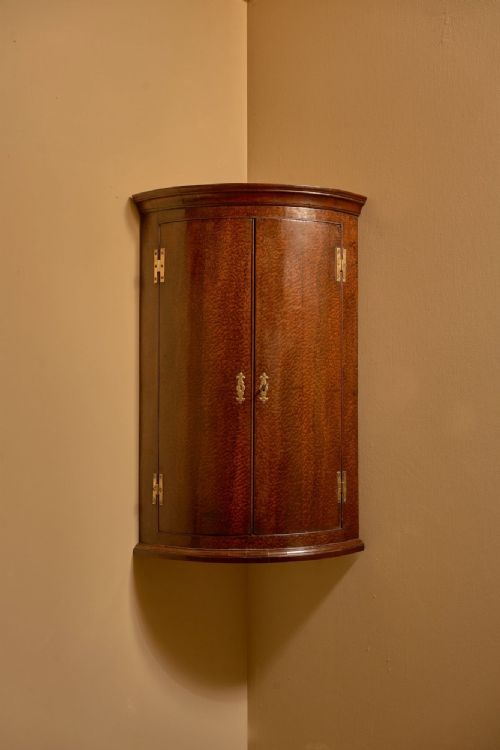
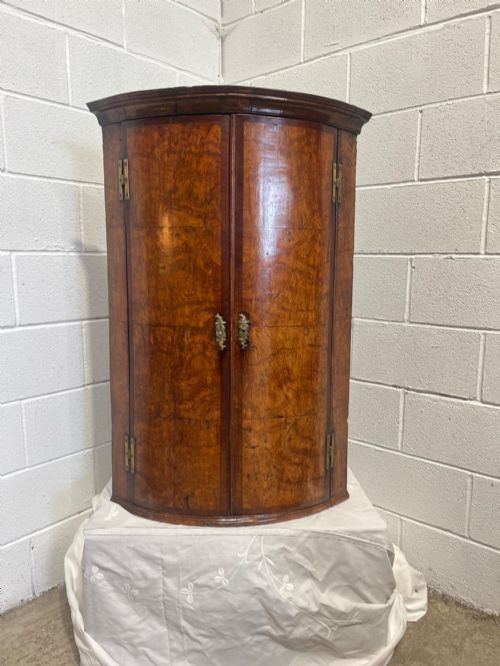
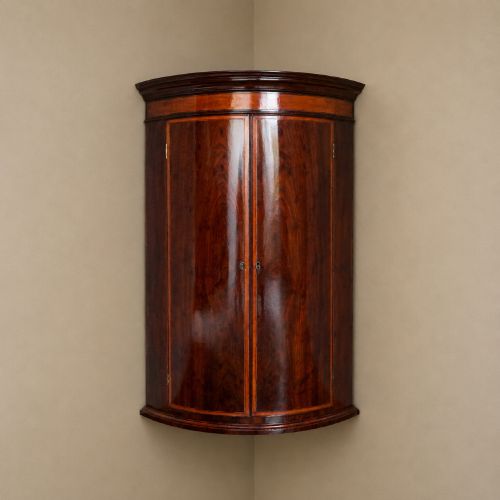
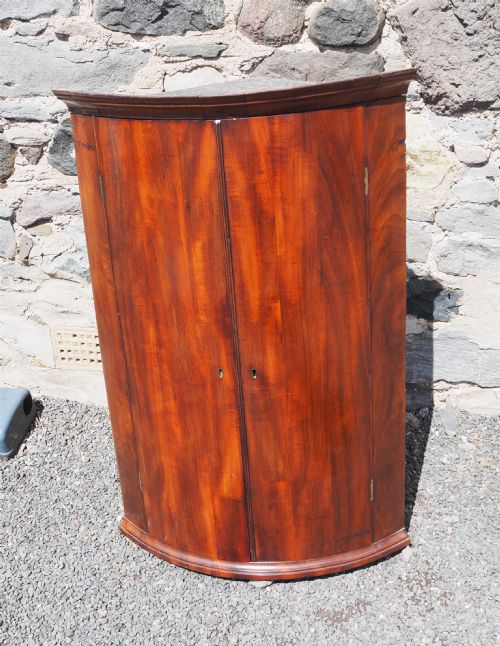
Makers from the eighteenth century onwards favoured timber forms that softened sharp room junctions. The selection on this page demonstrates how these wall cabinets appear in oak, mahogany, walnut, and pine, often featuring single panelled doors and brass hardware.
Most examples function as corner cupboards or display units, reflecting domestic storage needs across rural farmhouses and town houses. The historic range covers George II and George III eras, extending through to Victorian and nineteen-twenties interpretations.
Materials and construction
Cabinet makers constructed these pieces primarily from figured hardwoods like mahogany, burr oak, and walnut, alongside regional timbers such as Welsh oak and pine. Panels were curved to form the bow front profile, requiring careful timber selection and seasoned wood to prevent warping.
Surface decoration ranges from natural polished grain to japanned Chinoiserie lacquer and gilt highlights. Brass is utilised consistently for hinges and escutcheons, securing the doors while adding metallic contrast to the timber surfaces.
Curved Corner Wall Cabinet Retail Price Guide 2026
Typical asking prices for curved corner wall cabinet among the pieces listed under this phrase on Sellingantiques today, from the lower quarter to the upper quarter. They describe what is for sale here now, not the wider market.
Early cabinet makers occasionally miscalculated room angles, leading to bespoke curved doors that only fit one very specific farmhouse corner.
Evaluating craftsmanship and materials
Quality in a curved corner wall cabinet rests on the selection of timber veneers, such as plum pudding mahogany or burr oak, and the precision of the curved door joints. Superior examples exhibit tightly fitted mitres, substantial brass H-hinges, and well-proportioned cornices.
The sophistication of the surface finish further separates regional utility pieces from high-style urban furniture. Finely executed japanned Chinoiserie decoration or rich red walnut patination distinguishes the more ambitious workshop productions from straightforward pine or oak vernacular cupboards.
The Curved Corner Wall Cabinet Glossary
- Bow front
- A convex curved cabinet face that projects forward from the corner walls. This profile softens the geometric intersection of a room.
- Japanned
- European imitation of East Asian lacquerwork, built up with layers of varnish and often featuring raised motifs. It appears on select eighteenth and nineteenth-century pieces.
- Plum pudding mahogany
- A highly figured timber showing dark circular markings reminiscent of traditional Christmas puddings. Cabinet makers reserved this wood for prominent door panels.
- Serpentine
- A front profile curving inward centrally and outward at the ends, creating a wave-like contour. It represents a more complex joinery technique than a simple bow front.
- Escutcheon
- A protective brass plate surrounding a keyhole. On these cabinets, it frequently provides a decorative accent alongside the hinges.
Curved Corner Wall Cabinet: Frequently Asked Questions
How do I hang a heavy wooden corner cabinet?
These wall cabinets were originally built with internal fixing points or sturdy brackets designed to anchor directly into solid masonry or timber studs. Modern installation requires locating the structural wall supports to safely bear the weight of the dense hardwood.
Because eighteenth and nineteenth-century timber cabinets are heavy by nature, professional fitting ensures the piece remains secure against the corner walls without straining the antique joints.
What rooms suit a curved corner cupboard?
Dining rooms, hallways, and studies benefit most from these wall units because they occupy otherwise dead space in room angles. Their curved fronts project gracefully without obstructing traffic flow through doorways.
Placing one at eye level allows the internal shelves to hold glassware, books, or decorative objects while drawing the eye upward to complete the room's proportions.
How can I tell a Georgian piece from later styles?
Georgian cabinets from the eighteenth century typically display hand-cut dovetails, secondary softwood linings appropriate to the region, and rich timber patination acquired over generations. Details like plum pudding mahogany veneers or fine brass H-hinges point toward this earlier era.
Later nineteenth-century and Edwardian pieces often utilise different construction markers, machine-sawn elements, or revival styles such as Continental Empire influences that distinguish them from Georgian originals.
Were these cabinets used for display or storage?
Historical corner cupboards served dual purposes depending on the household, functioning primarily as enclosed storage for valuable tableware, food, or documents. Some later variations incorporated glazed doors specifically to exhibit ceramic collections.
Solid panelled doors kept contents hidden from dust and light, whereas glazed Edwardian and Georgian iterations were built to showcase prized possessions.