



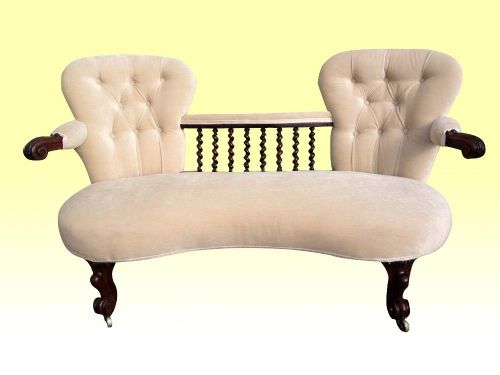


Curved Button Back Sofa
A curved button back sofa is a generous seat designed for comfort, offering deep upholstery and sweeping lines that suit a parlour or drawing room.
Curved Button Back Sofa
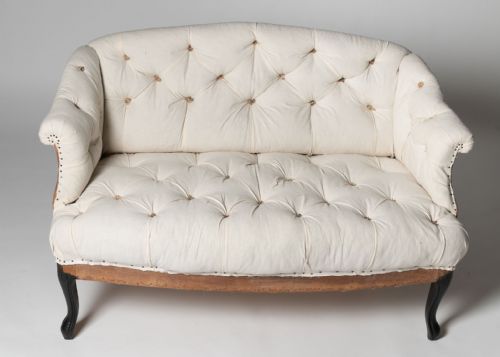
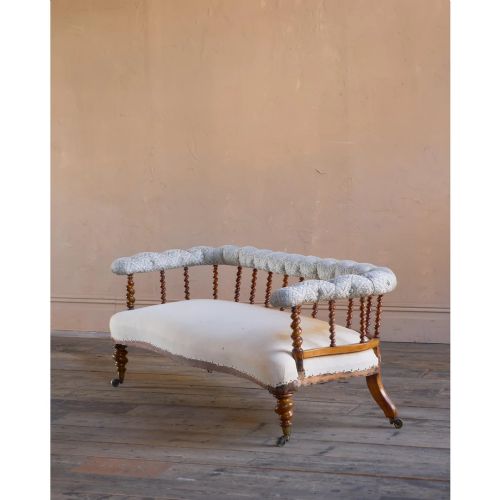
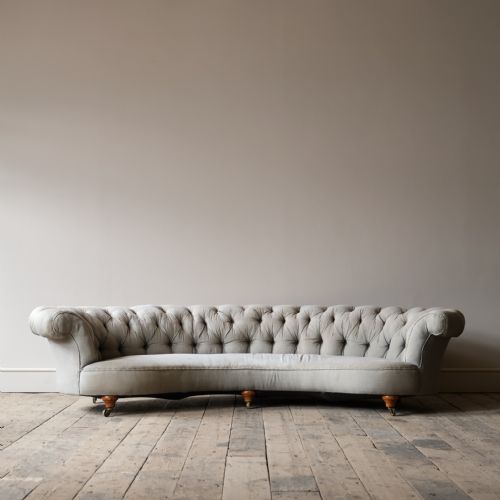
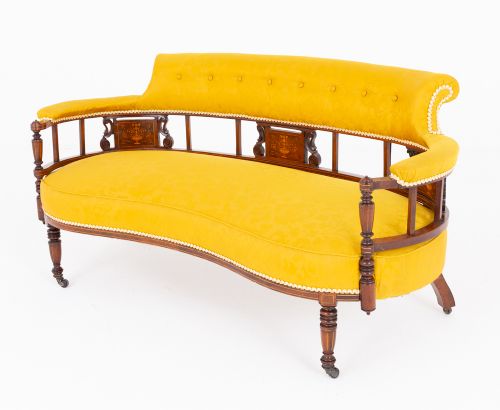
A curved button back sofa combines deep-buttoned upholstery with a rounded or crescent frame, creating a striking silhouette that anchors a room. These pieces appear across the nineteenth century, including Victorian and Edwardian examples alongside French provincial models and Napoleon III designs.
The most common forms on this page include the classic Chesterfield, the salon settee, and the boudoir sofa, often built with a kidney shape or a serpentine front. Makers such as Howard & Sons and C. Hindley & Sons demonstrate the high standard of craftsmanship found in these seating forms.
How they were made
The frames rely on timbers such as mahogany, rosewood, hardwood, and giltwood, providing a sturdy architectural base for the upholstered body. Brass fittings and castors often support the heavier mahogany and rosewood structures.
Upholstery involves traditional stuffing secured with deep buttoning, finished in leather, velvet, fabric, or silk. The complex curves require precise tensioning to maintain the shape of the backrest and the serpentine fronts.
Curved Button Back Sofa Retail Price Guide 2026
Typical asking prices for curved button back sofa among the pieces listed under this phrase on Sellingantiques today, from the lower quarter to the upper quarter. They describe what is for sale here now, not the wider market.
Some nineteenth-century makers hid their workshop signatures deep inside the horsehair stuffing, leaving a secret message for future upholsterers.
What varies in quality
Quality rests upon the proportion of the curved frame and the precision of the buttoning, which should follow the sweeping lines without distortion. Timbers like rosewood and mahogany show greater refinement in their grain and carving compared to plain hardwood frames.
The integrity of the original frame construction and the choice of covering material, whether supple leather or plush velvet, dictate the overall distinction of each piece.
Howard & Sons·C. Hindley & Sons
The Curved Button Back Sofa Glossary
- Button back
- A style of upholstery where the fabric is pulled tight and secured with buttons at regular intervals, creating deep recessed diamonds. This technique provides both structural support to the padding and a decorative texture.
- Chesterfield
- A traditional sofa characterised by low back and arms of the same height, heavily upholstered and typically buttoned. It remains a staple of nineteenth-century seating design.
- Canape
- A decorative French settee or sofa featuring an exposed wooden frame and upholstered seat and back. These pieces often display refined carving and lighter proportions than British settees.
- Serpentine front
- A furniture front that curves outward in the centre and inward toward the ends in an undulating line. This shape adds visual movement and complexity to the base of the seat.
Curved Button Back Sofa: Frequently Asked Questions
What is a curved button back sofa?
A curved button back sofa is a nineteenth-century seating form featuring a rounded or crescent-shaped frame and deep-buttoned upholstery. These pieces were designed for formal reception rooms and parlours.
They combine structural timber frames in mahogany, rosewood, or hardwood with sprung seats and padded backs covered in leather, velvet, or fabric.
Where were these sofas placed?
These settees served as principal seating in Victorian drawing rooms, boudoirs, and salons, often positioned to make use of an open floor plan or a bay window. Their curved silhouettes allowed them to sit comfortably away from straight walls.
Smaller boudoir sofas and kidney shapes suited intimate dressing rooms or private sitting areas, while larger Chesterfield and salon models occupied grander entertaining spaces.
How do I care for leather upholstery?
Leather upholstery on nineteenth-century pieces requires gentle cleaning with a dry or slightly damp cloth, avoiding harsh chemical cleaners that dry out the hide. Conditioning helps maintain flexibility in older leathers.
Keep these sofas away from direct sunlight and heat sources to prevent the leather and the underlying wooden frame from warping or cracking over time.
How can I tell Victorian from Edwardian pieces?
Victorian examples tend to feature heavier rosewood or mahogany frames, darker leather or velvet coverings, and robust proportions associated with mid to late nineteenth-century manufacture. They often incorporate elaborate buttoning and serpentine fronts.
Later pieces from the turn of the century frequently display lighter woods or giltwood finishes, reflecting the transition toward more delicate French-influenced styles like the Napoleon III boudoir sofa.