


Curved Art Deco Bedside
These curved art deco bedside pieces offer sweeping lines and practical storage, bringing period elegance directly to the modern bedroom.
Curved Art Deco Bedside
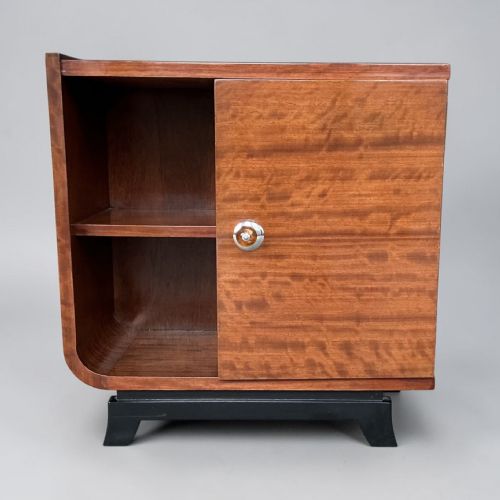
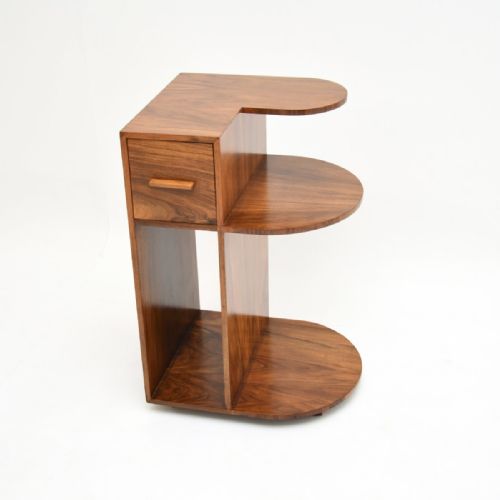
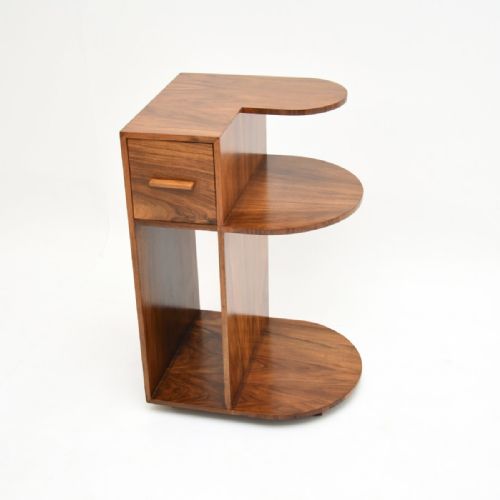
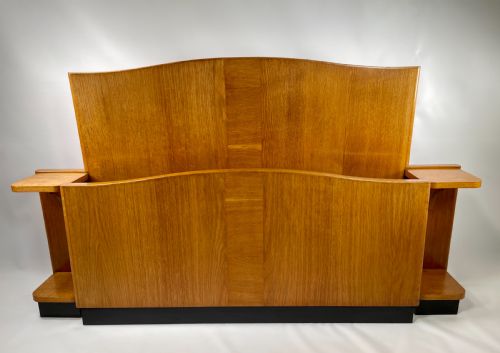
These items encompass bedside tables, side cabinets, and nightstands designed with distinctive geometric sweeps and rounded profiles. When exploring curved art deco bedside pieces, you encounter forms ranging from drum-shaped cabinets to complete bed units featuring attached side units. Most examples originate from the nineteen thirties, capturing the streamlined aesthetic of the interwar period.
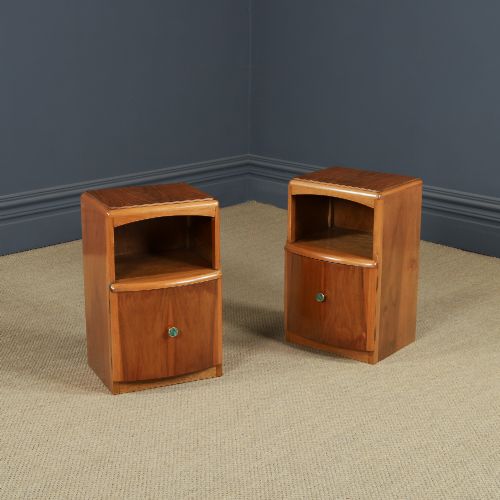
The selection includes matched pairs and individual side tables created for domestic sleeping quarters. Pieces frequently integrate open storage areas alongside enclosed cupboards, balancing decorative appeal with utility. English, French, and Italian examples demonstrate the international reach of this design language during the nineteen twenties and nineteen thirties.
How they were made
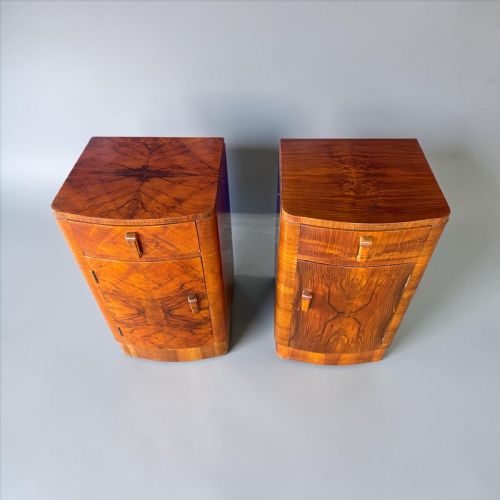
Cabinet makers utilised choice timber veneers over solid wood carcases, applying figured walnut, burr walnut, and blonde maple to create striking grain patterns on curved surfaces. Wood veneer allows craftsmen to wrap rounded forms smoothly without splitting, defining the sculptural silhouette characteristic of the style. Ebonised wood accents occasionally provide contrast against the lighter polished veneers.
Construction techniques focus on achieving seamless transitions around corners and cylindrical shapes, as seen in the drum-shaped configurations. Surfaces receive a high-gloss or polished finish that accentuates the natural figuring of the walnut and maple materials. Joinery remains concealed to maintain the clean, unbroken visual flow demanded by the movement.
Some nineteen thirties bedside cabinets feature illuminated tops designed to cast a gentle glow upward through the room.
What varies in quality
The sophistication of the timber selection dictates the visual impact, with highly figured burr walnut and blonde maple commanding greater aesthetic presence than plain wood veneers. Matched pairs display deliberate grain alignment across both units, whereas lesser examples show random or mismatched patterns. The complexity of the construction, particularly in drum-shaped or fully integrated bed and cabinet combinations, separates standard production from finer cabinet work.
Attribution to known makers elevates the standing of a piece, reflecting superior workshop execution and design pedigree. The integrity of the curved veneer work and the preservation of the original polished surface condition govern the overall visual balance.
Maurice Adams·H.L. Epstein Brothers
The Curved Art Deco Bedside Glossary
- Burr walnut
- A specialised timber growth featuring swirling, knotted grain patterns prized for decorative furniture fronts. It provides rich visual texture on rounded bedside tables.
- Ebonised
- Wood treated with a dark finish to resemble ebony, frequently used for contrasting trim or feet on lighter maple and walnut furniture. This treatment sharpens the geometric lines of the design.
- Nightstand
- A small low table or cabinet placed beside a bed for holding personal items and lighting. These items often feature integrated cupboards or open display spaces.
Curved Art Deco Bedside: Frequently Asked Questions
Are these pieces usually sold as pairs?
Many examples survive as matched pairs intended to flank a double bed symmetrically. Single cabinets also appear frequently for standalone placement.
Both configurations offer functional storage through enclosed cupboards or open display areas.
What woods were used for these cabinets?
Walnut, burr walnut veneer, and blonde maple form the primary surfaces for these designs. Ebonised wood occasionally provides contrasting detail.
These materials were chosen for their distinct grain patterns which highlight the curved construction.
How do integrated bed units function?
Certain examples combine a headboard with attached bedside cabinets or tables into a single cohesive structure. This arrangement creates a unified aesthetic across the sleeping area.
The attached units provide surface space and storage without requiring separate freestanding tables.
Do these tables suit modern bedrooms?
The compact proportions and clean lines allow these items to integrate easily beside contemporary low-profile beds. Their enclosed storage keeps modern necessities concealed.
The warm wood tones introduce organic texture and historical character to minimalist spaces.