





Crystal Trinket Dishes
Crystal trinket dishes combine cut glass and precious metals to hold small dressing table treasures.
Crystal Trinket Dishes
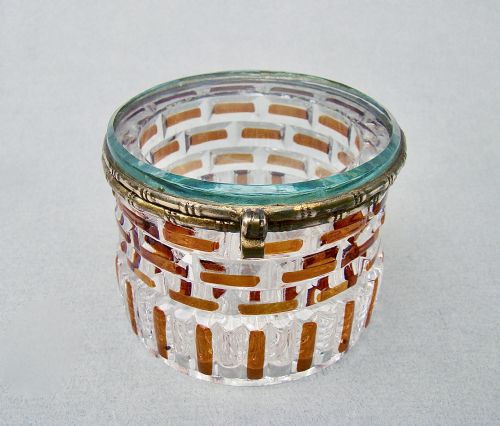
Crystal trinket dishes encompass small decorative containers and lidded boxes designed for dressing tables and vanity sets. These pieces combine heavy cut glass or crystal bodies with mounts and lids forged from silver, sterling silver, silver plate, or ormolu. The selection spans periods from the nineteenth century through the Edwardian era and into the Art Deco epoch.
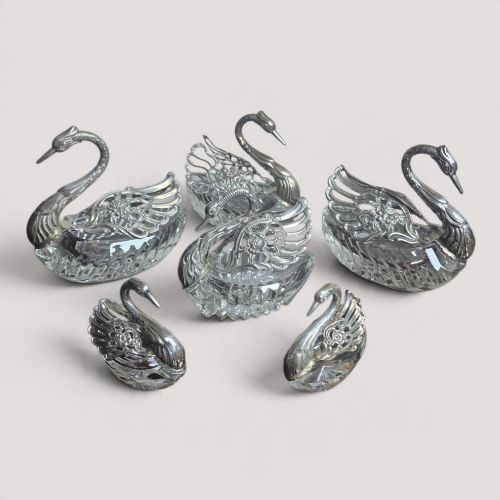
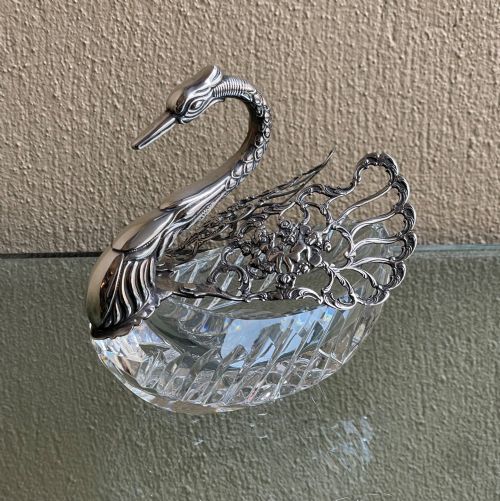
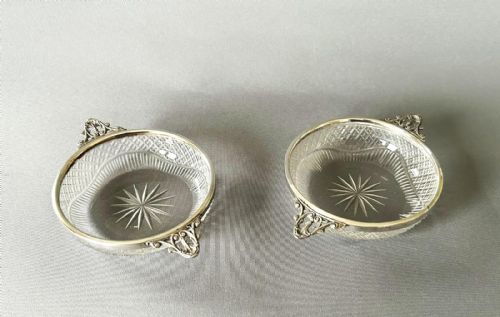
Buyers encounter a variety of forms ranging from lidded vanity jars and hinged boxes to open pin dishes and figural designs like swans. Continental and English workshops produced these items in distinct styles including Victorian, Rococo Revival, and French Belle Epoque. The physical footprint remains modest, intended for rings, pins, and small personal items.
How they were made
The glass elements rely on heavy moulding and deep hand-cutting to create geometric or floral facets that catch the light. Workshops then fitted these vessels with metal collars, hinges, and lids made from sterling silver or cast brass ormolu. Artisans frequently added secondary decorative techniques such as cold enamel work in blue tones directly onto the metal surfaces.
Makers such as Baccarat and Lalique produced high-grade crystal bodies that required precise cooling and finishing. Metal mounts were secured to the glass rims using specialised adhesives or mechanical flanges to ensure a sturdy union between the two distinct materials.
Crystal Trinket Dishes Retail Price Guide 2026
Typical asking prices for crystal trinket dishes among the pieces listed under this phrase on Sellingantiques today, from the lower quarter to the upper quarter. They describe what is for sale here now, not the wider market.
Swan-shaped glass dishes with silver wings remain ready to glide across any dressing table.
What varies in quality
Depth and crispness of the glass cutting separate standard utility items from finer luxury pieces. Sharp, clean facets reflect light evenly across the surface, whereas softer moulded edges indicate lesser production effort.
The weight and purity of the metal mounts dictate the overall standard of a piece. Substantial sterling silver or heavy ormolu castings with intact hinges and enamel retain their integrity better than thin silver plate over base metals.
Posen·René Lalique·Baccarat·Hoffman
The Crystal Trinket Dishes Glossary
- Cut Glass
- Glass shaped and patterned by holding it against a rotating abrasive wheel. This technique creates sharp facets that scatter light.
- Ormolu
- Gilded bronze or brass mounts used extensively in French decorative arts. It provides a rich golden frame for glass vessels.
- Sterling Silver
- An alloy containing ninety-two point five percent silver by mass. It appears frequently on the lids and collars of these boxes.
- Enamel
- A glassy substance melted onto metal surfaces for colour. Blue enamel additions are common on pieces from the nineteen-thirties.
- Pin Dish
- A shallow open vessel designed to hold small straight pins from daily attire. They often feature figural motifs or shaped rims.
Crystal Trinket Dishes: Frequently Asked Questions
How do I date my dish?
Examine the metal hallmarks and the overall stylistic traits of the piece. Edwardian and Victorian examples often feature ornate floral repoussé work, while nineteen-thirties items favour geometric Art Deco lines.
Material choices also offer clues, as heavy use of coloured enamel points firmly towards the interwar period.
Are the metal mounts silver?
Many mounts consist of English sterling silver or continental silver, indicated by tiny stamped hallmarks. Other pieces utilise silver plate or gilded ormolu over brass.
Checking for maker marks near the hinge or rim helps clarify the exact metal composition.
How should I clean them?
Wash the glass portion gently in warm soapy water using a soft cloth. Keep moisture away from any glued joints, fabric linings, or paper labels.
Polish silver or ormolu mounts with a dry microfibre cloth, avoiding harsh chemical dips that damage enamel work.
What were they used for?
These vessels sat on dressing tables to hold rings, brooches, pins, and small cosmetics. Covered boxes kept delicate items protected from dust.
Open pin dishes allowed quick access to everyday accessories during morning dressing routines.