



Crystal Shade Table Lamp
A crystal shade table lamp brings genuine sparkle to a room, offering both bright task illumination and the heavy gleam of cut glass.
Crystal Shade Table Lamp
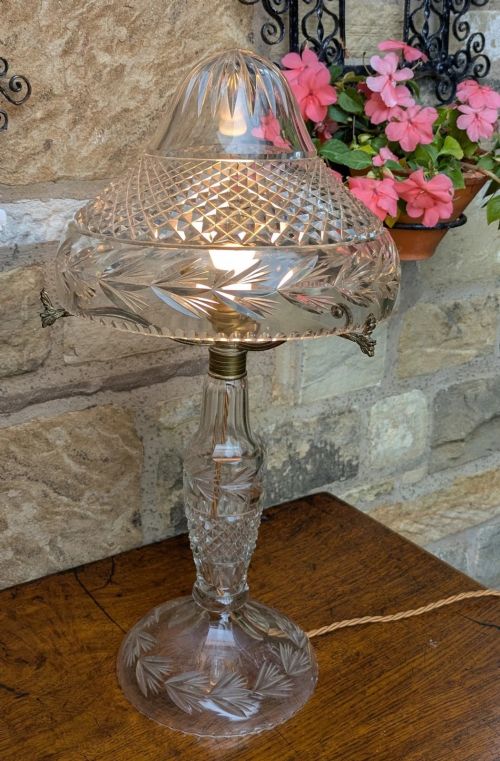
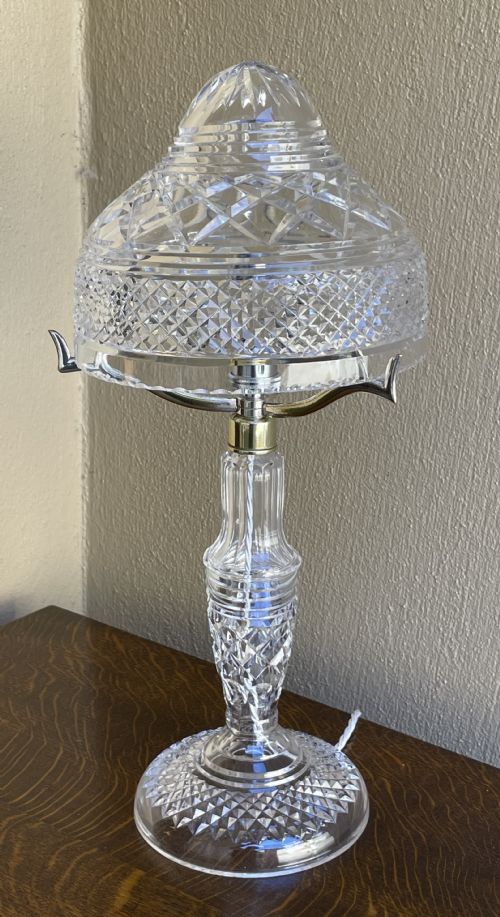
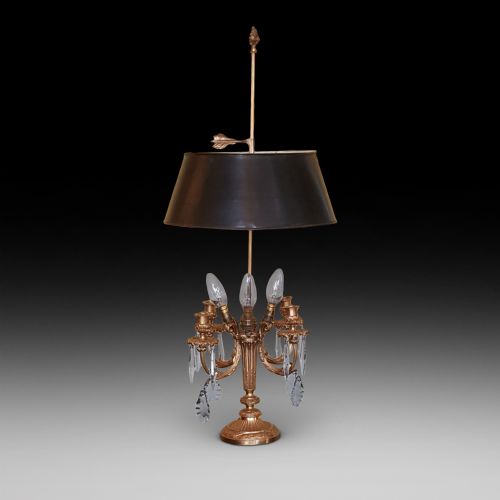
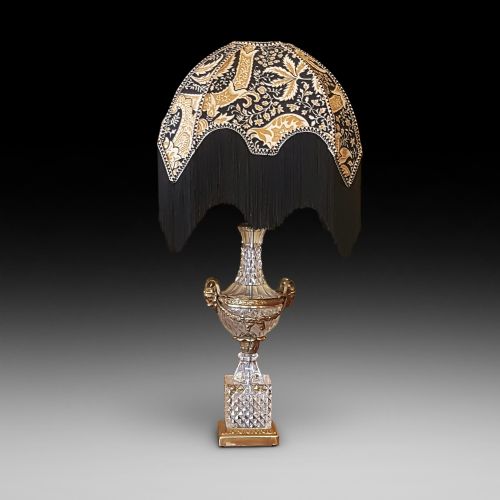
When you search for a crystal shade table lamp, you are looking at domestic lighting featuring cut glass, lead crystal, or frosted glass shades paired with bases formed from brass, chrome, gilt metal, or crystal itself. The pieces on this page span the Victorian period, the Edwardian era, and the 1920 and 1930 decades, taking forms such as mushroom lamps, converted paraffin oil lamps, and figural designs.
You are most likely to meet 1930s mushroom lamps made by makers such as Stuart Crystal, alongside early twentieth-century French pieces including Baccarat frosted glass figurine lamps and Art Deco dome lighting. Traditional English and French neoclassical styles recur frequently throughout the available selection, ranging from single bulb table lights to multi-branch candelabra.
Certain examples take the form of converted Victorian oil or paraffin lamps, adapting older fluid reservoirs for electrical use while retaining heavy cut glass bodies. Other listings include ceiling lights that share the same heavy crystal shade construction as standard table lamps, offering versatility in placement.
Materials and construction
These lamps rely on heavy cut glass and lead crystal, which are shaped and faceted by hand to refract light through shades and bodies alike. Metal mounts in brass, gilt metal, or chrome secure the glass components, providing structural rigidity to the base and collar.
Makers utilised frosted glass for specific figural and dome forms, creating a softer diffused glow distinct from the sharp sparkle of deep-cut lead crystal. Fabric and linen shades also appear on Edwardian and Art Deco pieces, balancing the heavy reflective qualities of the glass elements.
Materials recorded across the inventory include lead crystal, frosted glass, brass, chrome, and gilt metal.
Judging quality in glass lighting
The standard of a crystal shade table lamp depends on the depth and crispness of the cutting across the glass surface, where sharper facets catch and throw light more cleanly. Maker attribution also separates standard commercial production from documented pieces produced by established names like Stuart Crystal or Baccarat.
The weight and finish of the metal mounts contribute significantly to the overall substance of the piece, with solid brass and gilt metal outperforming lighter plated alternatives. Integrated quality is further demonstrated by the harmony between the shade and the base, particularly in matched pairings and original factory configurations.
Stuart Crystal·Baccarat
The Crystal Shade Table Lamp Glossary
- Cut glass
- Glass decorated by grinding facets and patterns into the surface using a wheel. This technique creates sharp edges that refract light in multiple directions.
- Lead crystal
- Glass containing a high proportion of lead oxide, which increases the weight, clarity, and refractive index of the material. It allows for deeper and more brilliant cutting than standard glass.
- Frosted glass
- Glass rendered opaque through acid etching or sandblasting. The resulting texture diffuses light evenly rather than casting sharp beams.
- Ormolu
- Gilded bronze or brass mounts used extensively in French neoclassical and Edwardian decorative lighting. It provides a rich golden contrast to the clear crystal components.
- Mushroom lamp
- A table lamp featuring a rounded, cap-like shade that resembles a mushroom fungus. This form gained popularity during the Art Deco period.
Crystal Shade Table Lamp: Frequently Asked Questions
How do I rewire an antique lamp?
Rewiring typically involves replacing older fabric or rubber insulated flex with modern three-core wiring that meets current safety standards. Many pieces retain their original brass bulb holders, which can be carefully rewired while preserving the historic metal components.
For lamps with complex metal mounts or delicate crystal shades, a professional electrician should handle the internal rewiring to avoid damaging fragile glass collars and threaded fittings.
Are these lamps heavy?
Yes, genuine lead crystal and thick cut glass components add substantial weight to both the shades and the bases. This heavy construction ensures the lamps remain stable on tables and sideboards despite carrying wide glass shades.
When lifting or moving these pieces, support both the glass body and the metal base simultaneously rather than pulling by the shade alone.
How do I clean a crystal shade?
Cleaning requires removing the shade from the metal mount and washing it in lukewarm water with mild soap. Avoid abrasive cloths or harsh chemical cleaners that can scratch the polished glass surface or damage gilt metal mounts.
Allow the crystal to dry completely before reattaching it to the lamp base and turning the power back on.
Can I replace a missing shade?
Replacing a shade requires matching the precise fitter size, collar diameter, and period style of the original base. Because many antique cut glass and frosted shades were hand-blown and hand-cut to specific dimensions, finding an exact period replacement can take time.
Many collectors prefer keeping lamps with their original matching shades to preserve the historical integrity and visual balance of the piece.