

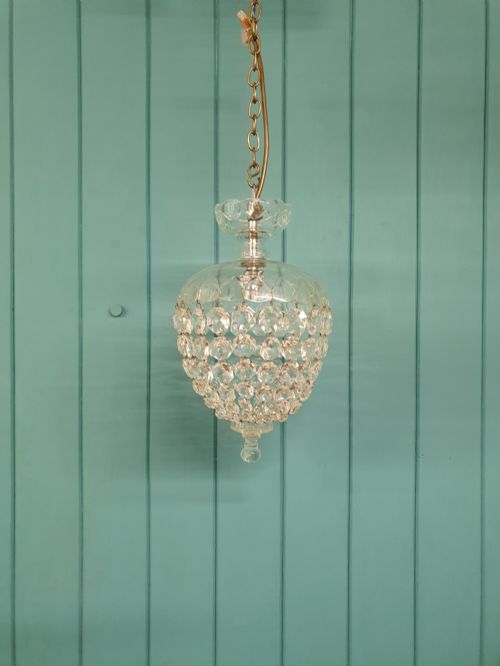
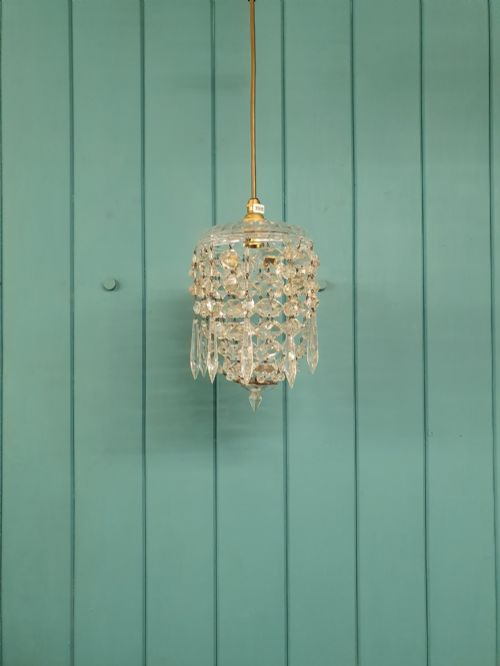
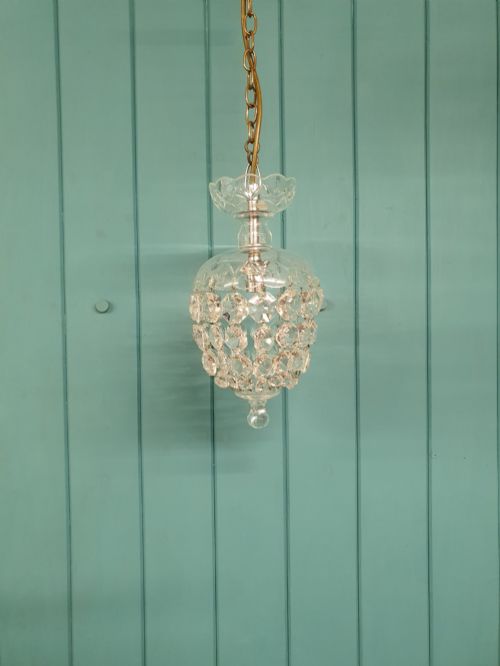


Crystal Shade Light
A crystal shade light brings remarkable sparkle to a room, scattering light through cut glass and prisms.
Crystal Shade Light
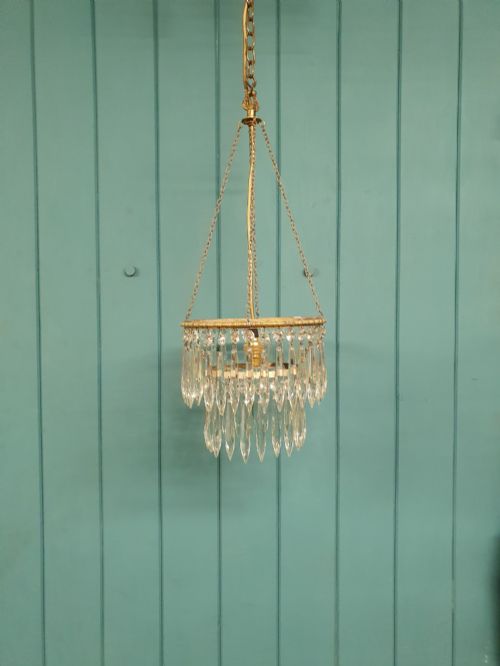
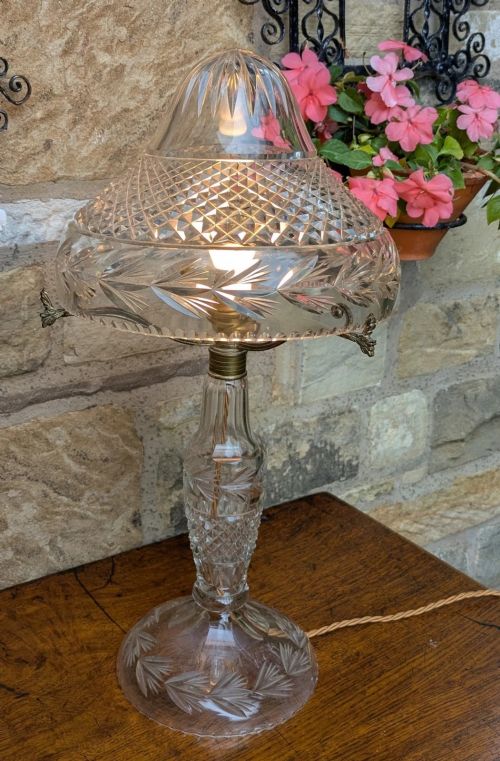
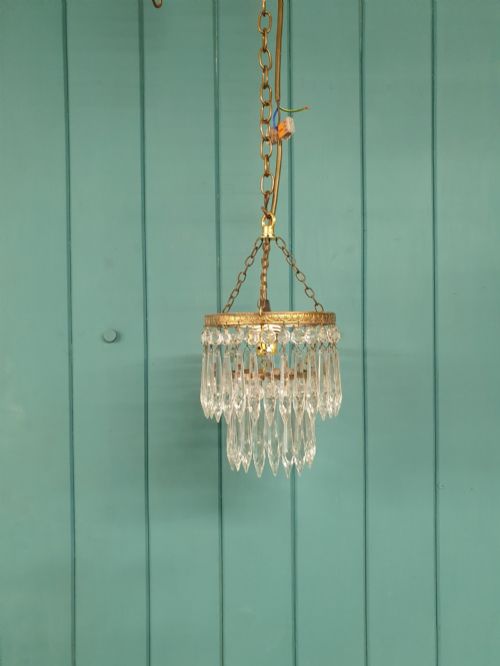
A crystal shade light encompasses a variety of illuminating forms, most commonly appearing as chandeliers, pendant lights, and table lamps from the Victorian, Edwardian, and early twentieth-century periods.
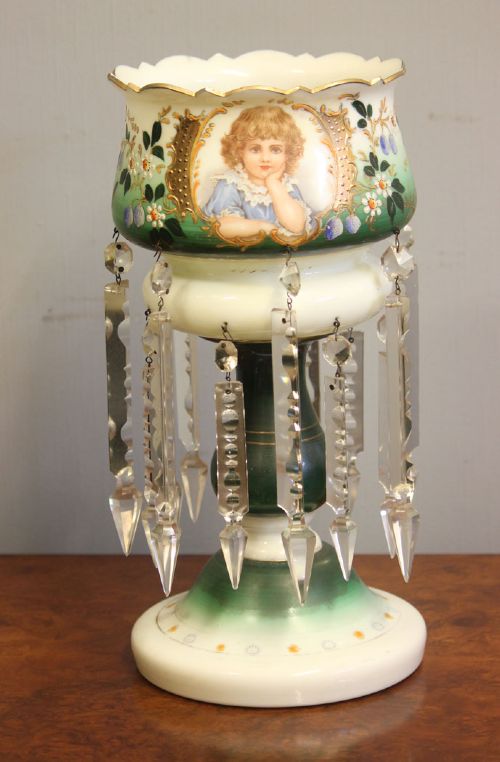
The assortment includes specialised items such as mantle lustres, wall lights, and oil lamps, reflecting the varied domestic illumination methods of the nineteenth and early twentieth centuries.
How they were made
Makers shaped these fixtures using combinations of brass, chrome, bronze, and gilt metal to form the structural frames and mounts, securing glass elements with wire and metal pins.
The optical components rely on cut glass, lead crystal, and hand-blown glass, often shaped into prisms, beads, drops, and domed shades to refract and amplify the illumination.
Crystal Shade Light Retail Price Guide 2026
Typical asking prices for crystal shade light among the pieces listed under this phrase on Sellingantiques today, from the lower quarter to the upper quarter. They describe what is for sale here now, not the wider market.
Listings feature items spanning the Victorian era through the 1930s, incorporating brass, bronze, lead crystal, and hand-blown glass elements.
What varies in quality
The sophistication of the glass cutting dictates much of the visual depth, where precise diamond facets and sharp hobnail patterns project sharper refraction than softer, pressed alternatives.
Metalwork construction also defines the tier, with heavy cast brass, bronze, and ormolu mounts offering greater structural integrity than lighter chrome or wire frameworks.
Stuart Crystal·Baccarat·F. & C. Osler
The Crystal Shade Light Glossary
- Prism
- A cut glass pendant hung from a lighting fixture to refract light into spectral colours. These drop elements catch ambient illumination from every angle.
- Mantel Lustre
- A decorative ornamental vase fitted with hanging glass prisms, placed traditionally on fireplace mantels. They were often paired with matching candle fixtures.
- Bag Chandelier
- A light fixture featuring a flattened lower basket or bag formed of numerous glass beads enclosing the internal burners or bulbs. The profile resembles a small gathered pouch.
- Spike Chandelier
- A compact ceiling light featuring an upright central spire or spike decorated with glass drops and metal foliage. They suit rooms with lower ceiling heights.
Crystal Shade Light: Frequently Asked Questions
How do I clean a crystal shade light?
Maintenance involves gentle cleaning of individual glass drops and prisms using a mild solution and a soft cloth to preserve the optical clarity without disturbing the wiring or metal pins.
Heavier fixtures benefit from cleaning in situ using a targeted spray, ensuring all moisture is dried thoroughly from the brass and bronze frames.
Were these lights originally electrified?
Many early pieces began as candle, oil, or paraffin burners before undergoing conversion to electricity during subsequent decades to suit modern domestic requirements.
Converted examples frequently retain period brass burners, oil fonts, or decorative drip pans alongside contemporary internal wiring.
Where should I hang a dome top chandelier?
Compact dome top and spike chandeliers work effectively in hallways, smaller reception rooms, or above occasional tables where ceiling height is restricted.
Larger multi-tiered waterfall and tent fixtures require generous vertical clearance to display their proportion and drop arrangements properly.
How do I date an Edwardian crystal light?
Edwardian pieces often combine traditional brass or silver-plated mounts with specific cut glass formations, reflecting the transition from Victorian ornamentation toward lighter Edwardian aesthetics.
Stylistic markers include specific drop shapes like spears and spikes, alongside mounting techniques characteristic of the early twentieth century.