



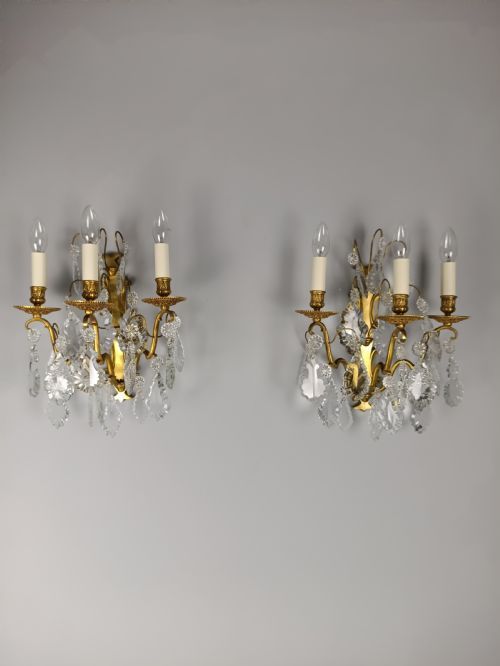

Crystal Sconce Lighting
Crystal sconce lighting illuminates a room with reflected candlelight or electric warmth through cut glass prisms and gilt mounts.
Crystal Sconce Lighting
Crystal sconce lighting comprises wall-mounted fixtures designed to hold candles or electric lamps while refracting light through glass drops and pendants. When buyers search for crystal sconce lighting, they encounter decorative wall brackets that trace their origins through nineteenth-century designs into twentieth-century revivals.
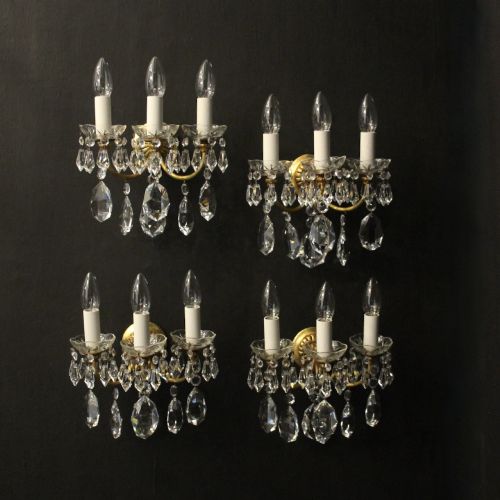
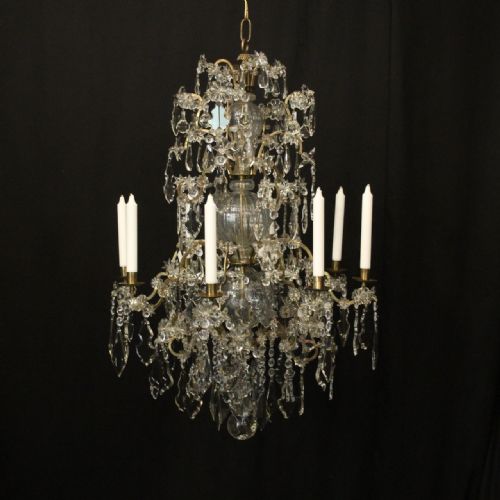
The selections recorded here span the Edwardian era, the nineteenth century, and the early decades of the twentieth century. French regional workshops dominate the groupings alongside Swedish and Florentine makers, often appearing in symmetrical pairs.
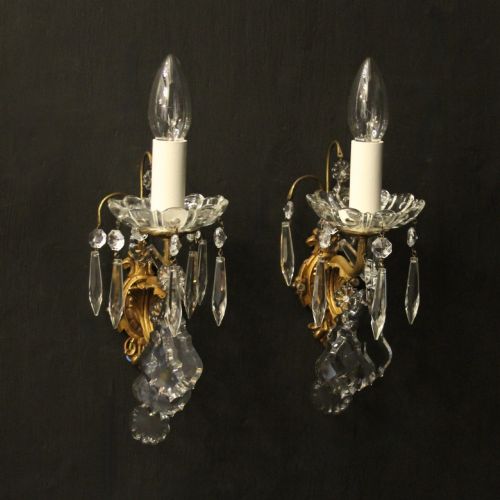
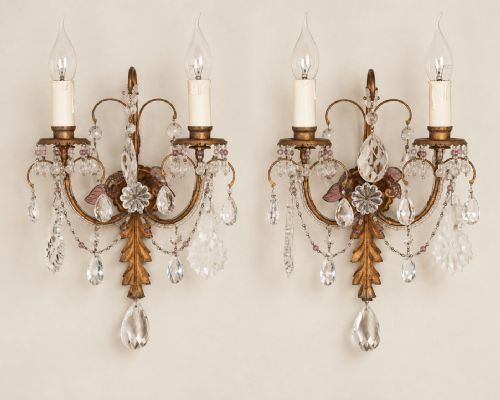
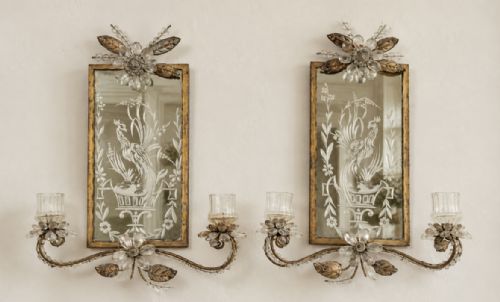
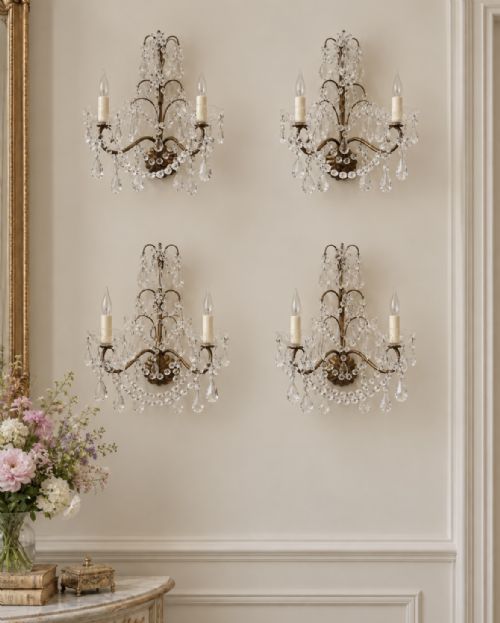
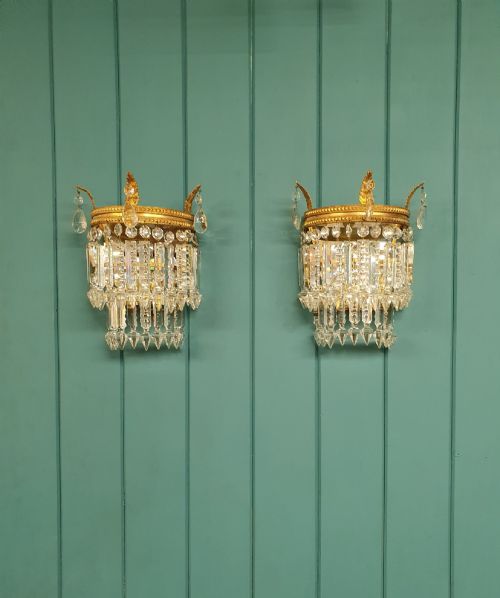
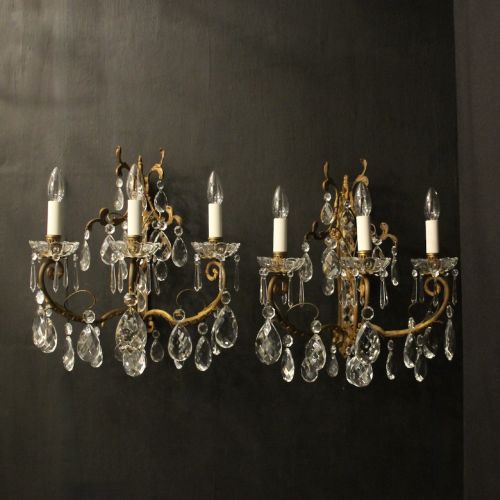
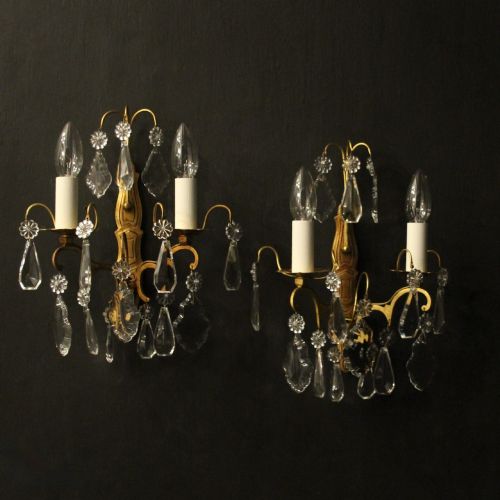
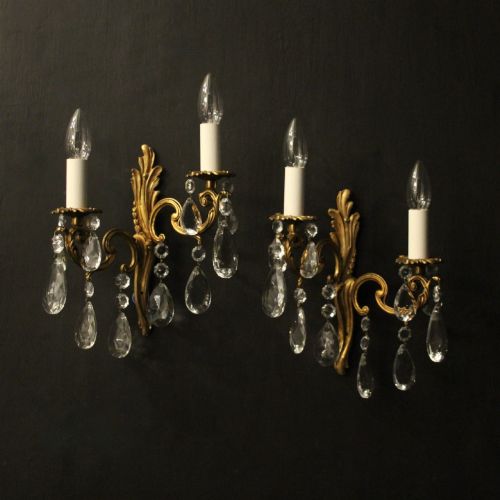
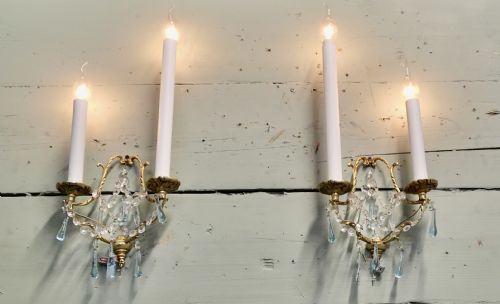
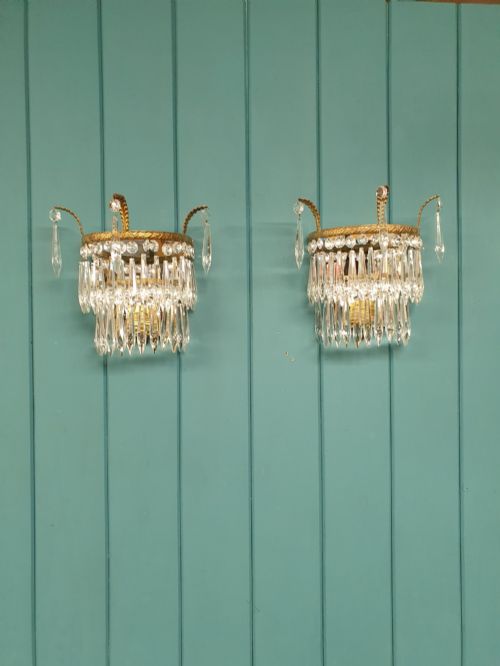
Common forms on this page include twin-arm and triple-arm wall lights, tent-and-bag assemblies, and mirror-backed fixtures. These pieces draw on French Rococo, Neoclassical, and Baroque vocabularies, bringing historical ornament directly onto the wall.
How they were made
Metalwork frames rely on brass, gilt bronze, ormolu, and wrought iron, formed into scrolled arms and floral backplates. Gilder's techniques apply gold leaf or surface plating to bronze and brass bases.
Glass components combine mould-blown elements with hand-cut crystal drops, lustres, and beads. Artisans wire or pin these crystal prisms to the metal armature using brass pins and wire loops.
Crystal Sconce Lighting Retail Price Guide 2026
Typical asking prices for crystal sconce lighting among the pieces listed under this phrase on Sellingantiques today, from the lower quarter to the upper quarter. They describe what is for sale here now, not the wider market.
Cherubs occasionally peek from the metalwork of early twentieth-century lustre wall lights, keeping watch over the flickering candles.
What varies in quality
Quality rests upon the depth of the metal chasing and the clarity of the glass prisms. Crisp hand-cutting on crystal creates sharp refractive facets, whereas moulded glass lacks the same brilliance.
The structural integrity of the backplate and the weight of the cast bronze or brass dictate the durability of the wall light. Fine surviving gilt layers and matching original crystal drops distinguish superior examples from assembled or altered pieces.
Maison Bagues·Baccarat·F. & C. Osler
The Crystal Sconce Lighting Glossary
- Girandole
- An ornamental branched candlestick or light fixture designed to be fixed to a wall. Many incorporate mirrored glass backplates to multiply the illumination.
- Lustre
- A pendant drop of cut glass or crystal suspended from a lighting fixture to refract light. They catch and scatter ambient illumination across the room.
- Ormolu
- Gilded bronze produced by applying a mercury and gold amalgam to a bronze base and heating it. This technique imparts a rich golden surface finish to nineteenth-century metalwork.
- Tent and bag
- A lighting configuration where strings of crystal beads form a tent shape above a gathered bag of drops. This style is frequently found on French wall lights from the early twentieth century.
- Backplate
- The flat or shaped metal section that fastens directly to the wall and supports the arms. It often bears the decorative stylistic motifs of the period.
Crystal Sconce Lighting: Frequently Asked Questions
How do I install antique wall lights?
Many antique fixtures arrive rewired for modern electrical standards while retaining their original brass or bronze frames. Professional installation ensures the heavy metal backplates secure safely to wall studs.
Consult an electrician regarding wall-box compatibility and appropriate bulb wattage to protect fragile historic wiring and sockets.
Where should I place crystal sconces?
Mount these fixtures beside mirrors, fireplaces, or flanking architectural doorways to maximise the reflective qualities of the cut glass. Height placement typically aligns near eye level to balance proportions within a room.
Consider the reach of the twin or triple arms so that passing traffic does not brush against hanging crystal drops.
How do I clean crystal sconces?
Remove dust gently using a soft feather duster or microfiber cloth to protect delicate brass pins and wire connections. For deeper cleaning, wipe glass drops with a mild solution without soaking vintage metal frames.
Avoid harsh chemical sprays that might strip the gilt surface from bronze and brass components.
How do I date these wall lights?
Examine the casting quality, the style of the metalwork, and the cut of the crystal prisms to determine the period. Edwardian pieces often share characteristics with earlier nineteenth-century French designs.
Look for structural clues in the backplate construction and screw threads that indicate nineteenth or early twentieth-century manufacturing methods.