
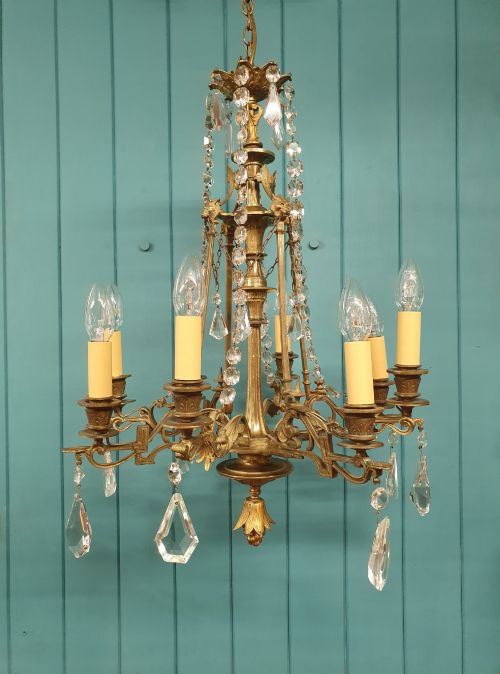


Crystal Prism Light Fitting
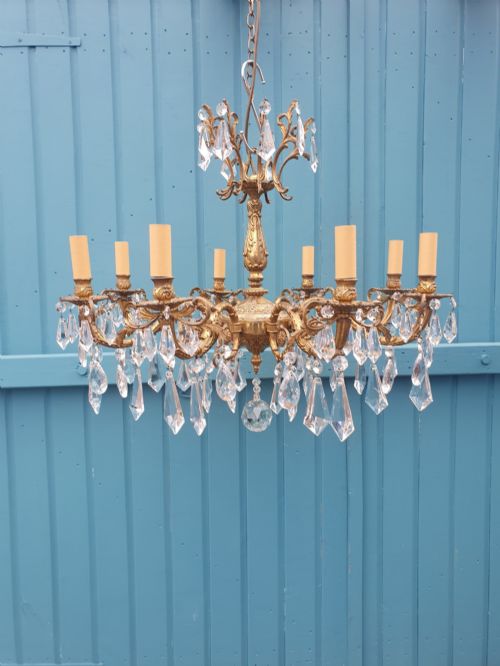
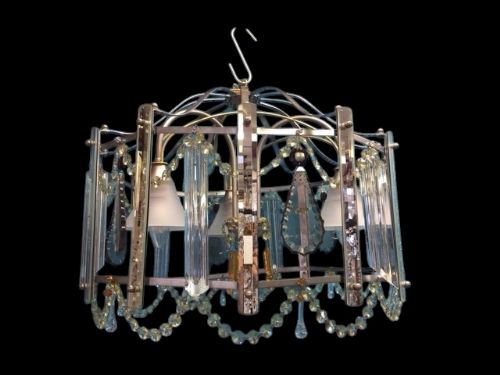
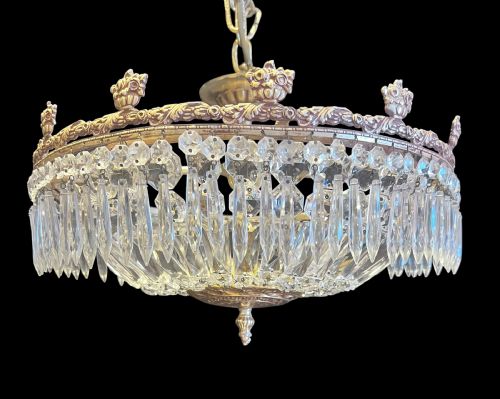
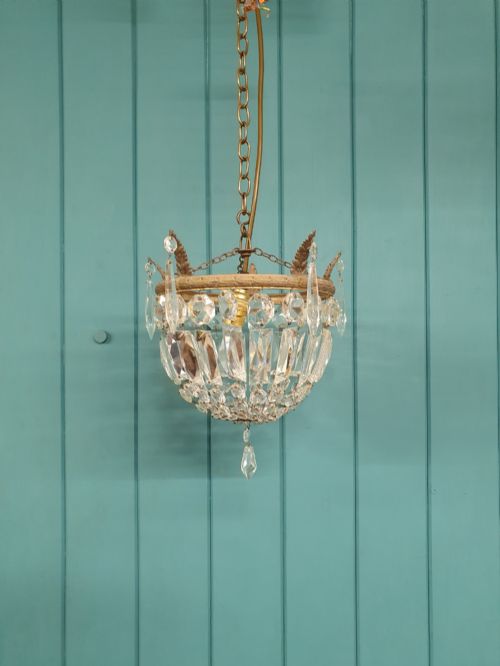
These crystal prism light fittings catch and scatter the room's light through cut glass drops, brass frames and French gilt metal.
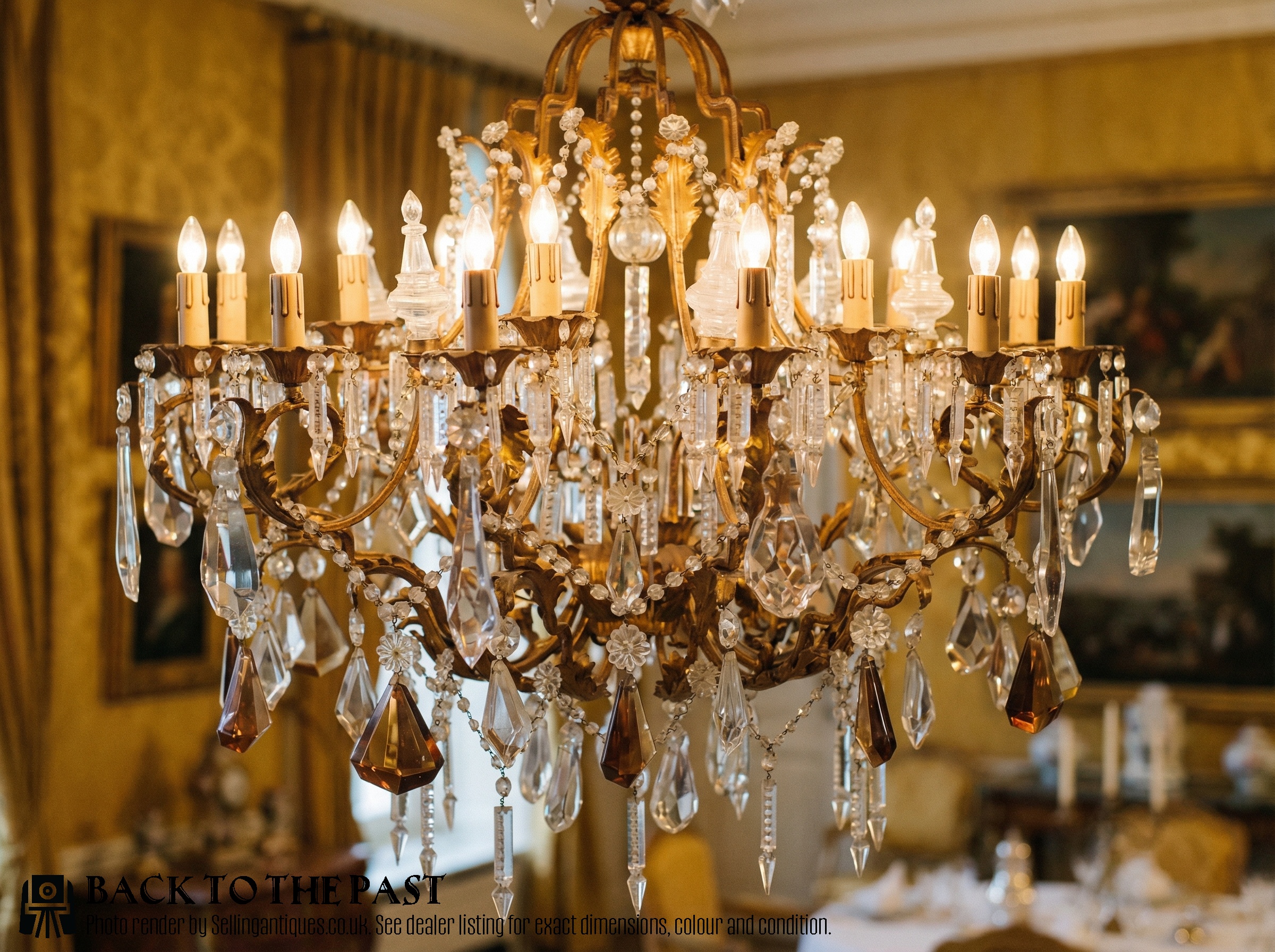
Crystal Prism Light Fitting
A crystal prism light fitting is a hanging ceiling fixture designed to illuminate a room while refracting light through glass drops and lustres. When you search for this phrase, you encounter diverse forms ranging from compact bag chandeliers to multi-tiered waterfall lampshades and large French cage designs.
The selections span from the nineteenth century through the Edwardian era into the nineteen twenties and thirties. You meet smaller spike chandeliers and basket forms alongside elaborate multi-arm brass and gilded bronze fixtures.
Origin and period dictate much of the character, with French styles such as Empire, Rococo, and Beaux-Arts sitting beside restrained Edwardian and geometric Art Deco pieces. Most examples on offer utilise brass, chrome, or gilt metal frames to support masses of cut glass and crystal prisms.
How they were made
The framework of a crystal prism light fitting relies on cast or spun brass, gilded bronze, and chrome to form the structural body, cage, or basket. These metal mounts are shaped to hold multiple arms, bands, and tiers that support the weight of the glass elements.
Hanging elements are fashioned from lead crystal, cut glass, and crystal glass, shaped into long prisms, coffin prisms, beads, drops, and oblong drips. These glass components are individually hand-cut and polished before being wired to the metal frame with small brass pins or wire swags.
Certain early twentieth-century chandeliers incorporate unexpected blue prisms tucked away at the top and centre to alter the cast of the room's light.
What varies in quality
The distinction between tiers of quality rests in the density and purity of the glass and the crispness of the metal casting. Heavy lead crystal prisms with sharp, hand-cut facets refract light with greater brilliance than pressed or moulded glass alternatives.
Subtleties in the metalwork separate standard fixtures from finer examples, particularly where chased or gilded bronze mounts, lion masks, and detailed brass frames replace simpler spun metal. The intricacy of the assembly, from complex multi-tiered waterfalls to integrated bead swags, elevates the overall execution.
The Crystal Prism Light Fitting Glossary
- Plafoniere
- A ceiling-mounted light fitting that sits flush or close to the ceiling surface rather than hanging on a long drop. These often feature a brass frame securing cut glass panels or crystal prisms.
- Coffin prism
- A specific geometric cut of hanging glass shaped like a narrow wedge or coffin lid. This prism style is frequently found on Edwardian and early twentieth-century chandeliers.
- Bag chandelier
- A light fixture featuring a gathered mass of glass beads and drops tapering downward into a bag shape. They are typically bordered by larger lustres or long prisms.
- Gilded bronze
- Metalwork finished with a thin layer of gold or gold-coloured leaf, often termed bronze dore in French pieces. This material forms the ornate cage and arm structures of nineteenth-century chandeliers.
- Waterfall lampshade
- A multi-tiered lighting form where successive cascading rings of crystal drops create a layered, flowing silhouette. These fixtures direct illumination through descending curtains of glass.
Crystal Prism Light Fitting: Frequently Asked Questions
How do I clean a crystal prism light fitting?
Cleaning requires removing dust with a soft brush and washing individual glass prisms by hand using warm water and a mild detergent. Metal frames should be wiped gently to avoid disturbing the original patina or finish.
Leaving the prisms attached while cleaning can lead to residue build-up in the tight wire connections. Taking down the drops allows thorough drying before reattachment to the brass or bronze structure.
What rooms suit a bag chandelier?
Bag chandeliers work well in spaces with lower ceilings where a pendant drop would hang too low. Their compact profile distributes refracted light evenly across smaller sitting rooms or hallways.
Because these fixtures project light outward through dense beadwork, they create a warm atmosphere. They complement period interiors ranging from Edwardian rooms to French-inspired spaces.
How can I tell an Edwardian chandelier from a thirties piece?
Edwardian and nineteenth-century chandeliers often display heavier cast brass, gilded bronze, and intricate details like lion masks. Their prism cuts tend toward long spear shapes and coffin drops.
Nineteen thirties pieces frequently adopt simpler geometric lines or leaner frames influenced by Art Deco design. They may incorporate chrome elements alongside standard brass and varied oblong drip crystals.
Are these light fittings wired for modern ceilings?
Most antique and vintage fixtures require professional rewiring to meet contemporary electrical standards. A qualified electrician can adapt the internal sockets and mounting brackets safely.
Retaining the original brass or bronze frame ensures the historical appearance remains intact. Modern wiring simply integrates behind the ceiling rose and within the central column.