


Crystal Drop Earrings
Crystal drop earrings bring brilliant sparkle to the ear, and these selections span eras from the nineteenth century through the twentieth.
Crystal Drop Earrings
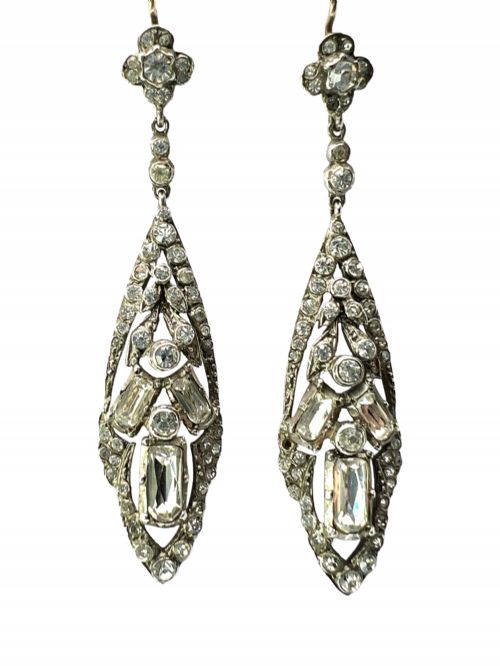
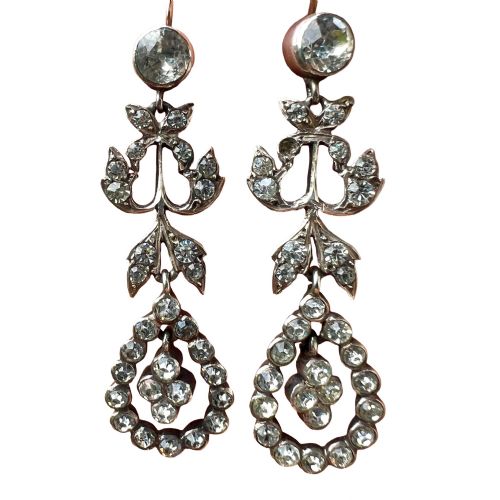
Crystal drop earrings are hanging ornaments designed to catch the light from the lobe, appearing across multiple eras including the Victorian, Edwardian, and Art Deco periods. Buyers seeking crystal drop earrings will find various configurations, from simple dangling stones to elaborate chandelier designs.
The pieces listed here encompass both genuine rock crystal and paste glass set within silver and gold mountings. Many examples utilise screwbacks, hinged lever backs, or traditional hooks to secure the drop components.
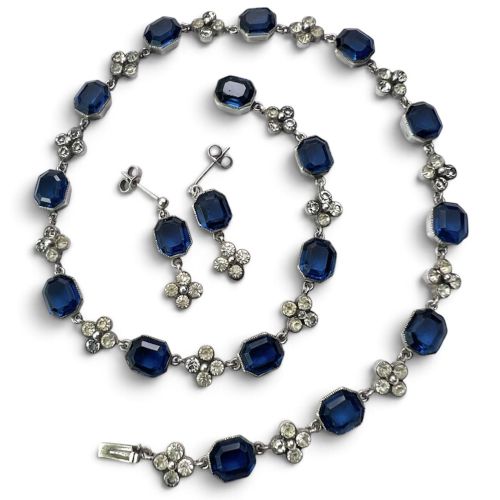
Earrings in this category range from daily wear studs with dangling elements to matching jewellery sets that pair earrings with necklaces. The aesthetic shifts from traditional Victorian ornamentation through geometric Art Deco styling to mid-century modernist forms.
How they were made
Craftsmen built these earrings using silver and various grades of gold, including nine carat yellow gold and eighteen carat gold mountings. Stones such as rock crystal, paste glass, citrine, topaz, and tourmaline were shaped into cushion cuts, briolettes, baguettes, and pear cuts to maximise brilliance.
Metalsmiths often combined silver and gold in a single piece, particularly in earlier examples, to securely hold faceted stones while providing warm backing tones. Elements like chain drops and hinged mechanisms required precise metalworking to ensure movement and durability.
Listings feature pieces spanning the nineteenth century through the nineteen-sixties, incorporating rock crystal, paste glass, silver, and nine carat gold.
What varies in quality
The calibre of these earrings depends on the clarity of the stones and the precision of the faceting, with natural rock crystal and genuine gemstones offering distinct visual depth compared to moulded paste. Setting techniques also differ, distinguishing hand-finished collet settings from simpler mass-produced bezels.
Construction integrity influences the overall standard, notably the strength of wire hooks, screwbacks, and hinged lever backs. The preservation of the original metal finish and the secure seating of each crystal dictate the lasting integrity of the piece.
Georg Jensen
The Crystal Drop Earrings Glossary
- Rock crystal
- A naturally occurring colourless quartz that artisans cut and facet for jewellery. It differs fundamentally from synthetic glass alternatives.
- Paste glass
- A heavy, high-refractive glass moulded or cut to imitate precious gemstones. Historic paste often displays subtle bubbles or mould seams.
- Briolette
- A drop-shaped gemstone cut with triangular facets entirely around its surface. This historic shape maximises sparkle from moving light.
- Screwback
- A mechanical earring finding utilising a threaded post and small nut to secure non-pierced lobes. It provides adjustable pressure for the wearer.
- Chandelier
- An elaborate multi-tiered earring design featuring cascading drops. These pieces are typically larger and intended for evening wear.
Crystal Drop Earrings: Frequently Asked Questions
How do I date crystal drop earrings?
Dating relies on examining the metal alloys, fastening mechanisms, and stone-cutting styles present in the piece. Victorian and Edwardian examples often feature closed-back settings and specific screwback or hook designs.
Mid-twentieth-century pieces, including those from the nineteen-fifties and nineteen-sixties, frequently utilise nine carat gold alongside modern geometric cuts and hinged lever backs.
Are these earrings for pierced ears?
The inventory includes variations designed for both pierced and non-pierced lobes. Historic pieces from the nineteenth and early twentieth centuries frequently utilise screwback or clip mechanisms.
Other designs feature standard posts, dangling hooks, or lever backs intended for pierced ears. Checking the specific fastener type ensures compatibility with the wearer.
How should I clean crystal earrings?
Maintenance requires gentle cleaning with warm soapy water and a soft brush to remove dust from behind the faceted stones. Harsh chemical dips should be avoided, particularly on antique settings containing paste glass or foil-backed crystals.
Stored individually in lined boxes, these earrings remain protected from scratches and impact. Regular checks of the stone settings help prevent accidental loss during wear.
What is the difference between rock crystal and paste?
Rock crystal is a natural mineral quartz possessing greater hardness and thermal conductivity than glass. Jewellers have used it for centuries as a durable alternative to diamonds.
Paste glass is a manufactured material shaped and polished to imitate gemstones. While paste can achieve high brilliance, it lacks the mineral composition and durability of natural quartz.