


Crystal Drinks Decanter
These crystal drinks decanter pieces combine cut glass and precious mounts to serve spirits in style.
Crystal Drinks Decanter
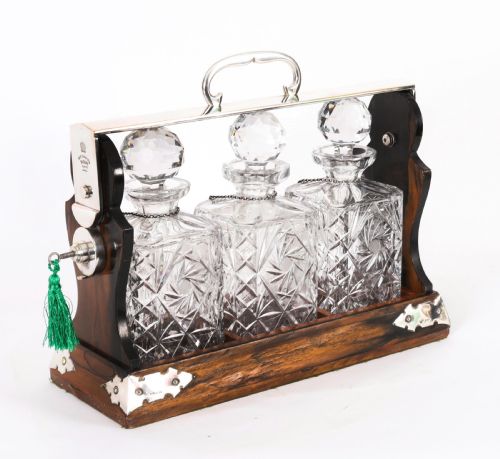
When you search for a crystal drinks decanter, you encounter vessels and locking security frames designed to hold spirits safely. These range from single bottles to elaborate tantalus sets housed in oak, coromandel, and walnut wood.
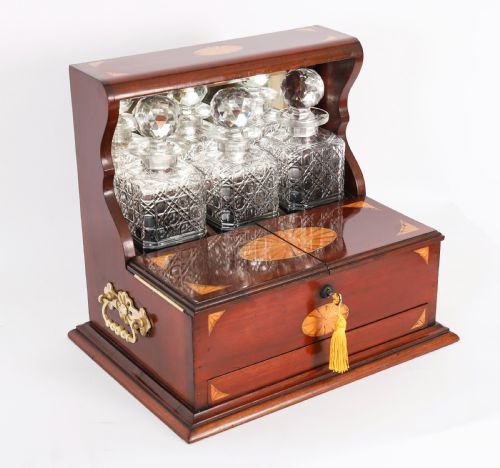
The version you are most likely to meet on this page is the Victorian or Edwardian framed set holding multiple cut crystal bottles. Many incorporate silver plated mounts, brass detailing, and integrated games compendiums or liquor compartments.
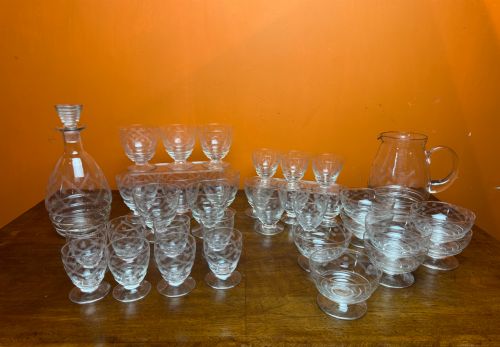
Beyond standard tantalus frames, the listings include cocktail shakers, liqueur stands, and engraved drinking services. These objects reflect the formal hospitality customs of the nineteenth and early twentieth centuries.
Materials and construction
Makers shaped the glass vessels through deep cutting and intaglio engraving techniques on heavy crystal and glass blanks. This work created the refractive surfaces characteristic of Victorian and Edwardian glassware.
Frames and stands utilise dense timbers such as oak, walnut, coromandel, and satinwood, often enhanced with brass or silver plated hardware. Locking mechanisms required precise metalworking to secure the bottles within their wooden bays.
Factors determining quality
The distinction between standard examples and superior pieces rests on the crispness of the glass cutting and the weight of the crystal. Finer decanters display sharp, clean facets that catch the light evenly without surface ripples.
Cabinetwork quality similarly defines the upper tier, where timbers exhibit careful grain selection and tight joinery. Integrated brass locking mechanisms, fully operational keys, and hallmarked silver mounts elevate the standing of a piece.
Betjemann·Webb Corbett·Hukin and Heath·Jacques Adnet
The Crystal Drinks Decanter Glossary
- Tantalus
- A locking wooden or metal frame that holds spirit decanters securely while displaying their contents. The locking bar prevents removal of the bottles until unlocked with a key.
- Cut Crystal
- Glass containing lead oxide that is faceted by grinding and polishing wheels. The lead content increases weight and refractive brilliance.
- Silver Plate
- A base metal layer coated with a thin layer of silver. This technique provided the decorative effect of solid silver at a lower production cost.
- Intaglio
- A design carved into the surface of glass rather than raised in relief. It requires skilled hand engraving with small stone or copper wheels.
- Coromandel
- A dense, heavily figured tropical hardwood native to India and Southeast Asia. Cabinetmakers utilised it for luxury boxes and tantalus frames during the nineteenth century.
Crystal Drinks Decanter: Frequently Asked Questions
How does a tantalus lock work?
A metal locking bar extends across the stoppers of the decanters, secured at one end by a hinged mechanism and a functional key lock. Turning the key releases the bar upward, allowing the bottles to be lifted from their fitted compartments.
When the bar is lowered and locked back into position, the stoppers cannot be removed, keeping the contents secure from unauthorized access.
How do I date an oak tantalus?
Dating an oak tantalus involves examining the hardware, wood finish, and locking mechanism style. Pieces from the Victorian period frequently feature heavy brass mounts and quarter sawn oak with dark patination.
Later Edwardian examples often display lighter finishes and streamlined fittings, while nineteenth century items may include maker stamps on the lock plates.
Can I use these decanters daily?
These historical crystal decanters can hold spirits for modern entertaining provided the interior is washed carefully by hand. Avoid using dishwashers, as thermal shock and harsh detergents can damage older lead glass and cloud the surface.
Wooden frames should be kept away from excessive moisture and direct heat sources to preserve the original polish and prevent timber warping.