





Crystal Candlestick Holders
Crystal candlestick holders bring refractive brilliance to a table, uniting glass, bronze, and ormolu across centuries of design.
Crystal Candlestick Holders
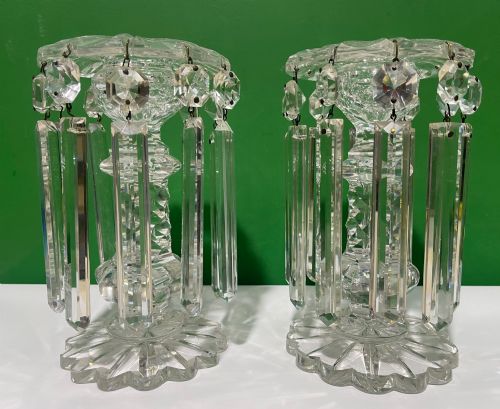
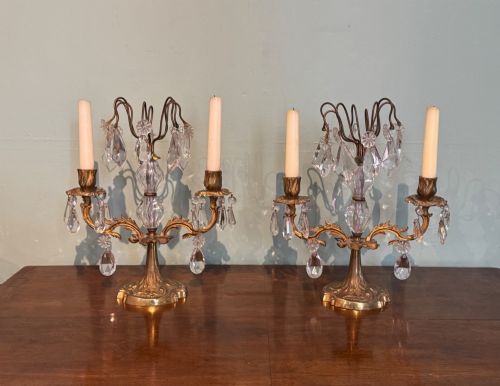
Crystal candlestick holders encompass single-light candlesticks, multi-arm candelabra, and drop-lustre forms designed to hold candles whilst amplifying their flame. When you search for crystal candlestick holders, you encounter diverse iterations ranging from Regency clear-cut glass to Victorian ruby glass and Art Deco pieces.
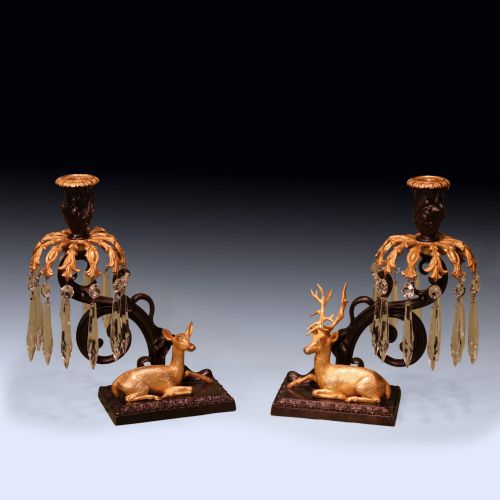
The pieces on this page span the eighteenth through the twentieth centuries, with nineteenth-century and Regency examples appearing frequently alongside 1930s creations. Makers utilised varied supports, combining cut crystal with brass, gilt bronze, ormolu, and occasionally green marble.
Forms extend beyond simple candle supports to incorporate mantle lustres fitted with dangling glass drops, as well as specialised patented designs like Clarke's Cricklite. French and Italian influences appear alongside English manufacturing traditions, presenting varied regional interpretations of lighting wares.
How they were made
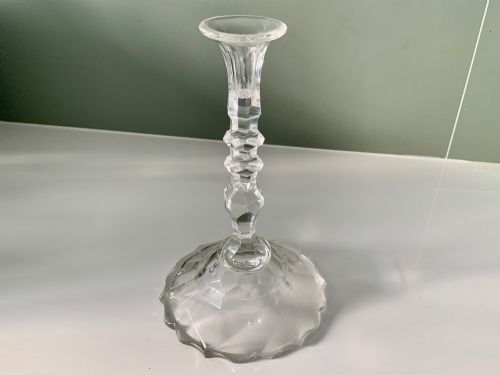
Makers fashioned the primary components from heavy lead crystal and glass, employing deep wheel-cutting techniques to create facets that catch and multiply candlelight. These glass bodies were frequently paired with cast metals such as brass, bronze, and ormolu to provide structural stability and ornamental contrast.
Lustre pieces incorporate suspended glass prisms or drops linked to the central bobeche by wire or pins, demanding precise metalwork and glass-blowing skill. Mounts often integrate chased gilt bronze or silver metal, securing the glass elements firmly within architectural or figurative bases.
Crystal Candlestick Holders Retail Price Guide 2026
Typical asking prices for crystal candlestick holders among the pieces listed under this phrase on Sellingantiques today, from the lower quarter to the upper quarter. They describe what is for sale here now, not the wider market.
Listings span from the 18th century through to the 1930s, featuring materials such as cut glass, ormolu, brass, and ruby glass.
What varies in quality
Quality rests in the crispness of the glass cutting, where sharper facets and heavy, clear crystal distinguish superior examples from lighter, moulded glass. The weight of the metal mounts and the refinement of the ormolu or bronze casting further separate standard production from exceptional work.
The integrity of the ensemble determines overall merit, particularly in lustre pieces where matching original pendant drops and undamaged candle sockets preserve the piece's original character. Maker attributions, such as signed René Lalique glass or Clarke's patent mechanisms, elevate individual examples.
Rene Lalique·Clarke
The Crystal Candlestick Holders Glossary
- Lustre
- A decorative table ornament featuring a candle socket surrounded by suspended glass prisms that reflect candlelight. They often double as small candelabra.
- Ormolu
- Gilded bronze utilised for mounts and decorative bases during the eighteenth and nineteenth centuries. It provides a warm, golden contrast to clear crystal.
- Bobeche
- The drip pan fitted beneath the candle nozzle to catch melting wax. These are frequently embellished with cut facets or hanging crystal drops.
- Barley twist
- A spiral form carved or moulded into the stem of a candlestick. This design creates dynamic optical effects within clear glass.
Crystal Candlestick Holders: Frequently Asked Questions
How do you clean crystal candlestick holders?
Clean these pieces gently using lukewarm water and mild soap, avoiding harsh chemicals that might damage ormolu mounts or gilt surfaces.
Remove hanging drops individually if necessary to polish them thoroughly before reattaching them to the metal frame.
What is a lustre candlestick?
A lustre candlestick is a form equipped with dangling glass prisms suspended from the rim to refract the light from the burning candle.
These pieces were popular throughout the Regency and Victorian periods as decorative mantel and table ornaments.
How do you date crystal candlestick holders?
Dating relies on examining the cutting style, glass composition, metal mounts, and any patent marks or maker signatures present on the base.
Regency pieces often feature crisp deep cutting with bronze mounts, whilst later Victorian and 1930s examples introduce coloured glass and distinct modernist or revivalist motifs.